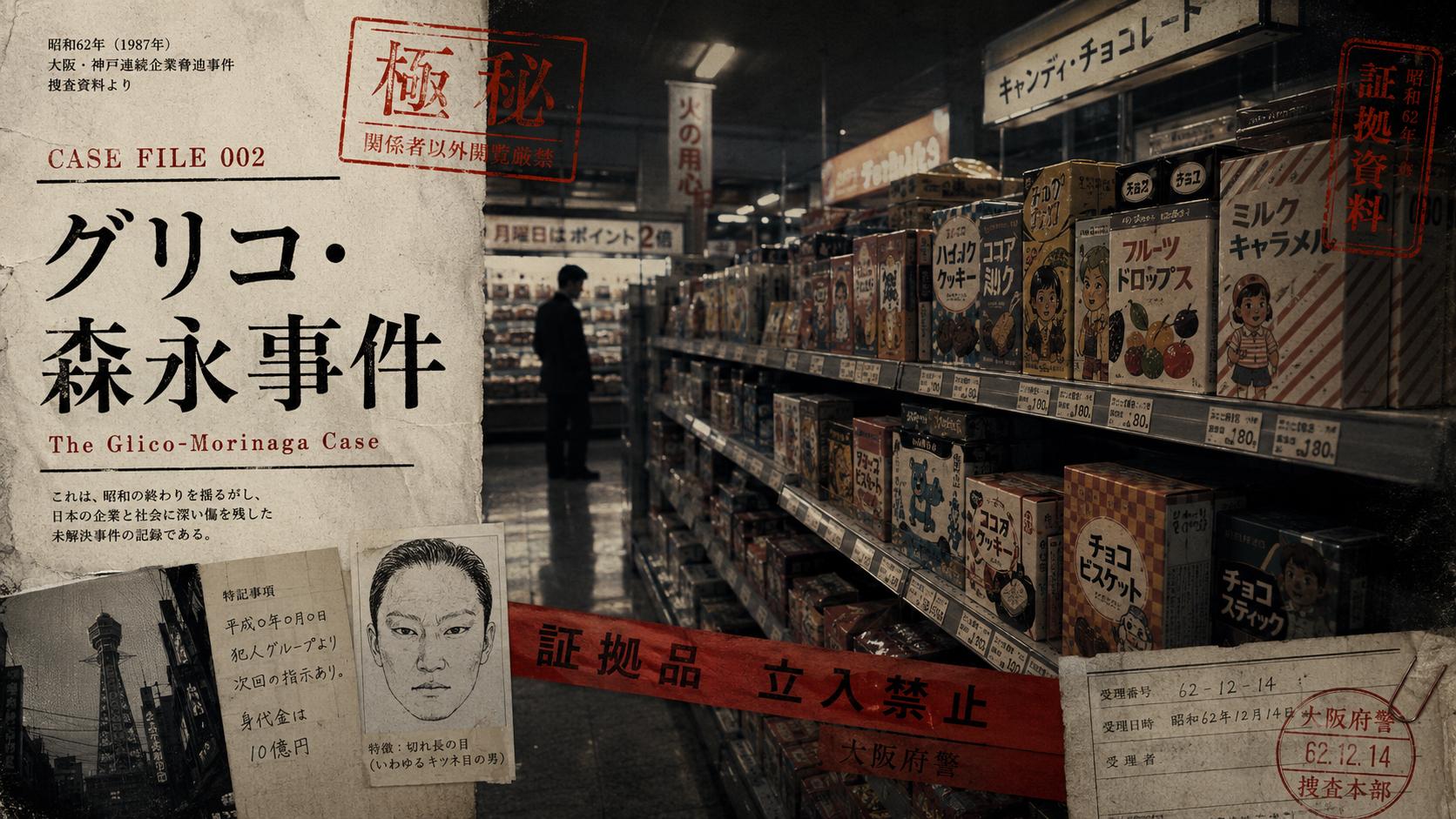
Case File 002 | Source-Locked Edition
The Glico-Morinaga Case
The Monster with 21 Faces and the late-Showa crime that turned Japan’s candy aisle into a stage
FACTS FIRST
In March 1984, the kidnapping of Ezaki Glico president Katsuhisa Ezaki opened a case that grew into corporate extortion, taunting letters to police and media, threats involving poisoned confectionery, and a nationwide crisis of consumer trust. The perpetrator, or group, called itself かい人21面相 — the Monster with 21 Faces. The case remains unsolved.
1984年3月、江崎グリコ社長・江崎勝久氏の誘拐から始まった一連の事件は、企業脅迫、報道機関への挑戦状、菓子への毒物混入を示唆する脅迫、そして全国的な消費者不安へと広がった。
Fixed Data: What Anchors the File
固定データ(CONFIRMED)
- Case
- The Glico-Morinaga Case
- Period
- 1984–1985
- Opening act
- Kidnapping of Ezaki Glico president Katsuhisa Ezaki
- Alias
- かい人21面相 / The Monster with 21 Faces
- Core pattern
- Kidnapping, extortion, product threats, media use
- Outcome
- Unsolved; statutes of limitation expired
Japan’s police white paper describes the case as beginning with the kidnapping of the Ezaki Glico president. Shimbun therefore treats it not as one isolated kidnapping, but as a sequence of events that crossed corporate security, police coordination, press coverage, and food distribution.
警察白書は、江崎グリコ社長誘拐に端を発した事件としてこのケースに言及している。Shimbunでは、単独の誘拐事件ではなく、企業・警察・報道・食品流通を横断した連続社会事件として扱う。
How a Candy Aisle Became a Stage
成立構造:菓子売場を劇場に変えたもの
1. Companies
The kidnapping and extortion threats attacked more than balance sheets. They attacked brand trust. For a food company, reputation is part of the product.
2. Media
The alias, letters, and provocative style pushed the case into newspapers and television. The media reported the case, but the case also used the media.
3. Consumers
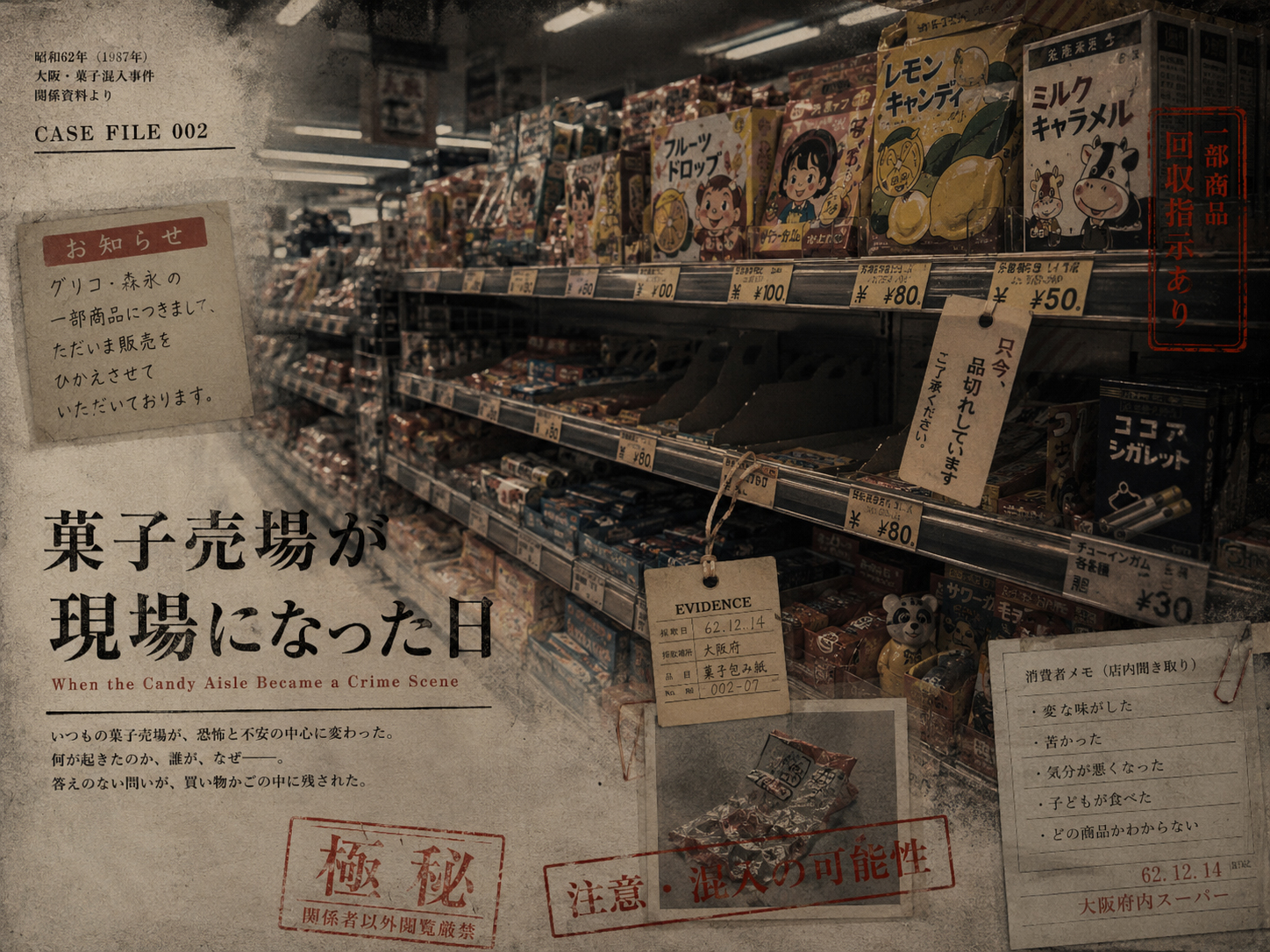
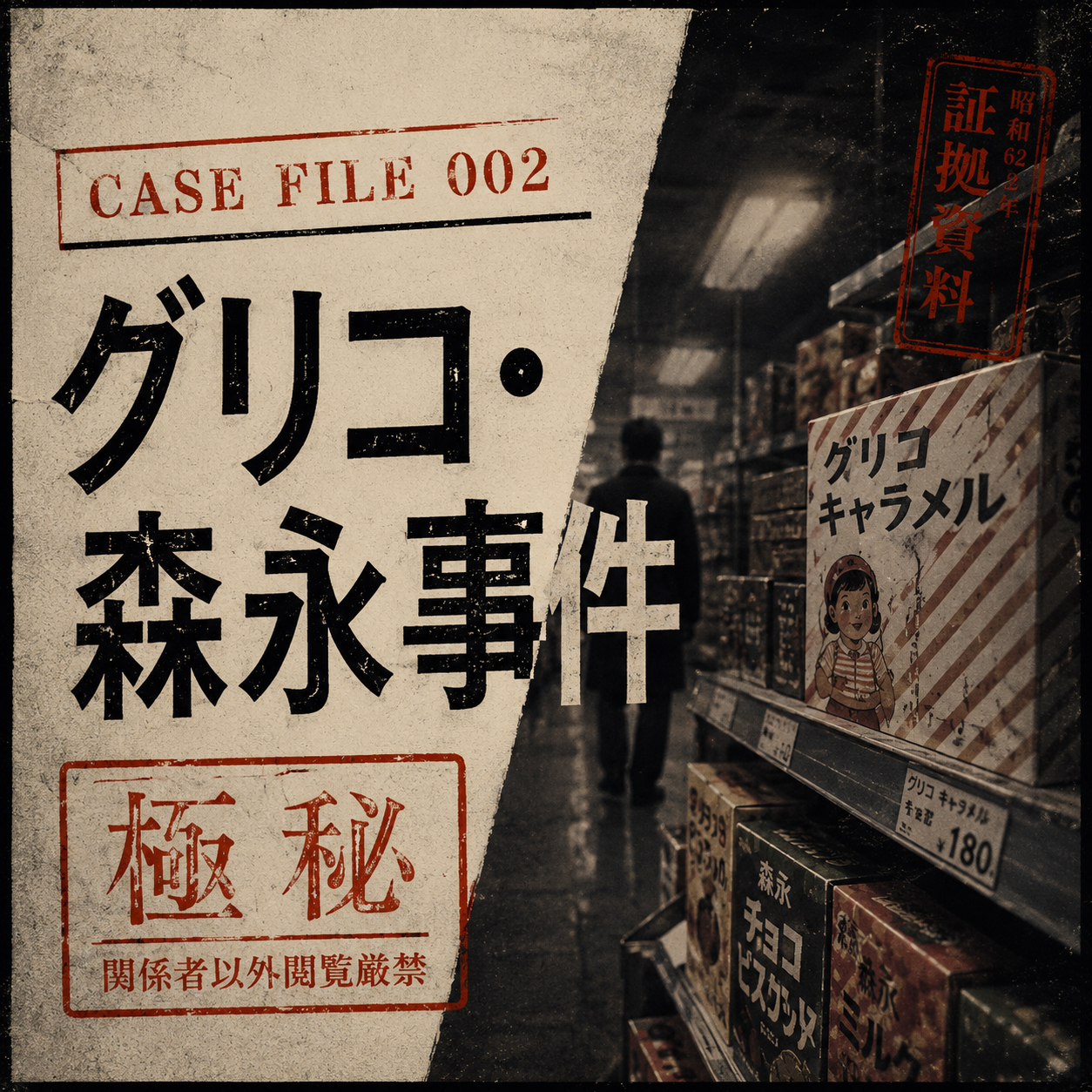
Threats involving confectionery moved fear into ordinary family life: supermarket shelves, children’s sweets, product returns, and the simple act of buying candy.
Not a Moment — A Seventeen-Month Script
This is a minimal chronology. Fine-grained dates should be upgraded only when backed by primary or high-quality archival sources.
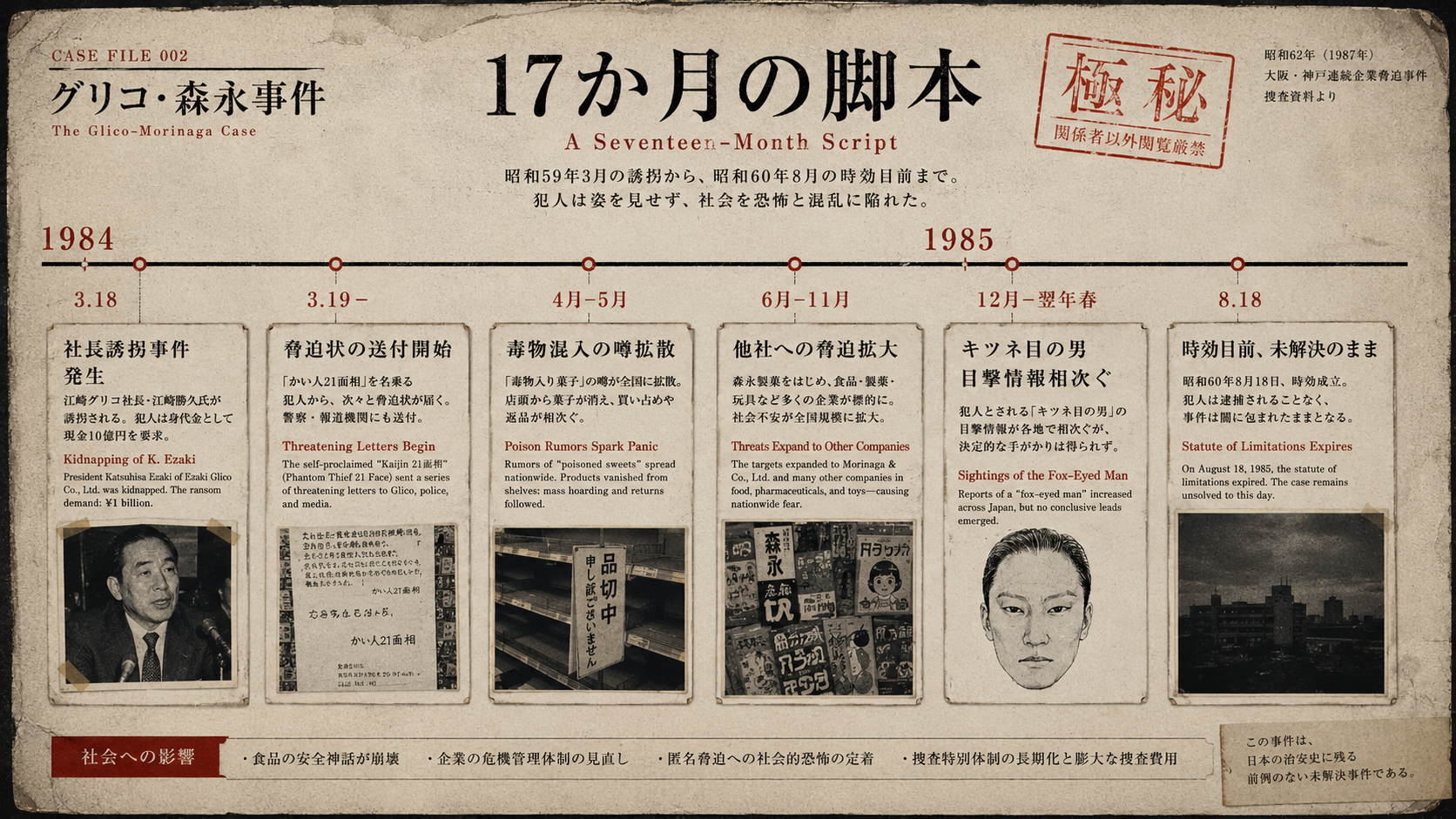
Case Gallery: Shimbun Editorial Images
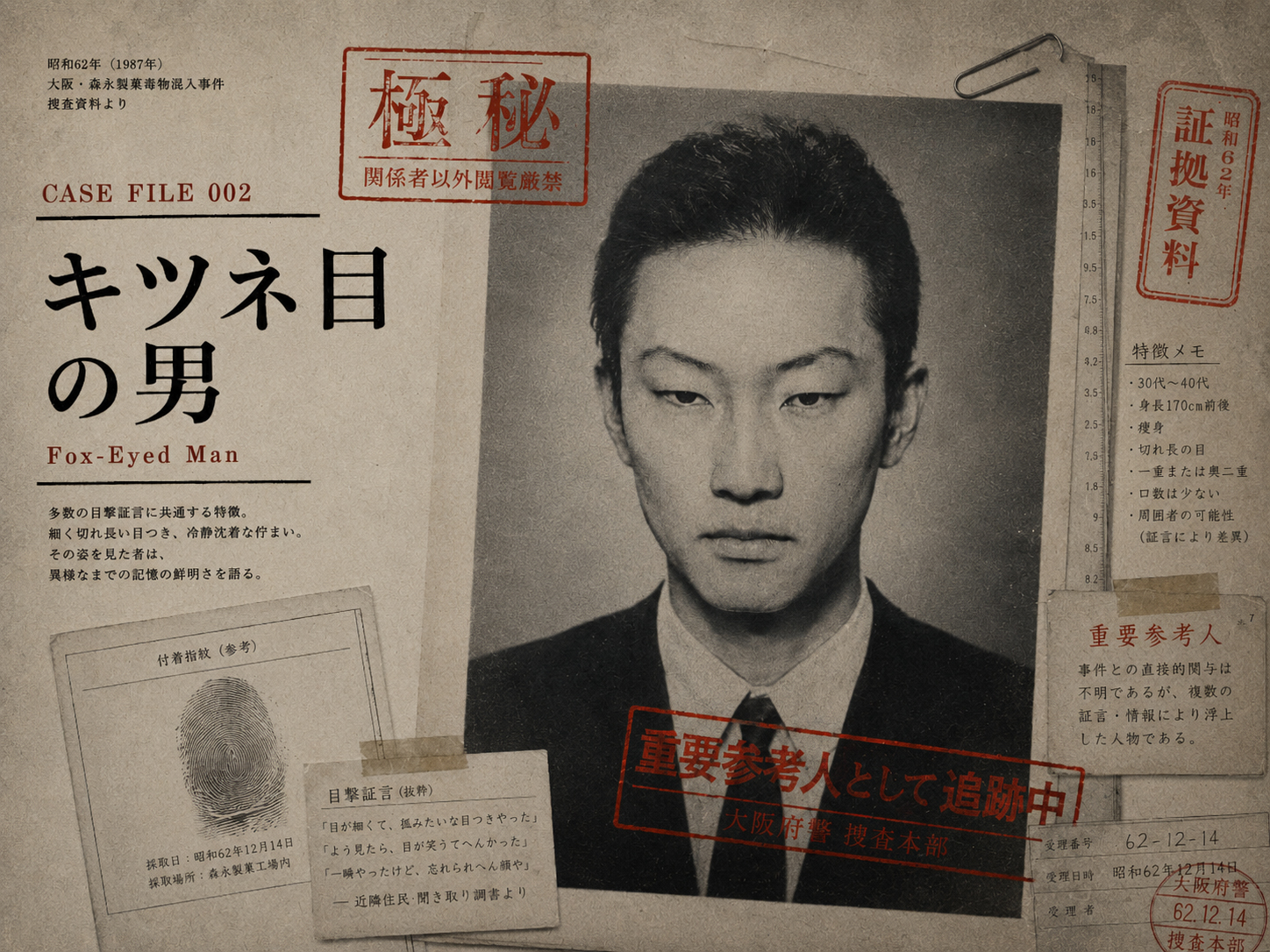
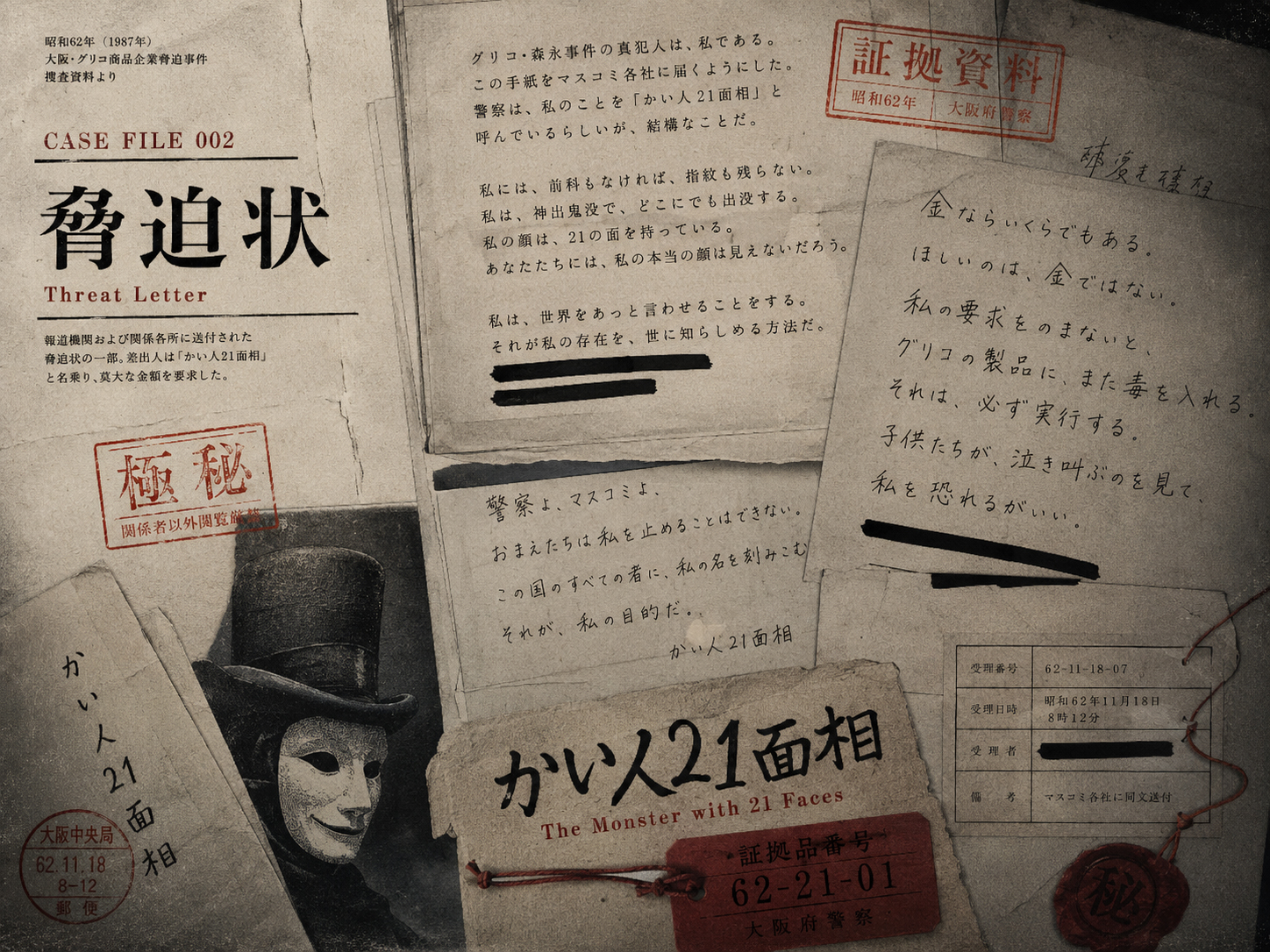
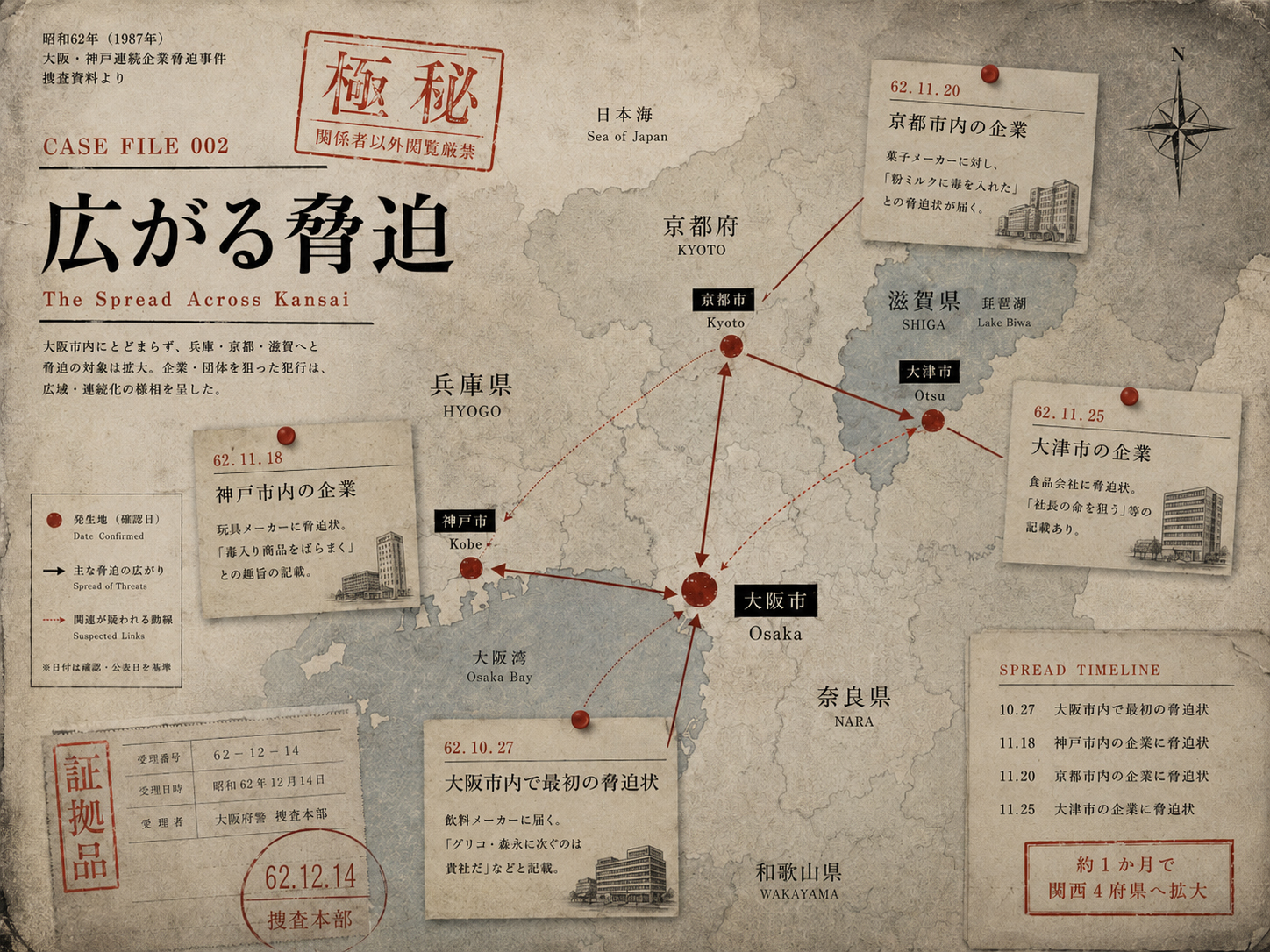
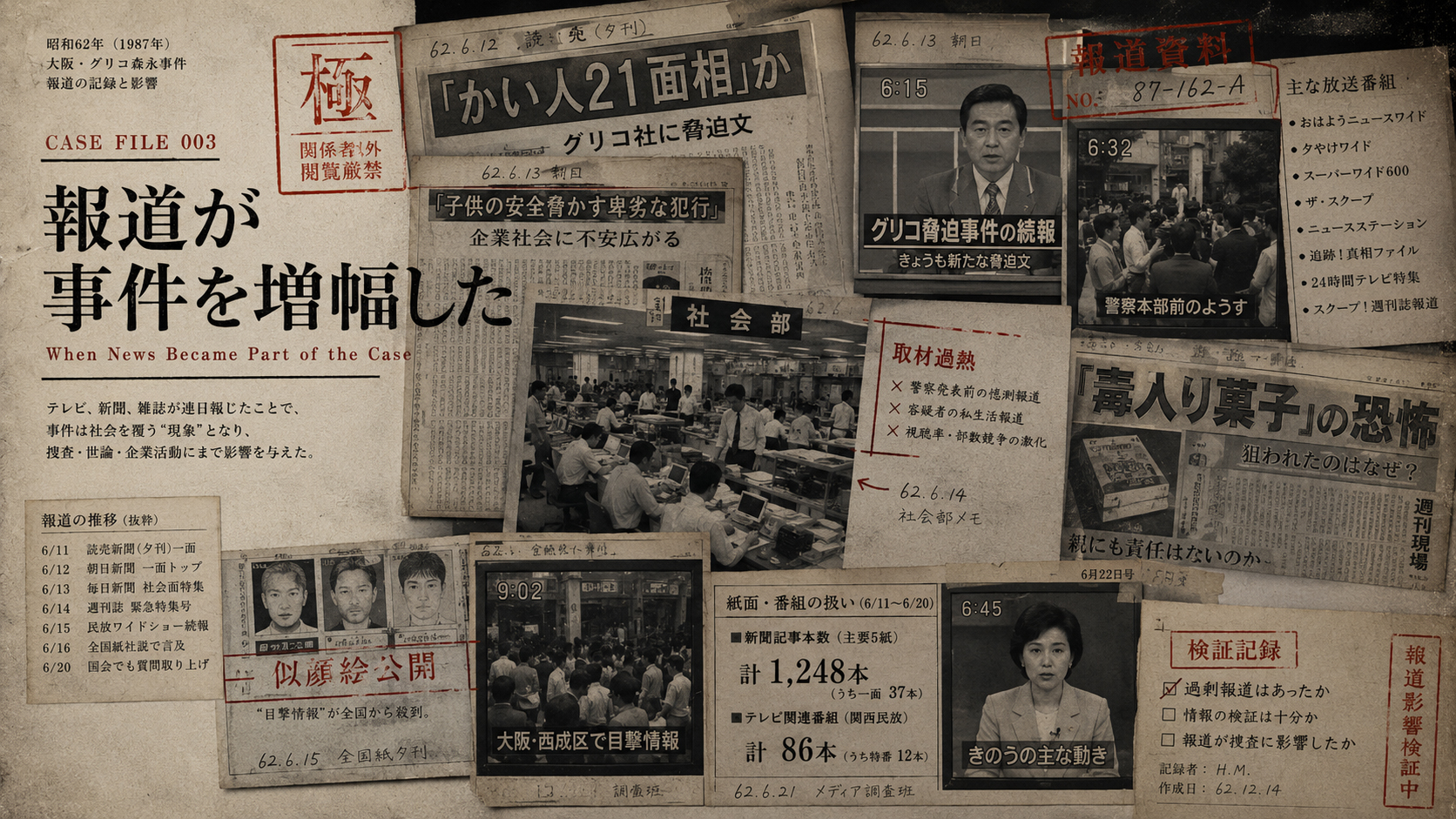
These images are original editorial illustrations for this archive page. They are not presented as police evidence or archival originals.
The Alias: “The Monster with 21 Faces”
The name was more than anonymity. It was a narrative mask. A figure with many faces, impossible to fix, impossible to catch, built for newspapers, television, and public fear as much as for ransom notes.
「かい人21面相」という名乗りは、単なる匿名ではない。正体を隠すだけでなく、自分たちの存在を“物語的な記号”として流通させる装置だった。
The Triangle: Police, Media, Companies
Police
The case crossed regions, companies, and criminal stages. Police maintained a large investigation, but no arrest or conviction resolved the case. In 2000, before the final limitations period expired, Japanese authorities were reported as acknowledging the failure to capture the extortion ring.
Media
Letters were aimed not only at companies and police but also at the news environment. The more the case was reported, the more the alias and fear circulated. The question is not simply whether the press was excessive; it is whether the offender understood press attention as part of the operation.
Companies
For a food company, a product is also a promise. The threat of poisoning introduced doubt into factories, distribution channels, store shelves, and family kitchens. The case left a long shadow over crisis management, corporate communications, and food-safety response in Japan.
Known Unknowns
Shimbun does not fill the gaps with drama. It preserves the gaps as research questions.
Offender profile
Single person or group? Insider knowledge or outside extortion? These questions have been argued for decades, but this file does not declare an answer.
Motive
Money, resentment, anti-corporate symbolism, theatrical self-display, or some mixture. Motive remains dangerous territory when evidence is incomplete.
The fox-eyed man
A powerful witness image is not the same as proven identity. Shimbun treats it as reported witness material.
Product contamination
Actual recovered items, offender claims, retailer responses, and public fear must be separated rather than merged into one simplified story.
Source Conflicts
Because the case is famous, details have been retold many times. Dates, counts of letters, investigation numbers, damage estimates, product descriptions, sighting locations, and evaluations of police performance can vary by source.
| Item | Status | Shimbun handling |
|---|---|---|
| Investigation scale | REPORTED | Use “large-scale investigation” unless a specific figure is pinned to a high-quality source. |
| Poisoned products | CONFIRMED / REPORTED split | Do not merge recovered items, offender claims, and press-fueled public panic. |
| Offender identity | DISPUTED | Avoid private names, organization claims, and guilt by implication. |
| Police failure | REPORTED + ANALYSIS | Separate the unresolved outcome from theories about why the investigation failed. |
Sources and Upgrade Path
This is a source-conscious English edition. A deeper A+ edition should add newspaper archive citations, police records, corporate-history sources, and broadcast-documentary references, then lock dates, letters, locations, and recovered-item details more tightly.
- National Police Agency, Police White Paper, 1985. Refers to the case as beginning with the kidnapping of the Ezaki Glico president.
- The Japan Times, “NPA admits defeat in Glico-Morinaga case.” Reports the 2000 acknowledgement that police failed to capture the extortion ring before the final limitation period expired.
- Glico corporate history / official company sources. Useful for company identity, leadership, and corporate-context checks.
- Archive candidates. Asahi, Yomiuri, Mainichi newspaper archives; NHK retrospectives; corporate statements; contemporaneous magazine coverage. These should be used carefully, with conflicts preserved rather than hidden.