Overview
The 300 Million Yen Incident is famous because it looks impossibly clean: no dramatic violence, no lasting public suspect, and a method that turned symbols of authority into tools of theft.
The SHIMBUN approach is to resist the myth first. Before naming theories, the file separates confirmed facts, reported details, source conflicts, and known unknowns.
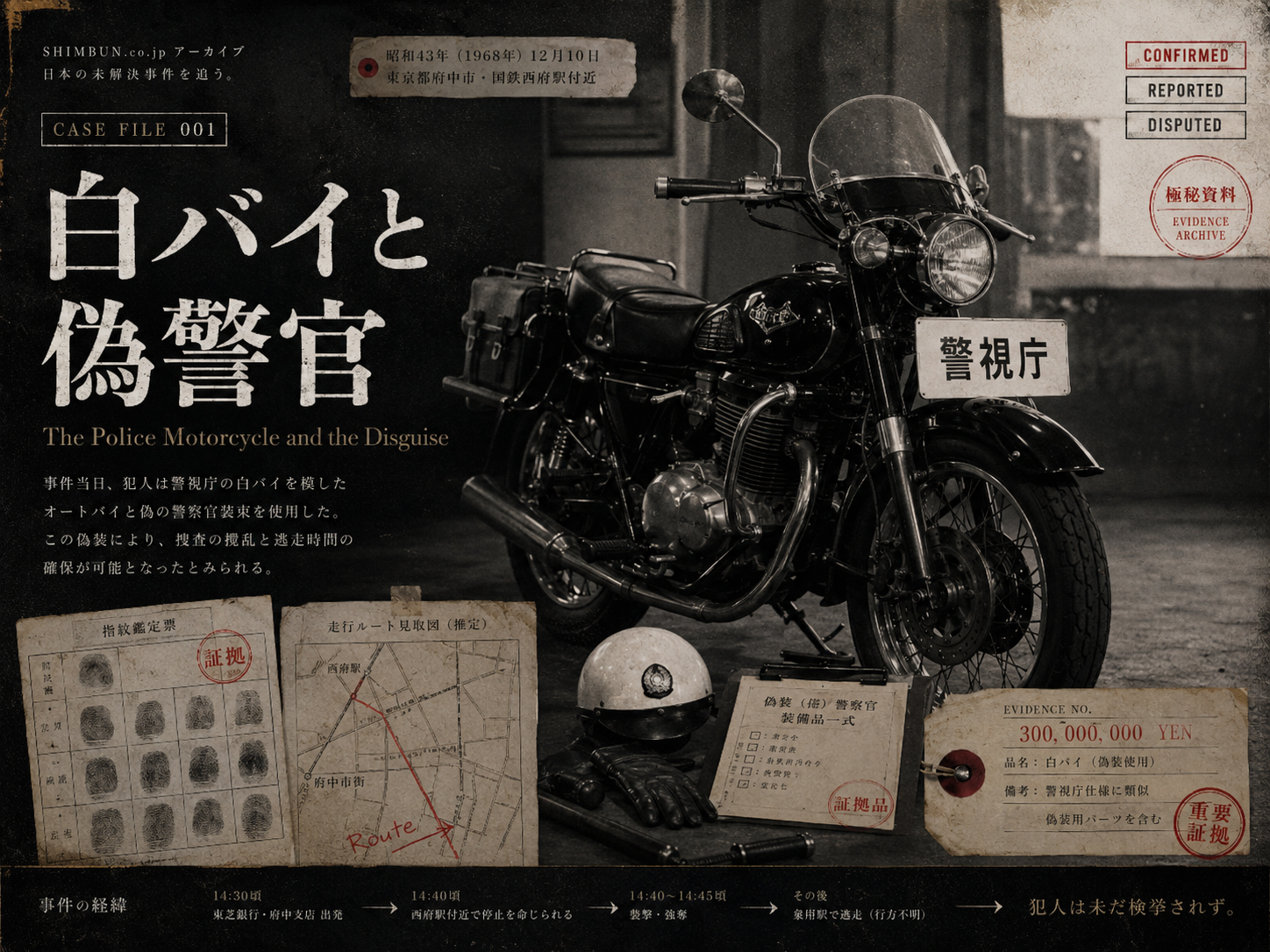
Verified Facts
Only the hard frame belongs here. The incident happened on December 10, 1968. The broad location was Fuchū City, Tokyo. The stolen amount was ¥294,307,500. The central method involved impersonating a motorcycle police officer, warning of an explosive danger, forcing the cash-car crew away, and driving off with the vehicle.
A photo-archive caption places the scene on a road north of Fuchū Prison and identifies the transport as tied to bonus funds connected to Nippon Trust Bank’s Kokubunji branch. That level of detail is useful, but the page still treats street-level phrasing carefully when sources vary.
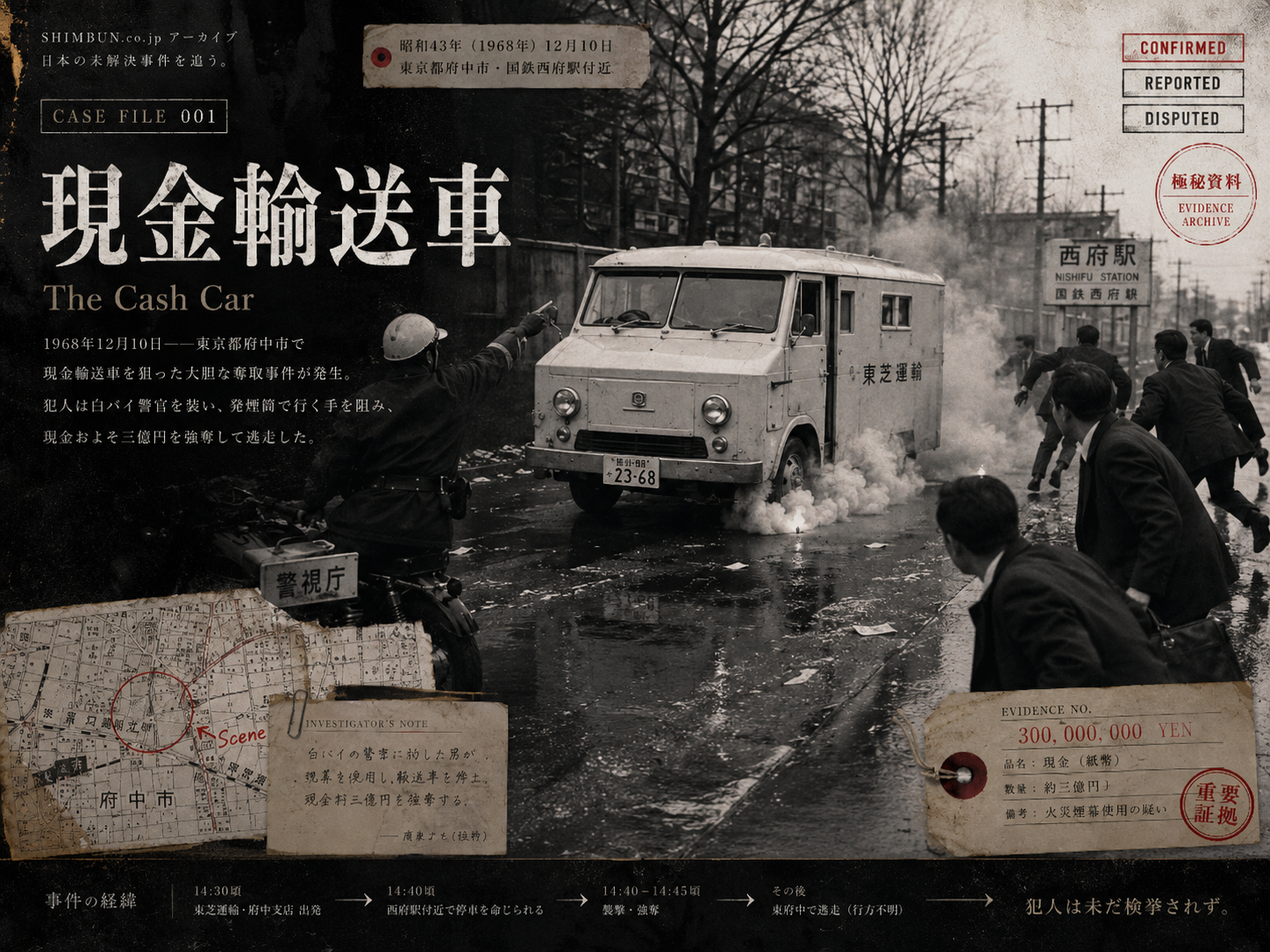
How It Worked
Most reliable summaries agree that the “magic” was not force. It was sequencing.
1Authority: the motorcycle-police disguise lowered normal suspicion.
2Fear: the bomb warning shifted attention from identity to danger.
3Distance: smoke or flare-like urgency made stepping away feel rational.
4Exit: once the crew was clear, the offender’s task became simple — drive away.
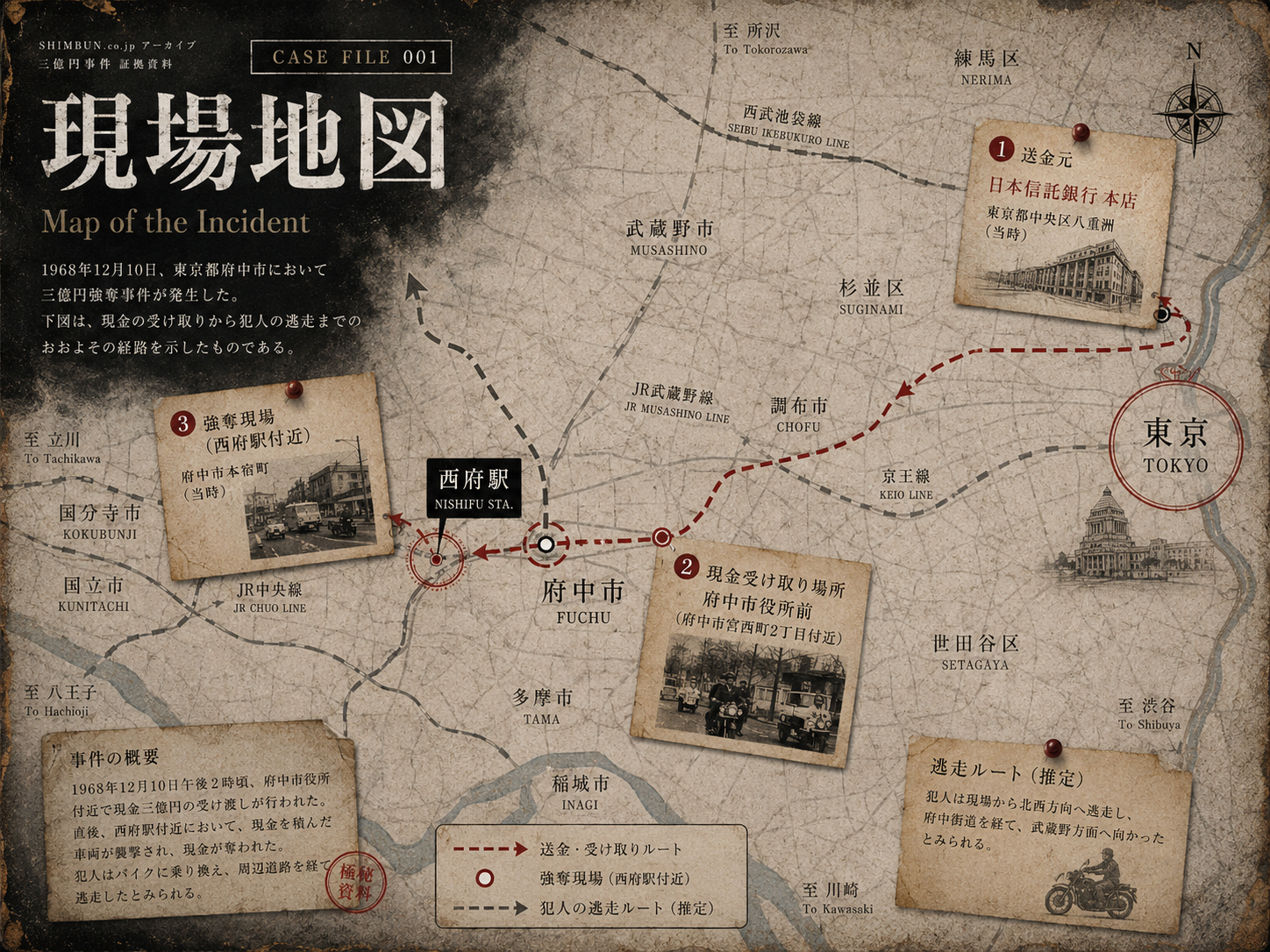
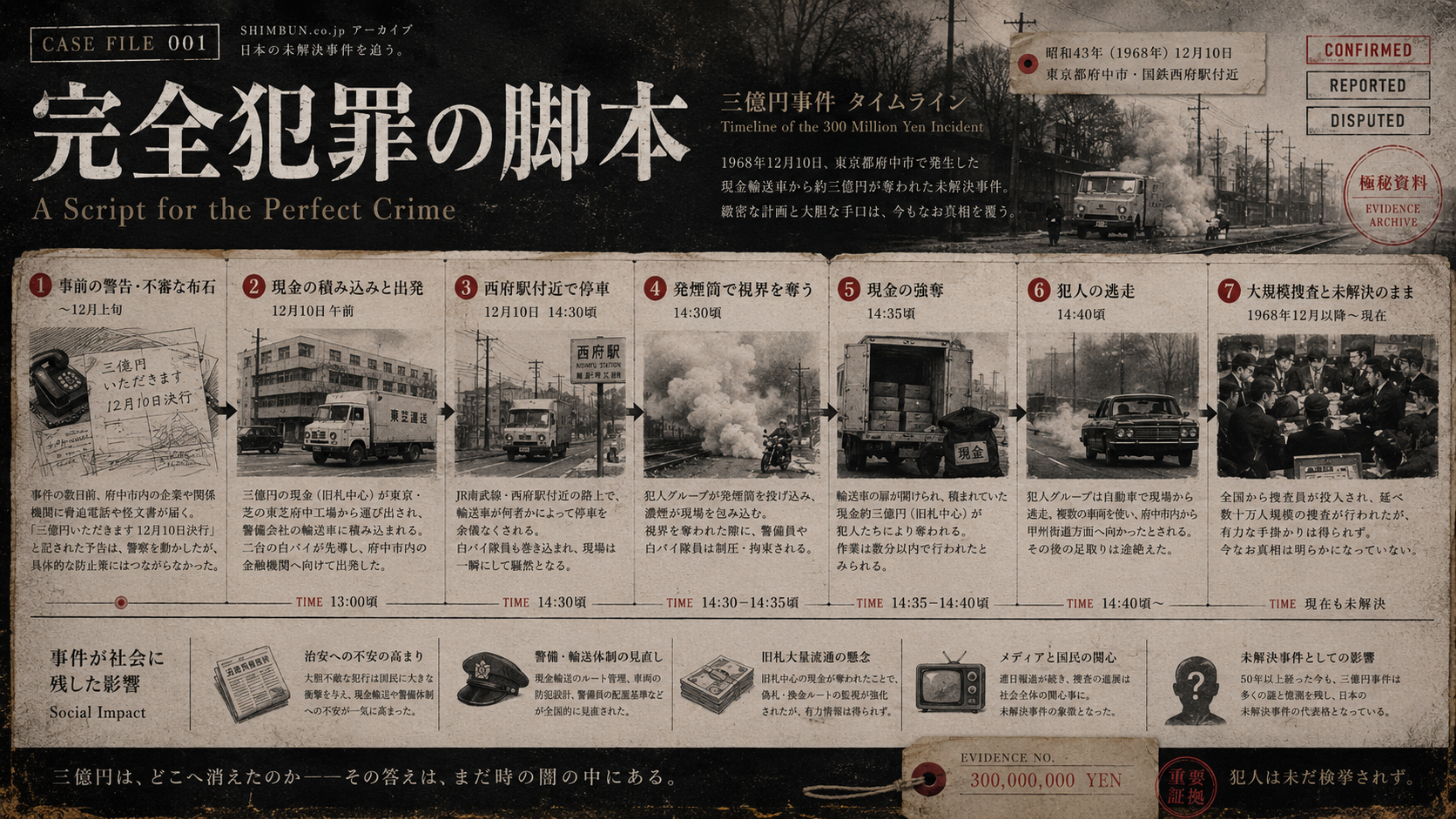
Minimal Timeline
The famous “three-minute” model should be treated as a reported model unless anchored to contemporaneous reporting. It remains useful as a way to understand the shape of the event.
A person posing as a motorcycle police officer stops the cash transport.
The ruse asserts an explosive threat and focuses the crew on danger.
Smoke or flare-like effects make distance feel urgent and reasonable.
With the crew away, the offender drives away in the transport vehicle.
The case is widely described as legally unreachable after the statute-of-limitations expiry under then-applicable practice.
Evidence Handling
For this case, evidence must be sorted into bins. Mixing the bins is how myths become “facts.”
RECOVEREDItems physically recovered with traceable documentation.
WITNESSEDTestimony or observation; valuable but deformable.
INFERREDReasoning from time, distance, logistics, or constraints; useful only when labeled.
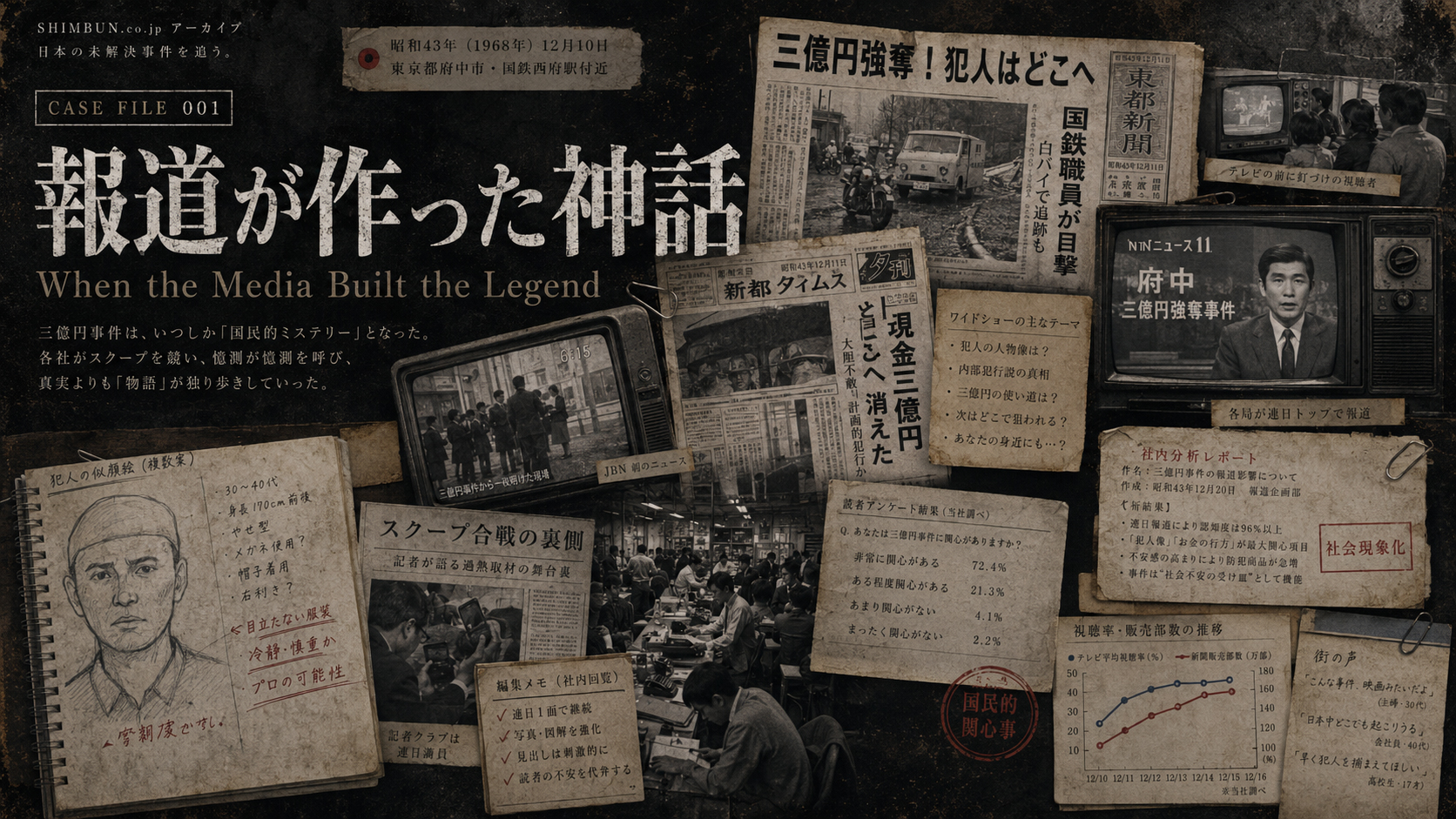
Historical photos of the incident are typically licensed archive materials. SHIMBUN uses original illustrations and points readers toward source references rather than reposting protected images.
Known Unknowns
SHIMBUN publishes questions, not guesses. The remaining archive questions include:
- Which contemporaneous newspaper text best fixes the exact stop point?
- What is the strongest primary source for the minute-by-minute timing?
- Which recovered items are primary-source documented versus later retelling details?
- What source best anchors the “bonus funds in transit” claim beyond photo captions?
- How should secondary sites and vehicle-disposal details be separated by source quality?
Sources and Upgrade Notes
This English remake keeps the prior page’s footnoted-edition method but gives it a mobile-ready SHIMBUN layout. Current anchor categories include structured public summaries, licensed photo-bank captions, editorial image archive references, and local long-form reporting. The next A+ upgrade is to add major newspaper archive text and at least one book with page citations.
- Japanese structured summaries for date, amount, disguise, limitation date, and commonly cited investigation-scale figures.
- Mainichi Photo Bank caption material for Fuchū Prison north-side road wording and transport context.
- Licensed editorial photo archive references for historical image availability and licensing limits.
- Local long-form reporting for street-level retelling details, kept as reported unless corroborated.