Editorial Promise
The Minamata Disease Case is not simply an old pollution story. It is a record of factory discharge, poisoned seafood, medical discovery, state delay, corporate responsibility, courtroom struggle, social stigma, and the dignity of victims who had to fight to be recognized.
SHIMBUN.co.jp does not reduce this case to corporate villain theater. The deeper question is why early warnings were ignored, why causation and recognition moved so slowly, and why victims carried the burden of proving what had been done to them.
海は証拠だった。町は証人だった。遅れこそが事件だった。

The Shape of the Case
Minamata disease was caused by methylmercury compounds discharged in industrial wastewater and accumulated in fish and shellfish. People who ate contaminated seafood suffered nervous-system damage, including sensory disturbance, impaired coordination, speech difficulty, narrowed visual fields, hearing problems, and profound life disruption.
The damage cannot be measured only in diagnoses. It included lost fishing livelihoods, stigma, family caregiving, recognition battles, compensation lawsuits, and decades of being forced to prove harm.
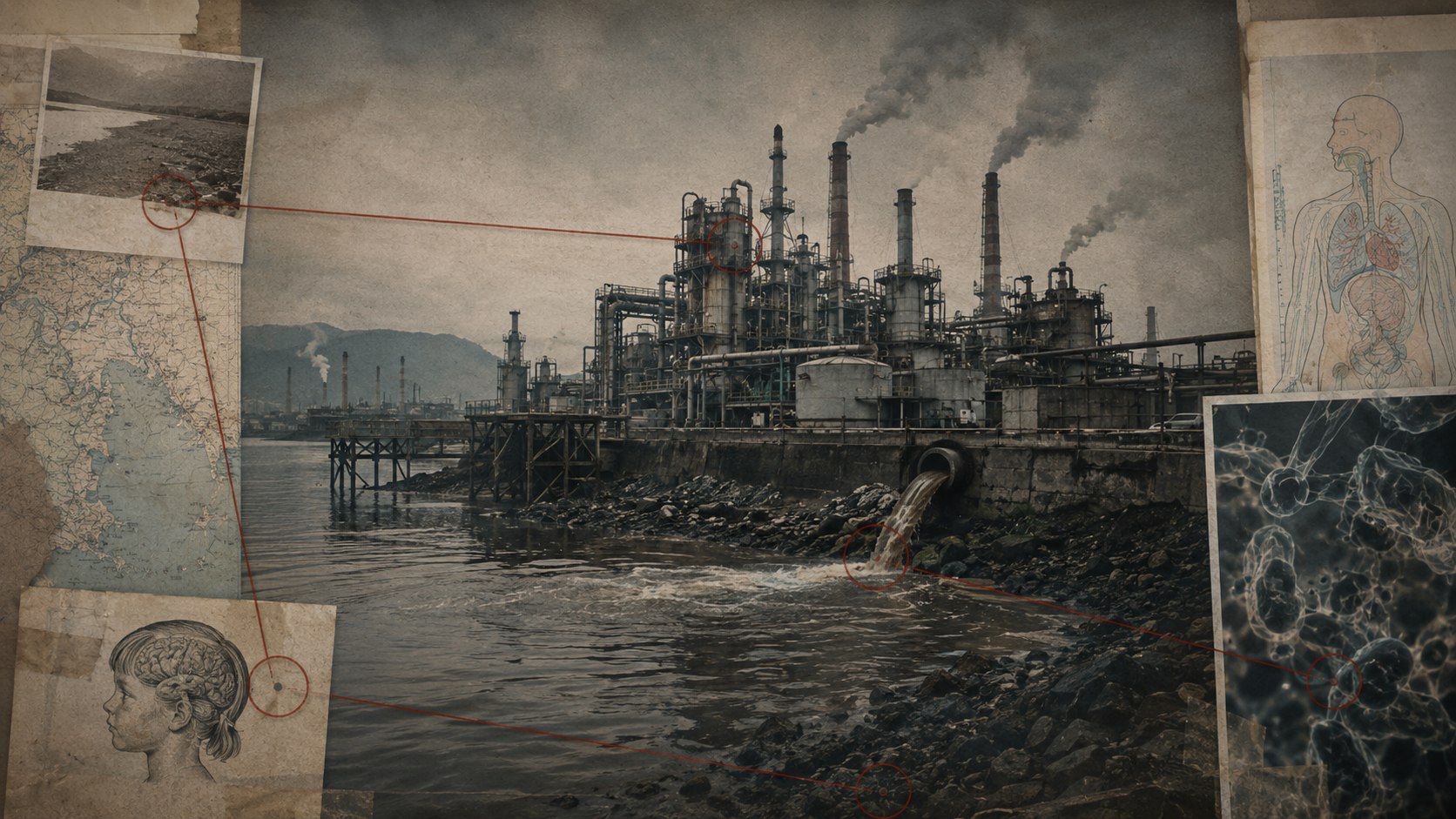
Why It Belongs as Case File 010
Case 010 is a milestone for SHIMBUN.co.jp. The archive has already covered cold cases, corporate extortion, justice history, political corruption, terrorism, disaster, organized crime, and corporate accounting. Minamata adds environmental justice: a case where industry, government, science, law, and the human body meet.
It is not a relic of the past. The delay between scientific warning and social recognition, the pressure inside a company town, the burden placed on patients, and the difficulty of drawing relief boundaries remain alive as lessons.
Four archive axes
1Factory wastewater and sea contamination
2Methylmercury poisoning through fish and shellfish
3Patients, families, congenital damage, and stigma
4Corporate responsibility, government delay, lawsuits, and compensation
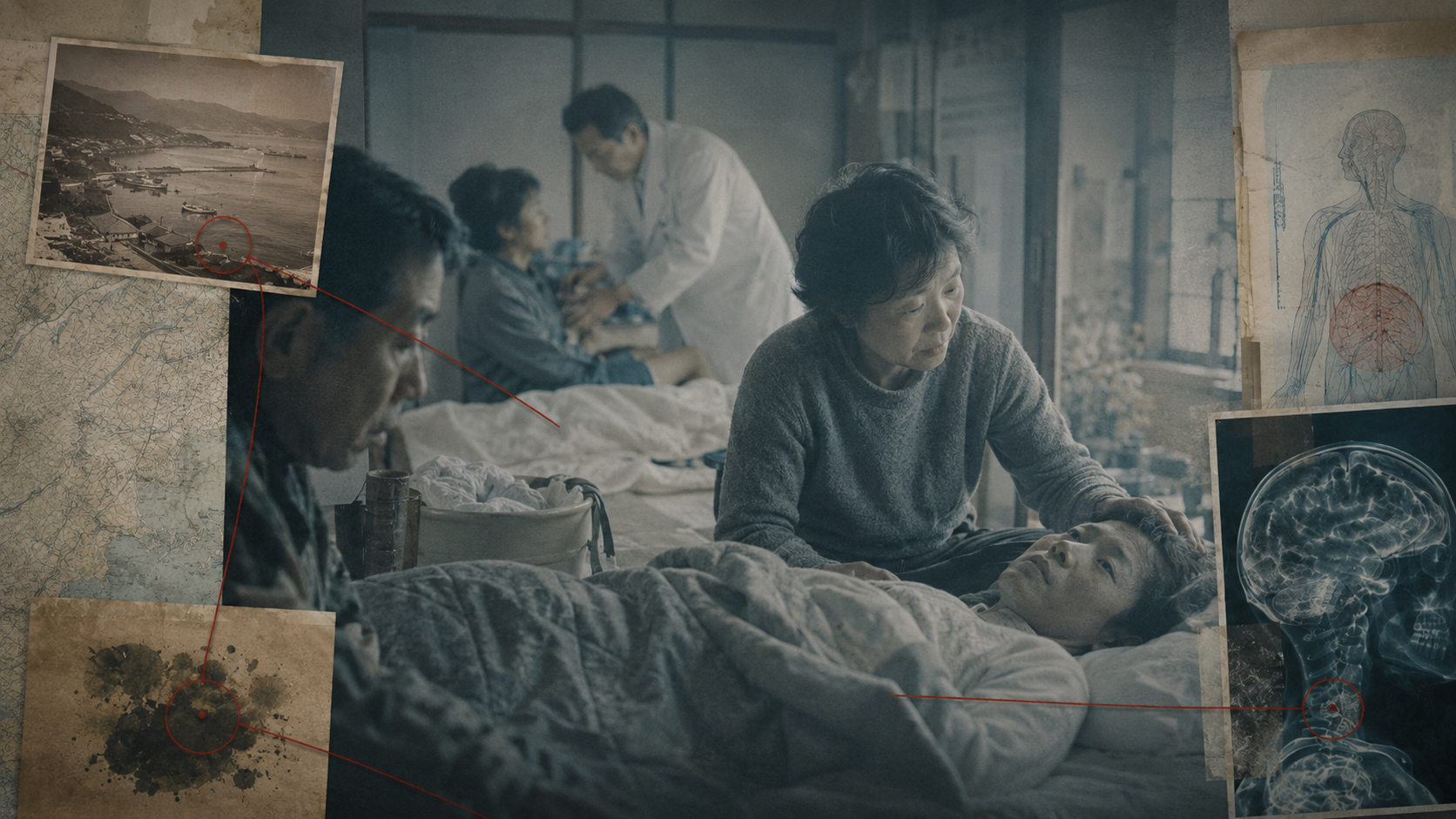
Reading It as a Map
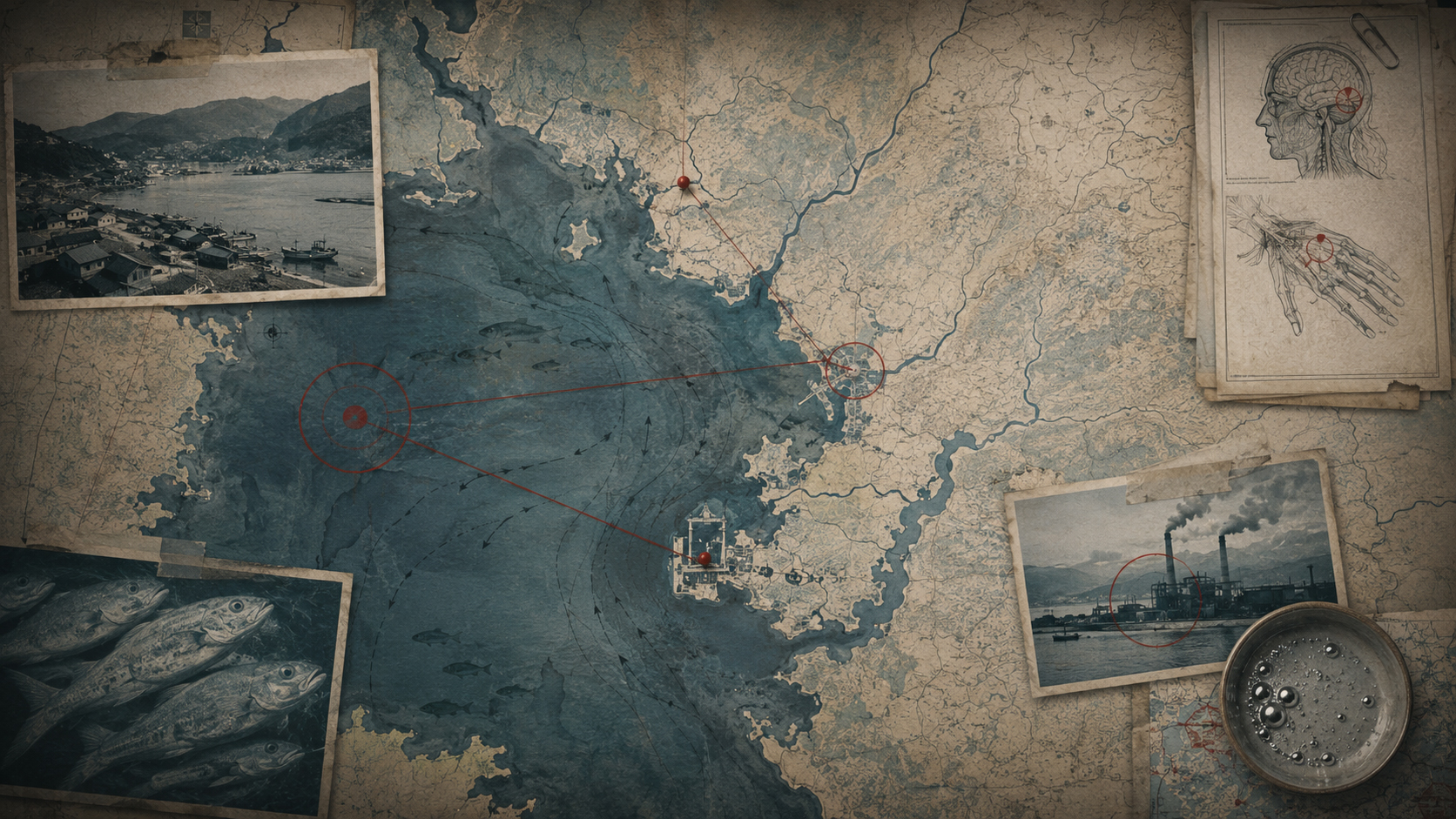
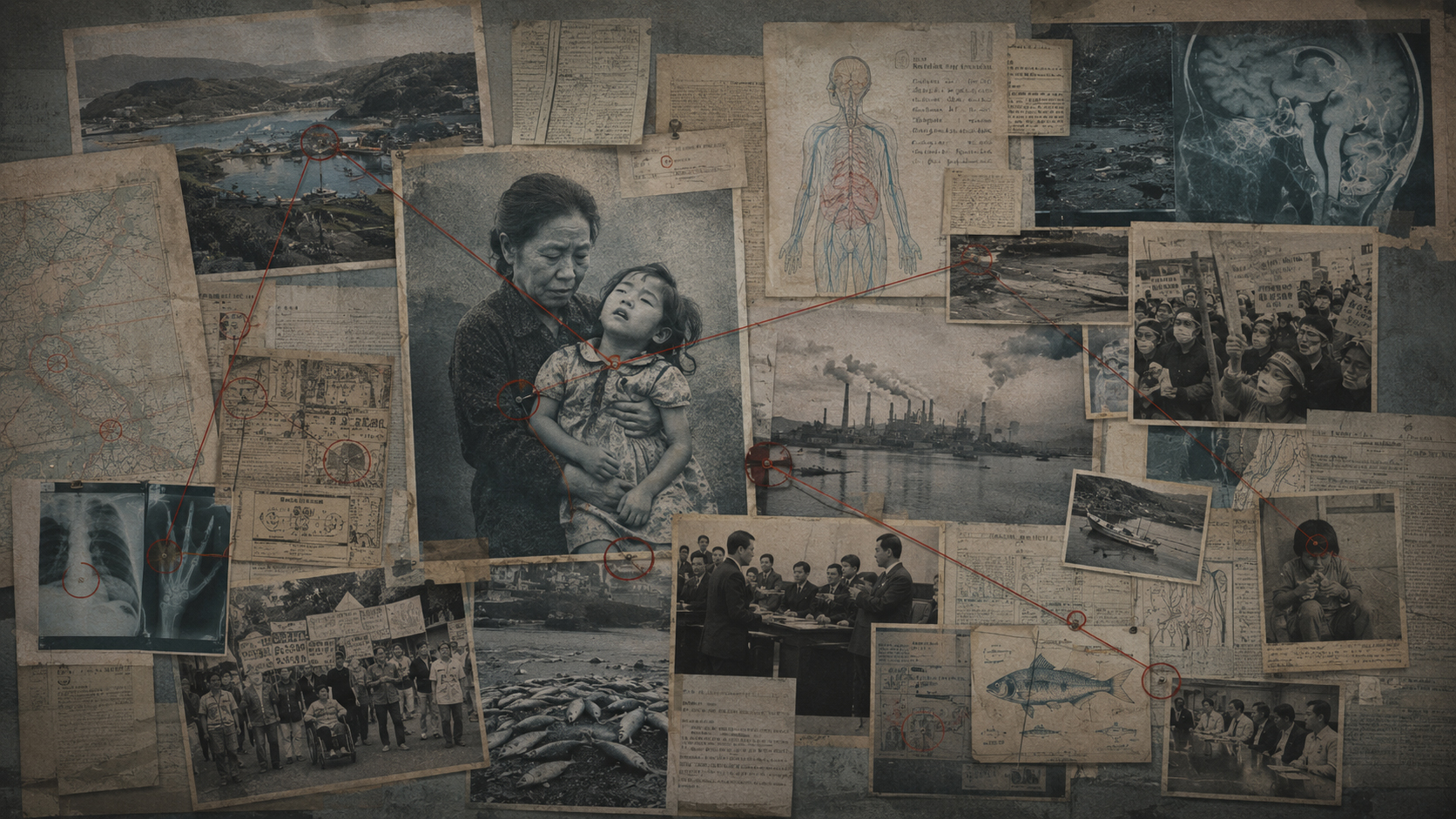
The Minamata case must be read geographically: factory, outfall, bay, fish movement, fishing villages, family tables, hospitals, courts. The line of harm did not stop at the factory gate. It moved through the sea into bodies and community memory.
Where it happened cannot be separated from who was harmed. Minamata Bay became a site, a witness, and an archive.
Timeline
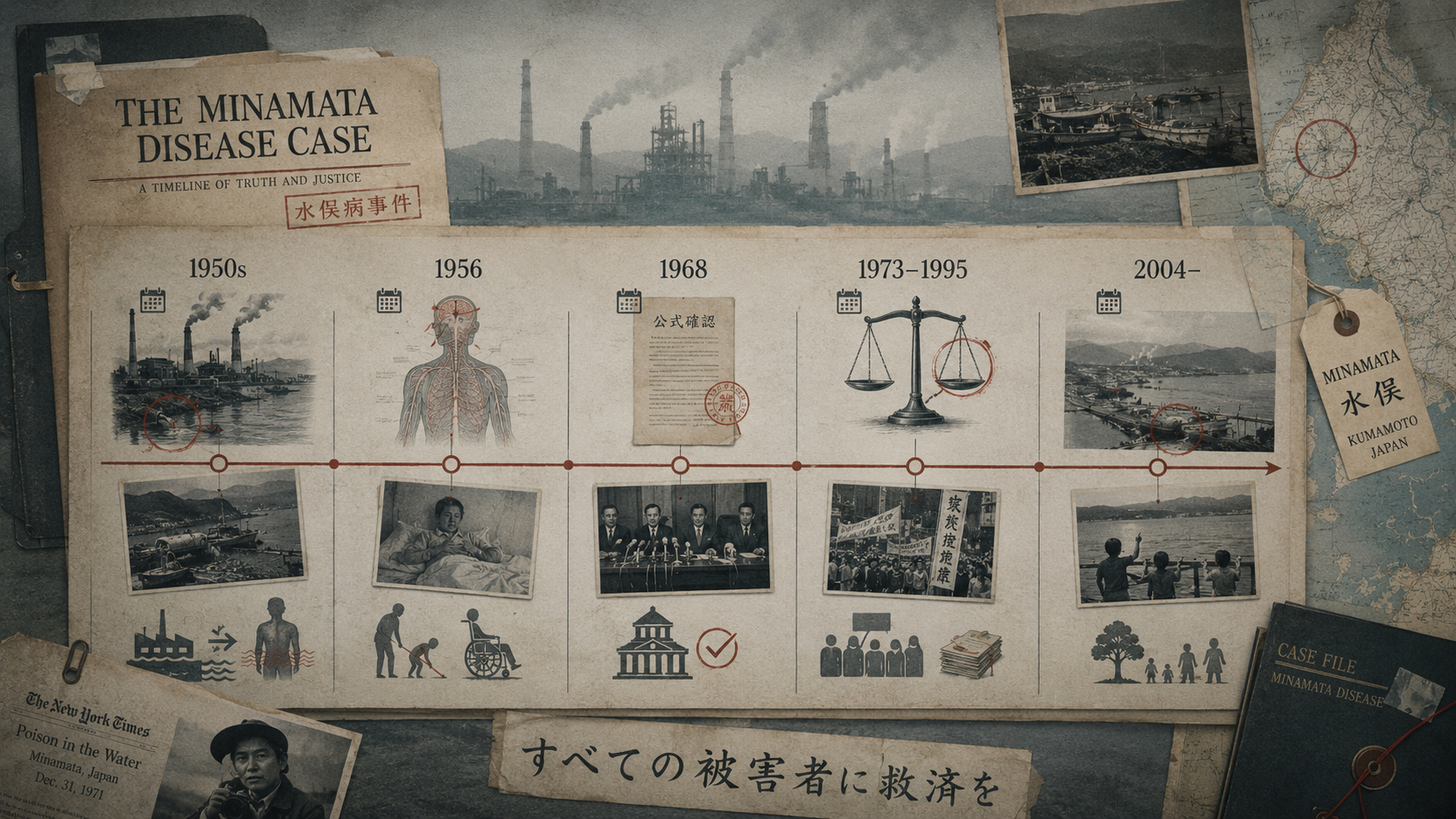
The Minamata Disease Case did not end with one announcement. It spans official discovery, causation findings, legal responsibility, compensation, unrecognized victims, relief systems, and public memory.
Animals, fish, and people show unexplained symptoms around the bay.
Minamata disease is officially recognized in the Minamata Bay area.
The government states that contaminated fish and shellfish were the pathway of methylmercury poisoning.
Legal rulings and compensation struggles move corporate responsibility to the center.
Certification, compensation, and relief for unrecognized victims continue for decades.
Minamata becomes a global symbol of mercury pollution, victim dignity, and environmental justice.
Courtroom and Relief
Courts played a central role in the Minamata case. Victims brought medical proof, life testimony, community memory, and corporate accountability into legal space. The courtroom was not only about damages. It was about who society would recognize as harmed.
Certification and relief remained difficult because damage did not fit neat administrative lines. Symptoms varied. Geography widened. Time passed. Families suffered across generations. Institutions drew boundaries, but harm remained beyond the boundary.

Media and Memory
Minamata entered public memory through photography, newspapers, television, medical research, residents’ movements, patient testimony, and court records. Reporting was sometimes late, but documentation helped make invisible harm visible.
Today, Minamata is more than a place name. It is a global word for mercury harm, industrial denial, environmental justice, and the dignity of victims.
Source Notes
This page is based on public materials from Japan’s Ministry of the Environment, the National Institute for Minamata Disease, Minamata archives, court materials, medical research, reporting, and patient testimony. Certification, compensation, and victim counts vary by system and time period, so the file separates established facts from disputed boundaries.
- Ministry of the Environment summaries, timelines, and administrative materials
- National Institute for Minamata Disease and related archive materials
- Kumamoto University research, medical literature, and patient/family testimony
- Litigation materials, compensation agreements, and relief-system documents
- Japanese and international reporting, photography, and environmental-policy history