Editorial Promise
This is not a horror story. It is not suspect fantasy. It is the record of a real family, a real neighborhood, and a real cold case that remains open.
SHIMBUN.co.jp handles this case with restraint. We do not invent a suspect. We do not name private people through rumor. We do not turn violence into spectacle. This file organizes what has been confirmed by official sources, what has been reported, what remains disputed, and what is still unknown.
犯人探しではなく、事実固定。恐怖ではなく、記録。
The Shape of the Case
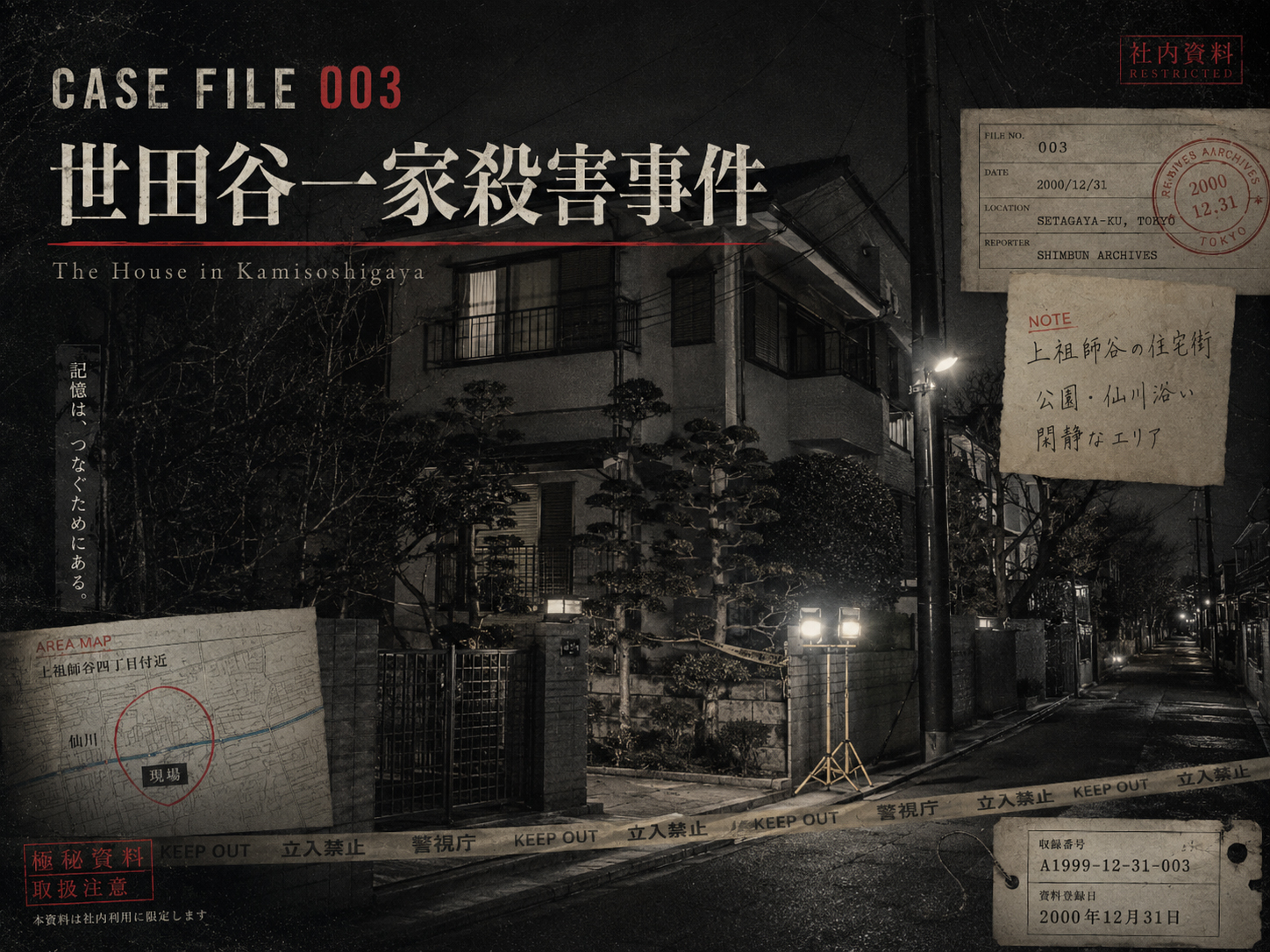
From the night of December 30, 2000 into the early hours of December 31, a family of four was murdered inside a home in Kamisoshigaya, Setagaya Ward, Tokyo. The Tokyo Metropolitan Police Department continues to seek information about the case.
The surrounding area matters. The official police description places the home near Sengawa, parkland, school grounds, and a residential zone affected by park-development relocation. This was not an anonymous downtown crime scene. It was a quiet edge of the city, where ordinary streets, family homes, and public green space overlapped.
Why It Belongs as Case File 003
Case 001, the 300 Million Yen Incident, is Japan’s classic “perfect crime” mystery from the late 1960s. Case 002, the Glico-Morinaga case, is a corporate-extortion and media-fear case from the 1980s. Case 003 brings the archive into the modern forensic era.
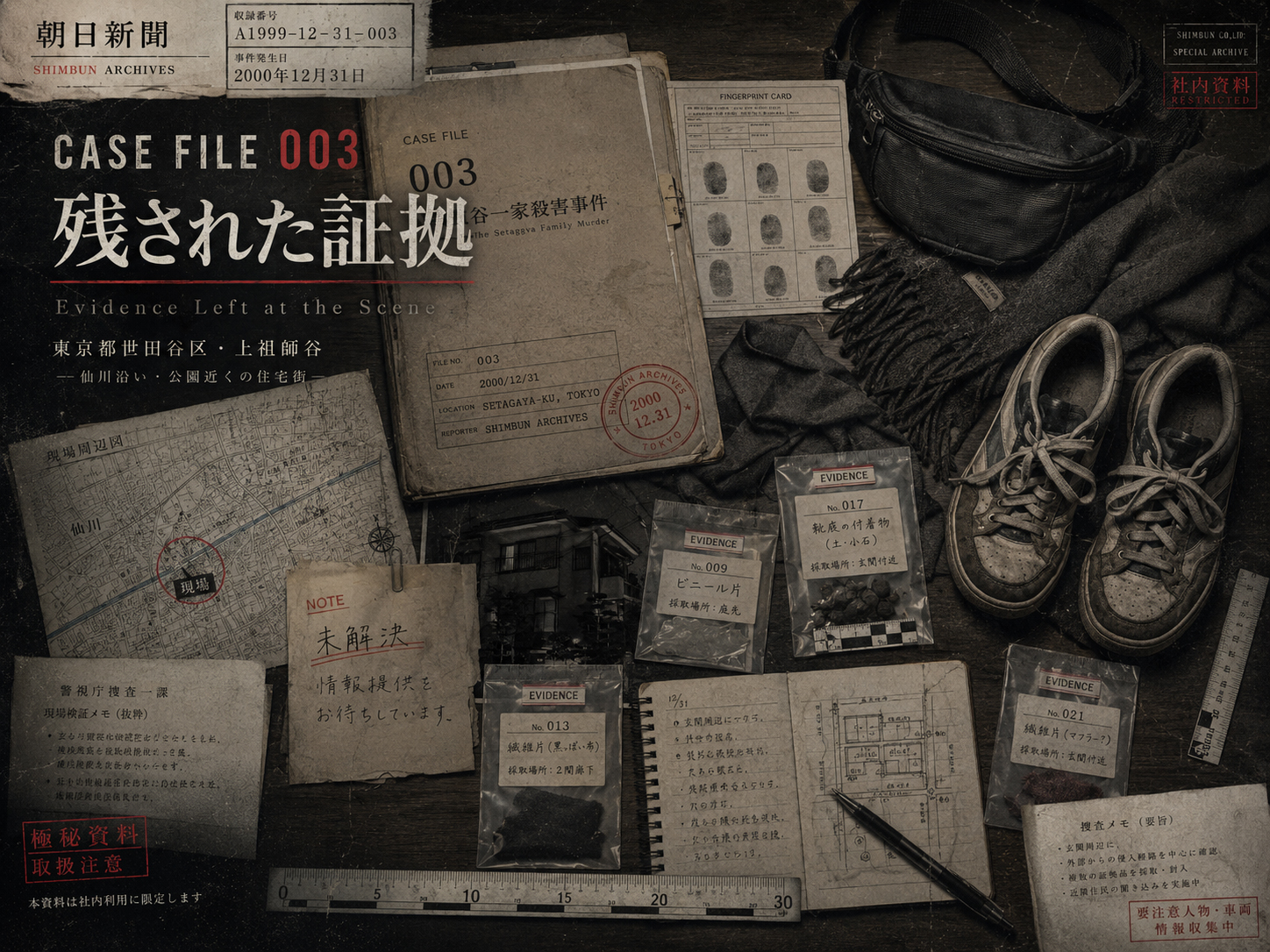
This case occurred at the edge of the 21st century, in an era of DNA analysis, mass media, and long-running public investigation. That is why it sits differently from earlier postwar mysteries. It is not simply old. It remains present.
The four archive questions
1What can be confirmed about the timing?
2What traces were left at the scene?
3How does the geography of Kamisoshigaya shape the case?
4Why has the investigation remained open for so long?
Timeline
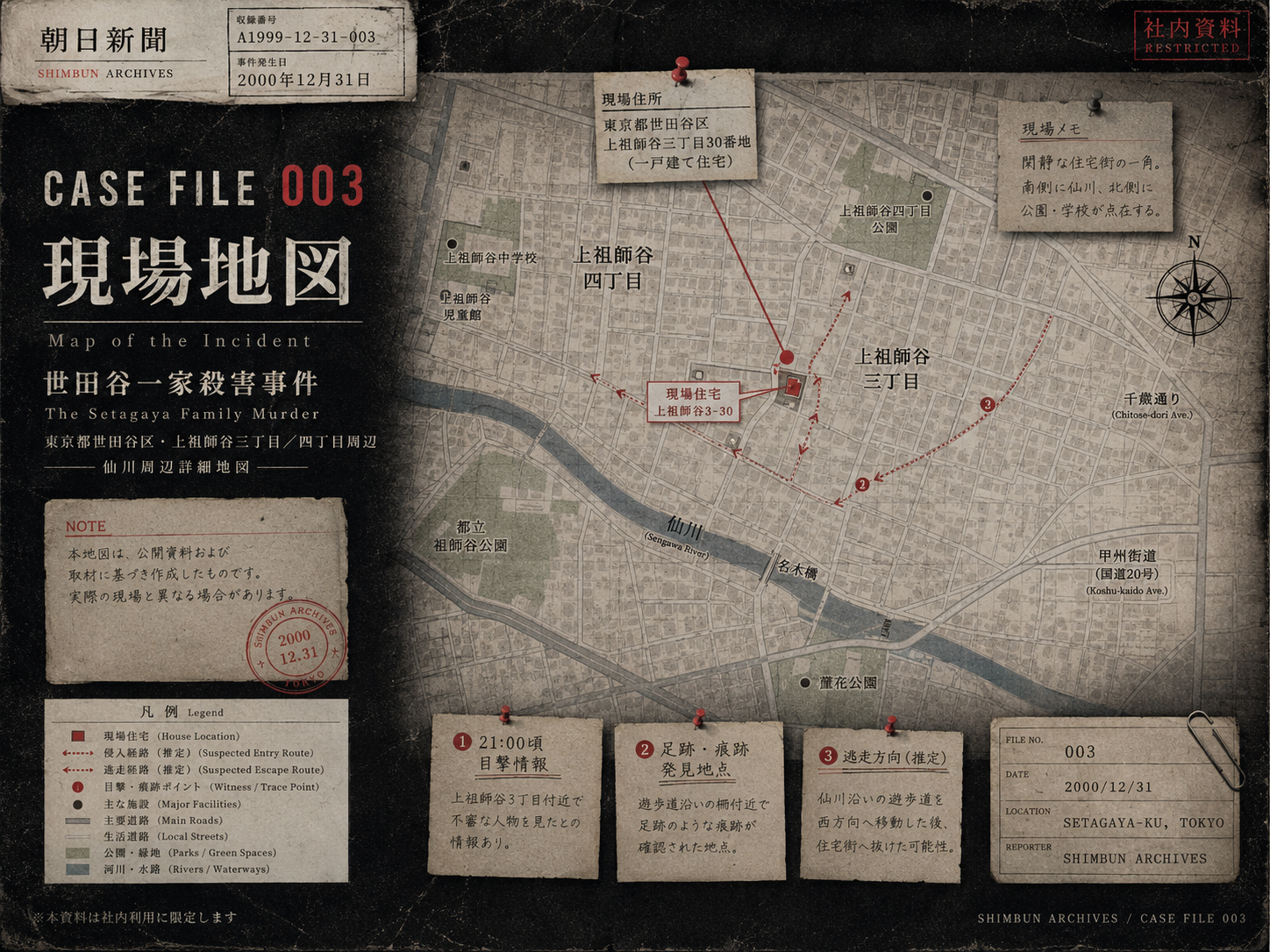
The timeline must be read carefully. The broad window is official. Some details about the killer’s movements, stay in the house, and route remain matters of investigation, reporting, and analysis.
Night
A quiet residential area at year-end. Police later sought information about suspicious people or vehicles in the surrounding area.
Tokyo police identify the time frame as around 11 p.m. on Dec. 30 through the early hours of Dec. 31.
Reports have long focused on the possibility that the killer remained at the scene for an unusually long period.
Afternoon
The victims were discovered, police were notified, and the house became the center of a major investigation.
Evidence was analyzed, re-examined, and reported on over the years. Public appeals continued.
No arrest has been made. The police continue to ask for information.
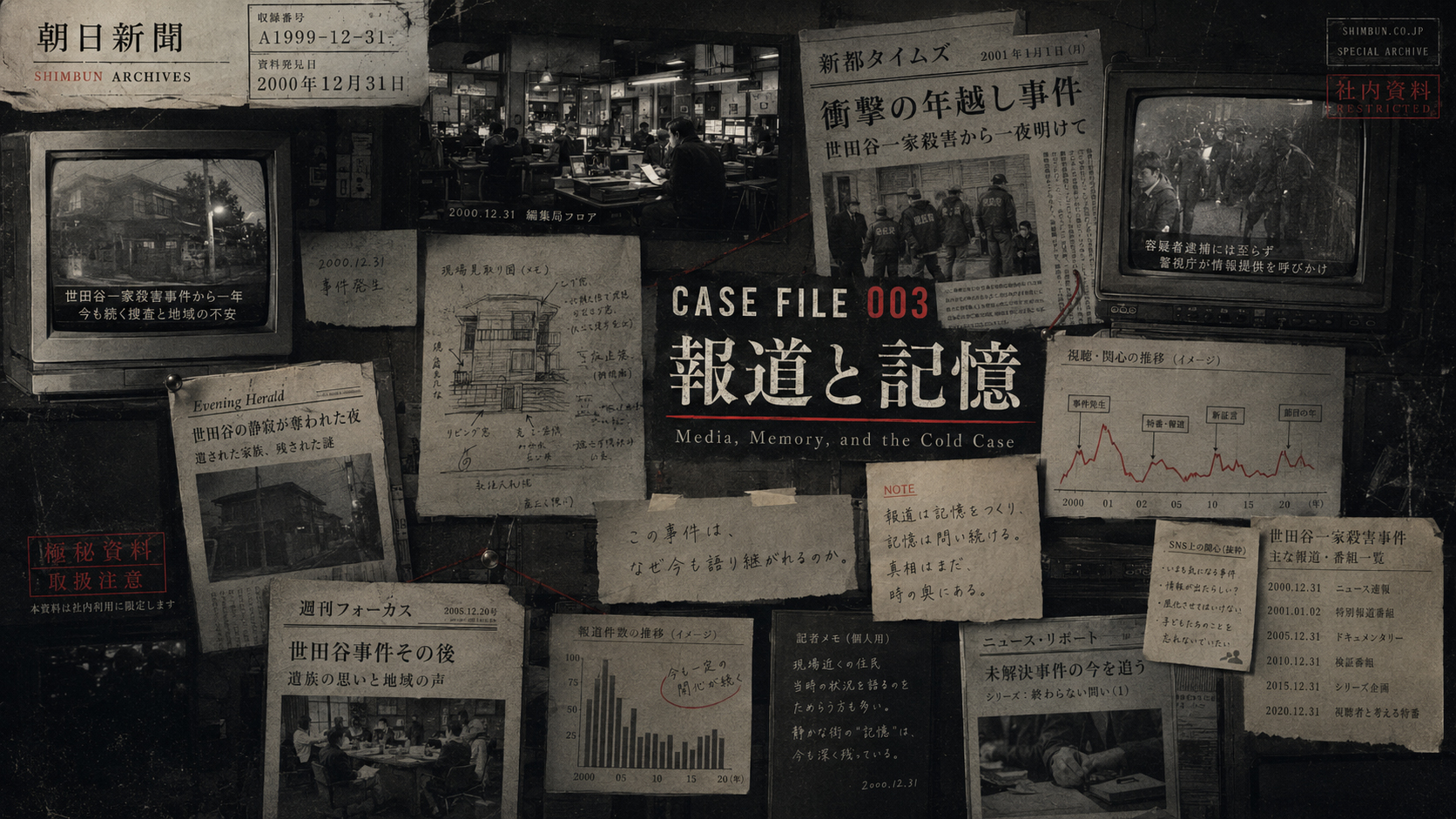
Media, Memory, and the Cold Case
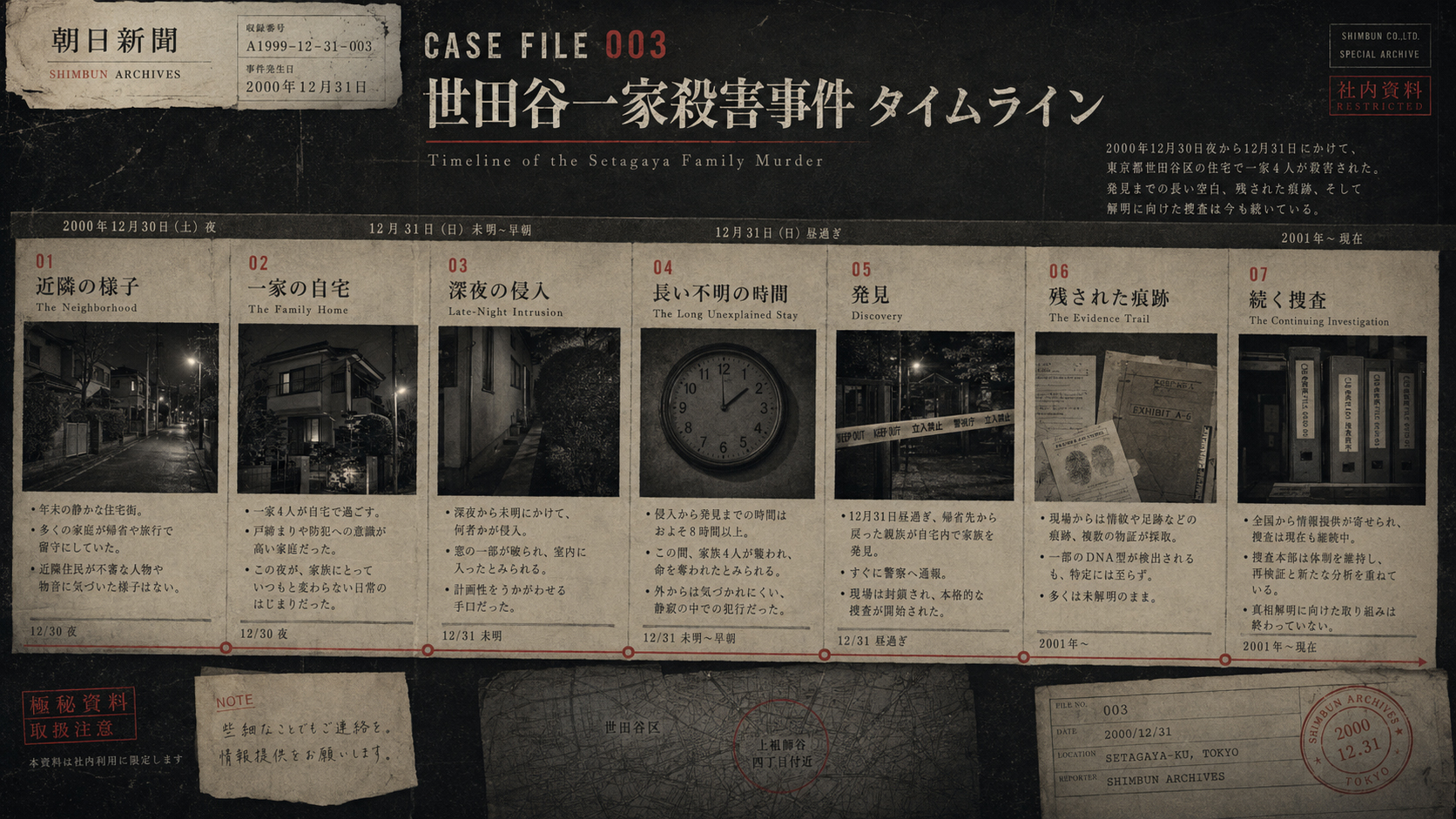
The case returns to public attention every year-end. The date, the family setting, the amount of evidence, and the absence of an arrest have made it one of Japan’s most remembered modern unsolved murders.
Memory has responsibilities. To remember this case is not to consume the family’s suffering. It is to keep the categories clear: known, reported, disputed, unknown. That is the work of an archive.
Source Notes
This page is grounded in official Tokyo Metropolitan Police information, supported by public reporting, and deliberately excludes rumor-driven suspect naming.
- Tokyo Metropolitan Police Department: Robbery and Quadruple Murder of a Family in Kami-soshigaya
- Tokyo Metropolitan Police Department Japanese case page: 上祖師谷三丁目一家4人強盗殺人事件
- Setagaya Ward public information-request page
- Major news reporting used only where facts can be separated from speculation.