Editorial Lens
The Yama-Ichi War does not need to be read as gangster legend. It is a public-order case about what happens when a major criminal organization splits and turns urban space into a zone of tension, rumor, intimidation, and policing.
SHIMBUN.co.jp does not romanticize yakuza culture here. The file focuses on succession conflict, retaliatory violence, police operations, public fear, and the social transition from uneasy coexistence toward more explicit anti-gang policy.
本件は、極道文化の美化ではなく、公共秩序の事件として読む。
The Shape of the Case
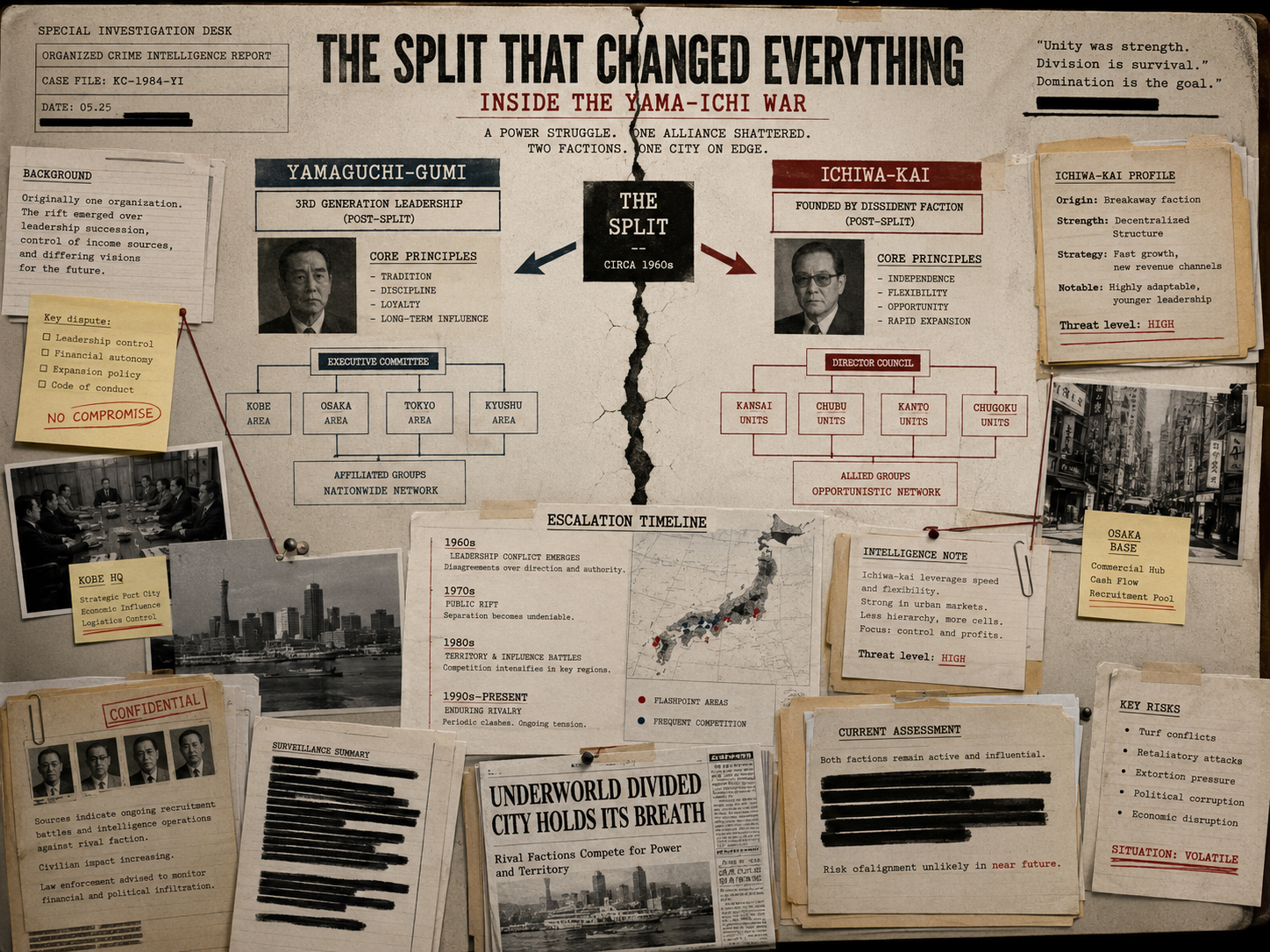
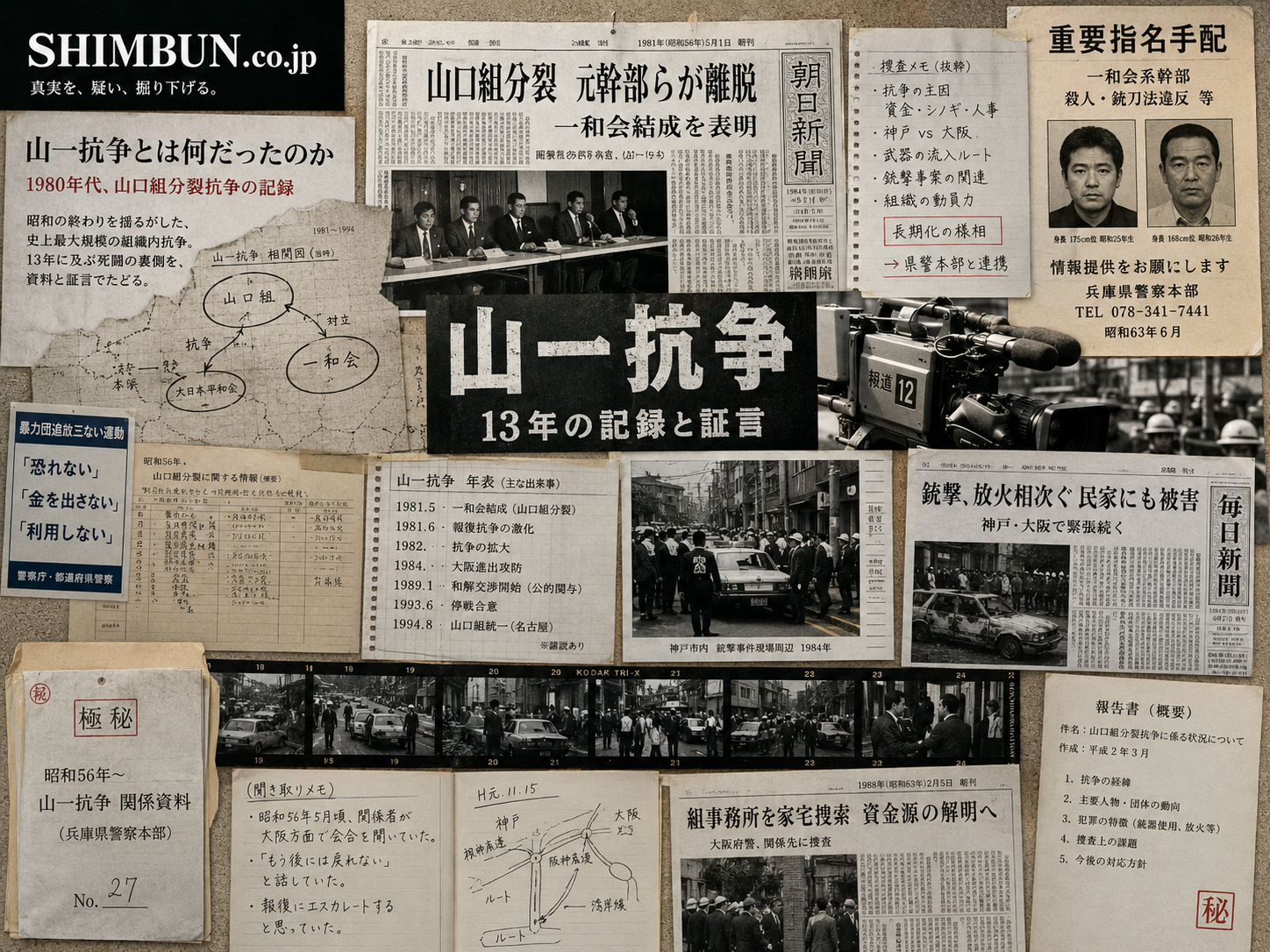
The Yama-Ichi War refers to the prolonged conflict that followed an internal split within the Yamaguchi-gumi and the rise of the rival Ichiwa-kai. At stake were leadership succession, control of income streams, organizational direction, and the future of one of Japan’s most powerful criminal networks.
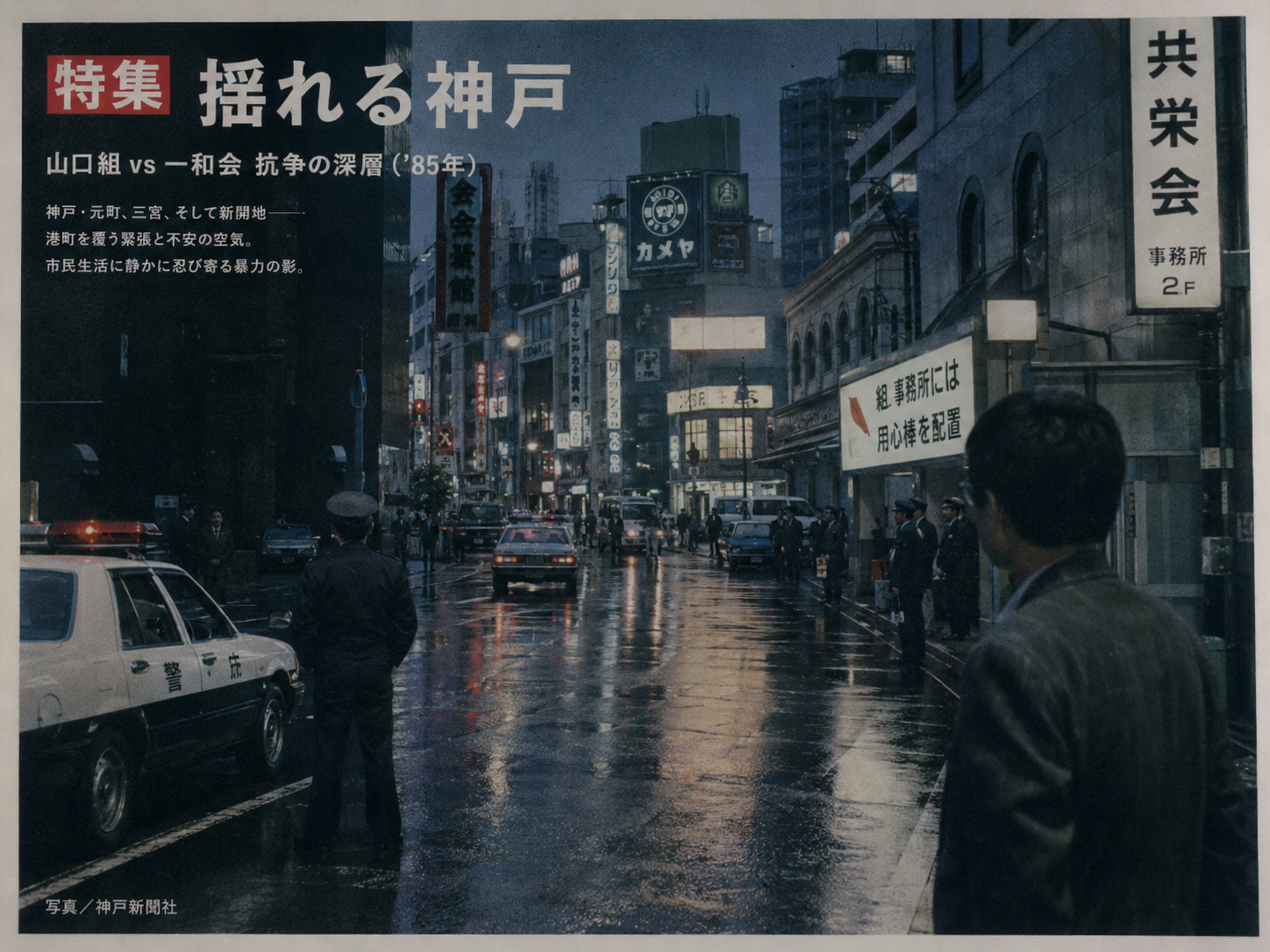
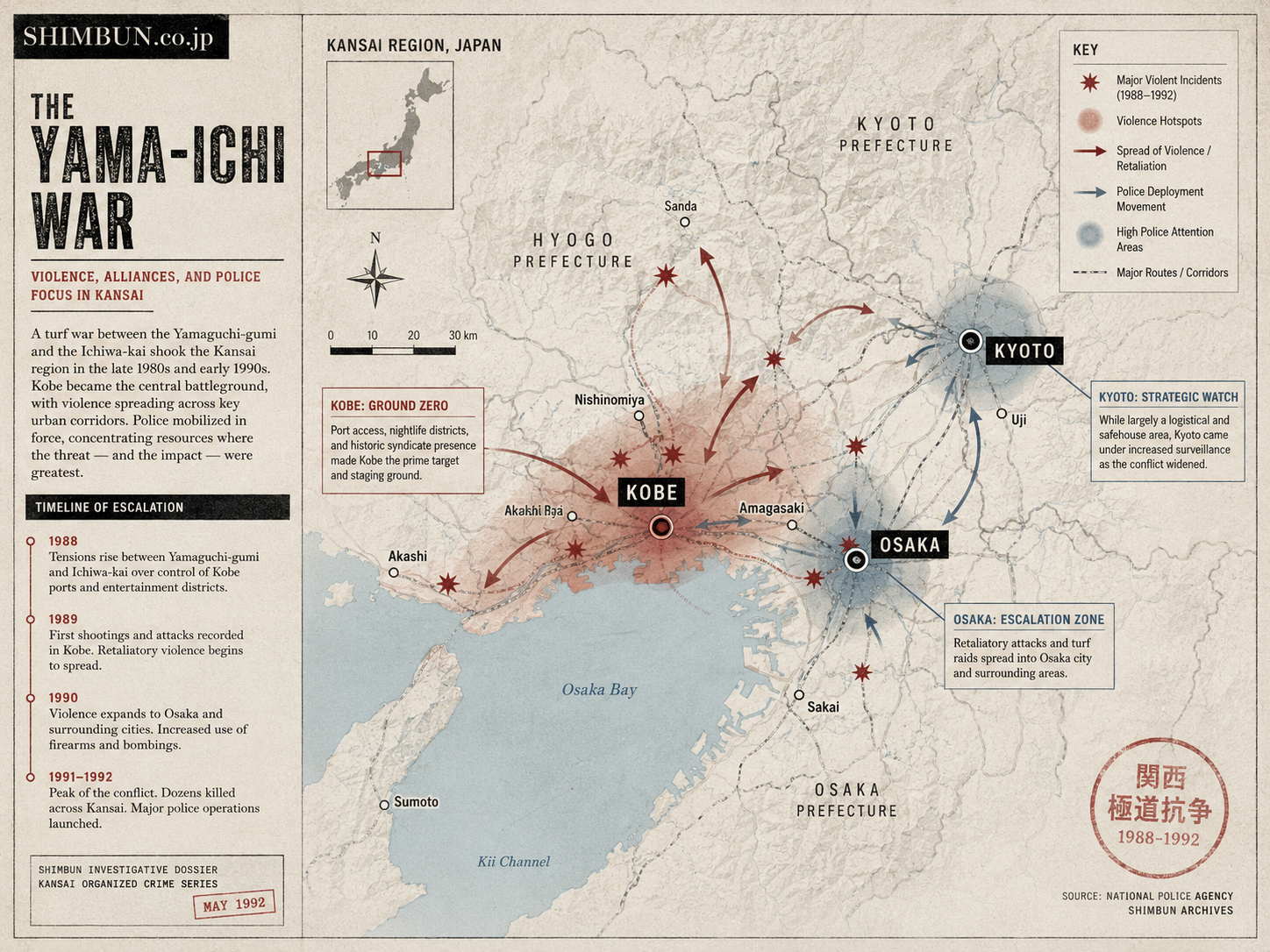
Kobe was the most charged stage for the conflict. It was a port city of logistics, nightlife, labor, construction, and layered local influence. When organized violence entered that environment, the conflict became more than a gang problem. It became a civic problem, visible in patrols, warnings, press coverage, and altered daily habits.
Why It Belongs as Case File 008
Case 001 was perfect-crime mythology. Case 002 was corporate extortion. Case 003 was a modern cold case. Case 004 was postwar justice. Case 005 was political corruption. Case 006 was urban terrorism. Case 007 was disaster and institutional failure. Case 008 is organized crime and public order.
This file matters because it shows how Japan’s long ambiguity toward the yakuza began to crack. For years, criminal organizations could be treated as a tolerated social fact. But a long conflict that disrupted business, public confidence, and local safety made that ambiguity harder to sustain.
Four archive axes
1Succession conflict and organizational split
2Retaliation and intimidation across Kobe and Kansai
3Police mobilization and public pressure
4A turning point in how Japan framed anti-gang policy
Timeline
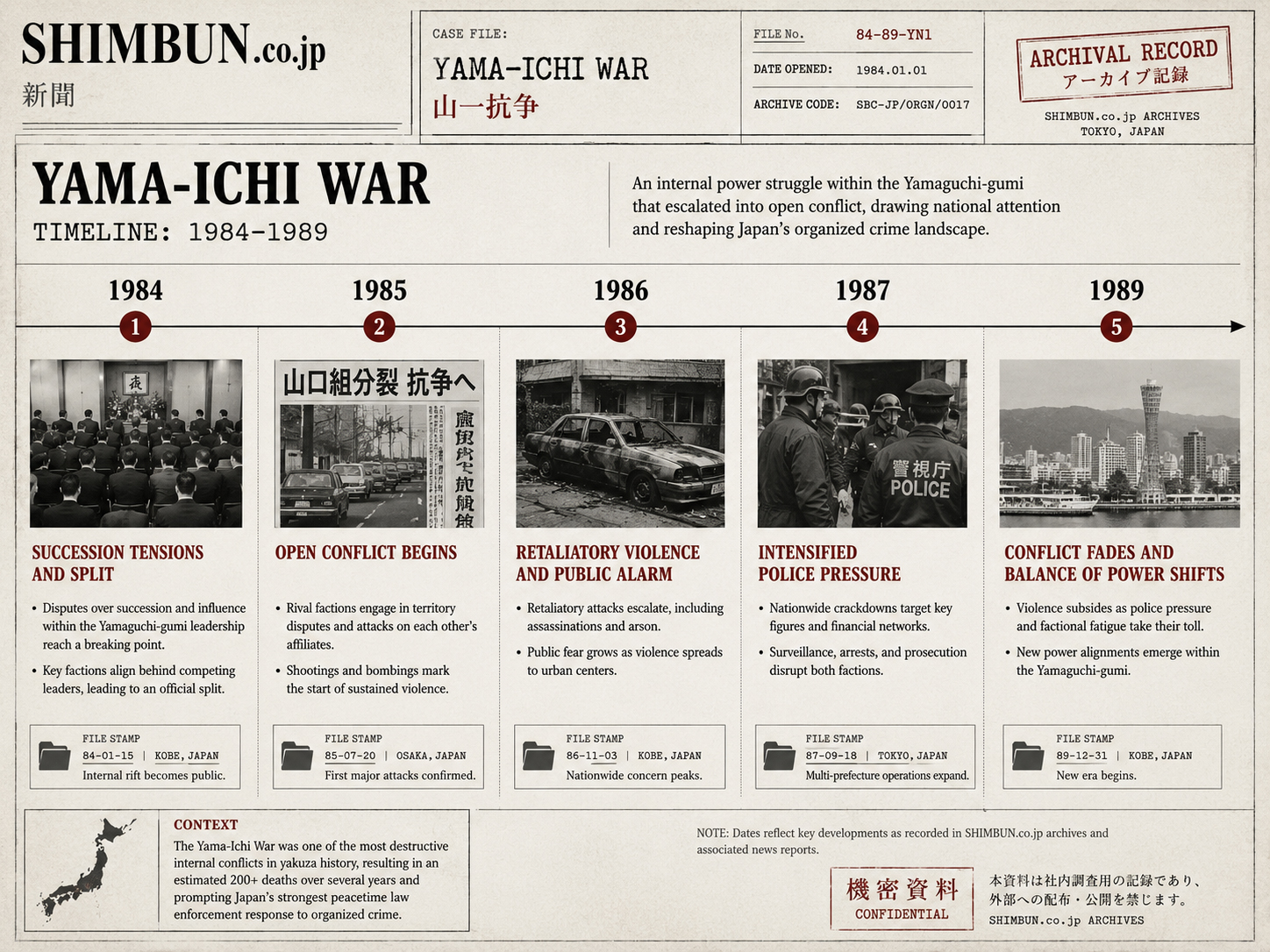
The Yama-Ichi War should be read as a chain rather than a single outbreak: tension, split, public escalation, retaliation, police pressure, and eventual decline.
Disputes over leadership, control, and direction widen the internal crack inside the Yamaguchi-gumi.
The emergence of the Ichiwa-kai turns internal tension into open organizational conflict.
Shootings, intimidation, and fear reshape the urban atmosphere of Kobe and surrounding areas.
Broad enforcement pressure targets money, locations, networks, and mobility across multiple prefectures.
Violence eases, but the deeper legacy remains: how should organized crime be handled in public life?
Police, Society, and Media
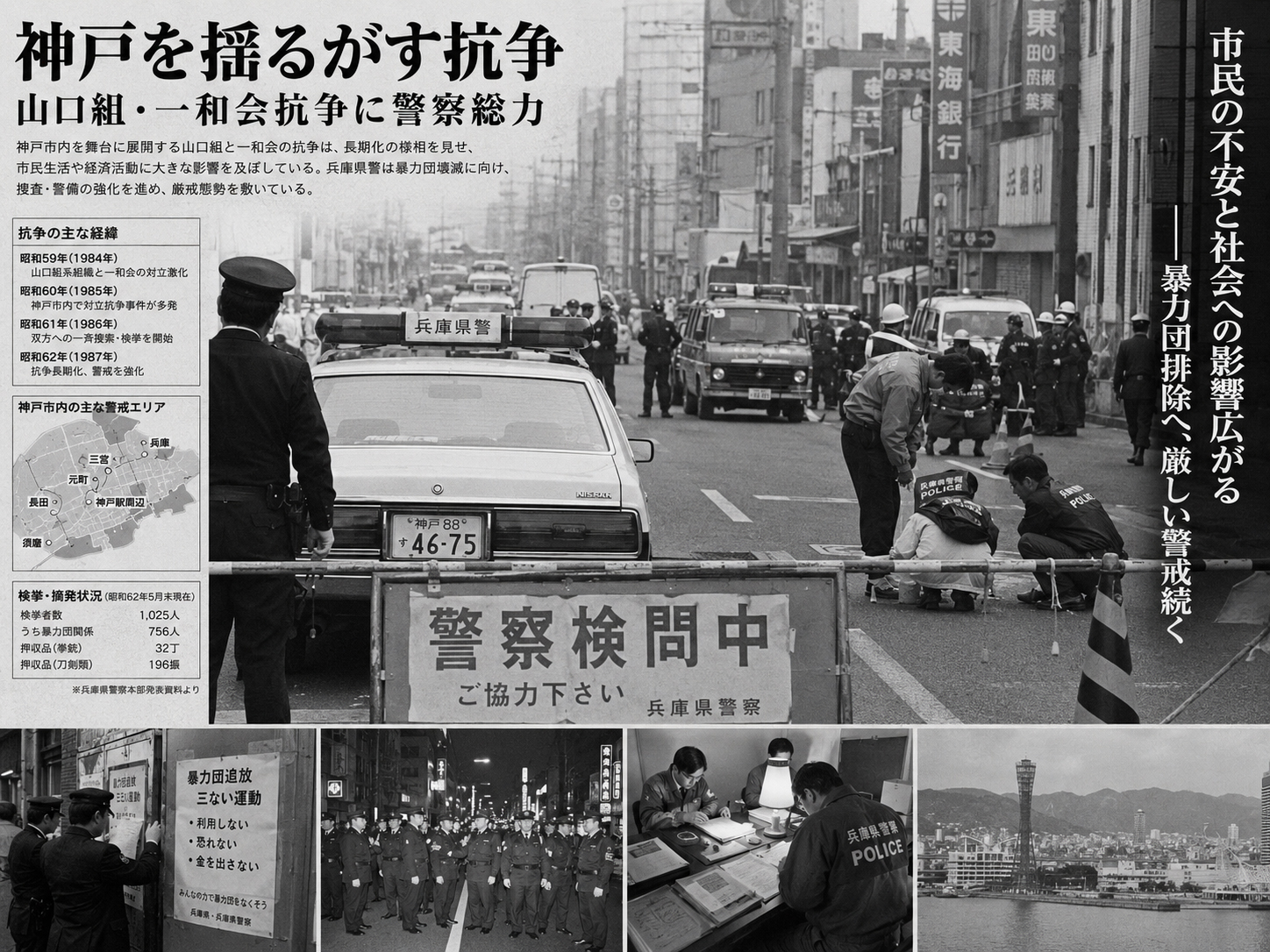
What defined the Yama-Ichi War was not violence alone, but the surrounding machinery of response: checkpoints, patrols, raids, seizures, inter-prefectural coordination, and visible “anti-gang” messaging. Organized crime seemed underground, yet both the conflict and the crackdown transformed public space.
For ordinary people, the meaning of the conflict was concrete: streets to avoid, businesses under pressure, late returns home, rumors that changed behavior, and the sense that a city’s confidence had narrowed. That accumulation helped erode public tolerance for the social presence of the yakuza.
Memory and Legacy
The Yama-Ichi War was more than an underworld feud. It showed how a major criminal split could reshape a city’s mood, test police institutions, and feed later efforts to draw a sharper line between society and organized crime.
Case File 008 exists not to make the yakuza look dramatic, but to record how easily organized violence can move near ordinary life—and how hard it is to undo a long period of tolerated coexistence once it starts to fail.
Source Notes
This page draws on police materials, reporting, nonfiction accounts, organized-crime research, and historical work on postwar Kobe and Kansai. Because detailed counts, precise chronology, and factional interpretations can vary across sources, the file separates documented contours from broader interpretation.
- Police White Papers and materials from national and prefectural police agencies
- Major newspaper, magazine, and nonfiction reporting on the Yama-Ichi War
- Research on yakuza organizations, postwar Kobe, and the Kansai economy
- Administrative and legal materials on the evolution of anti-gang policy