Editorial Promise
Fukushima Daiichi should not be reduced to an anti-nuclear or pro-nuclear slogan. It was a national disaster record involving earthquake, tsunami, design, regulation, corporate decision-making, government response, evacuation, public communication, decommissioning, and memory.
SHIMBUN.co.jp treats this case not to assign blame through rhetoric, but to separate what happened, which assumptions failed, what institutions knew, and what society has struggled to learn.
これは、自然災害だけではない。前提が壊れた事故だった。
The Shape of the Case
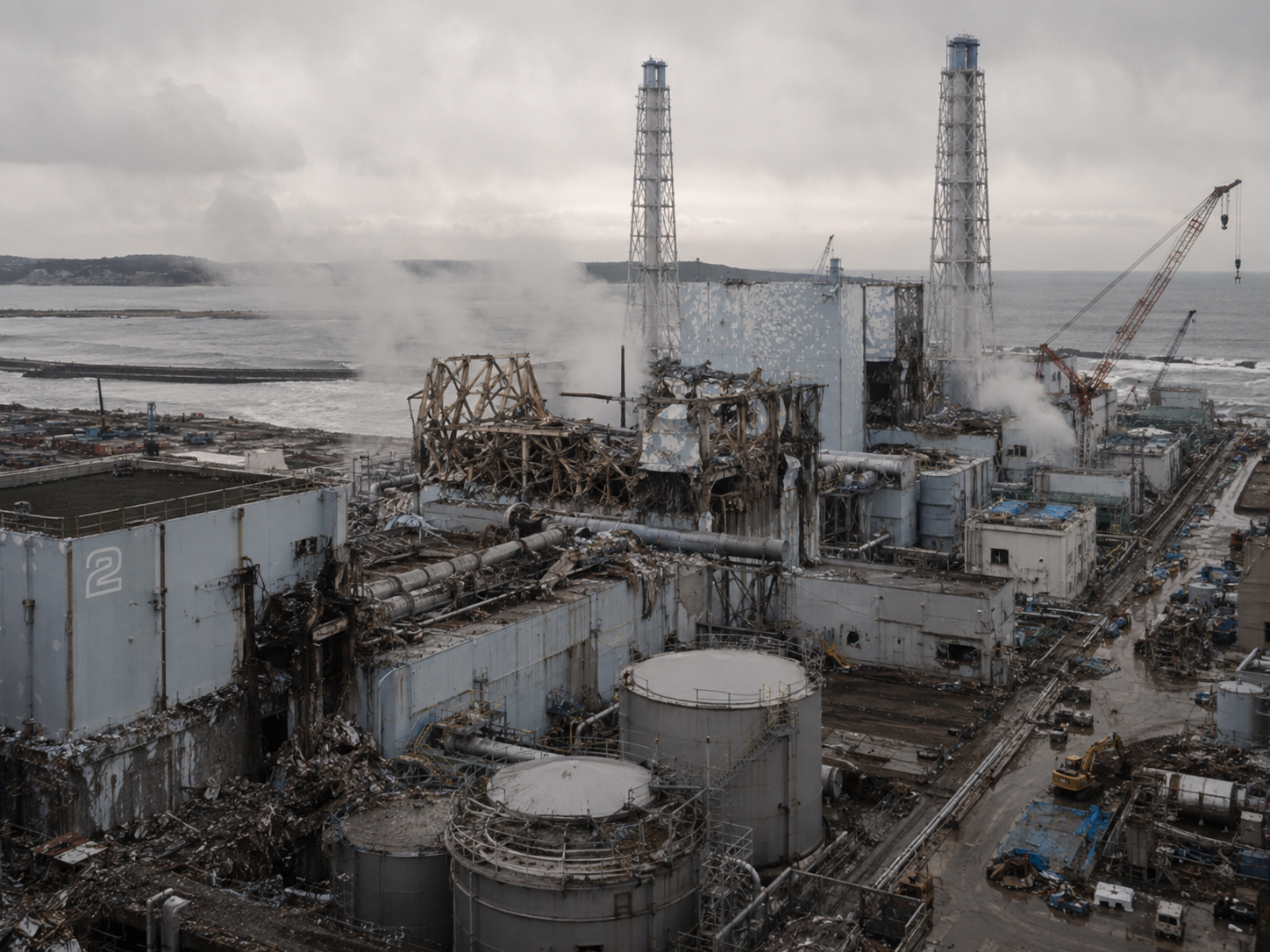
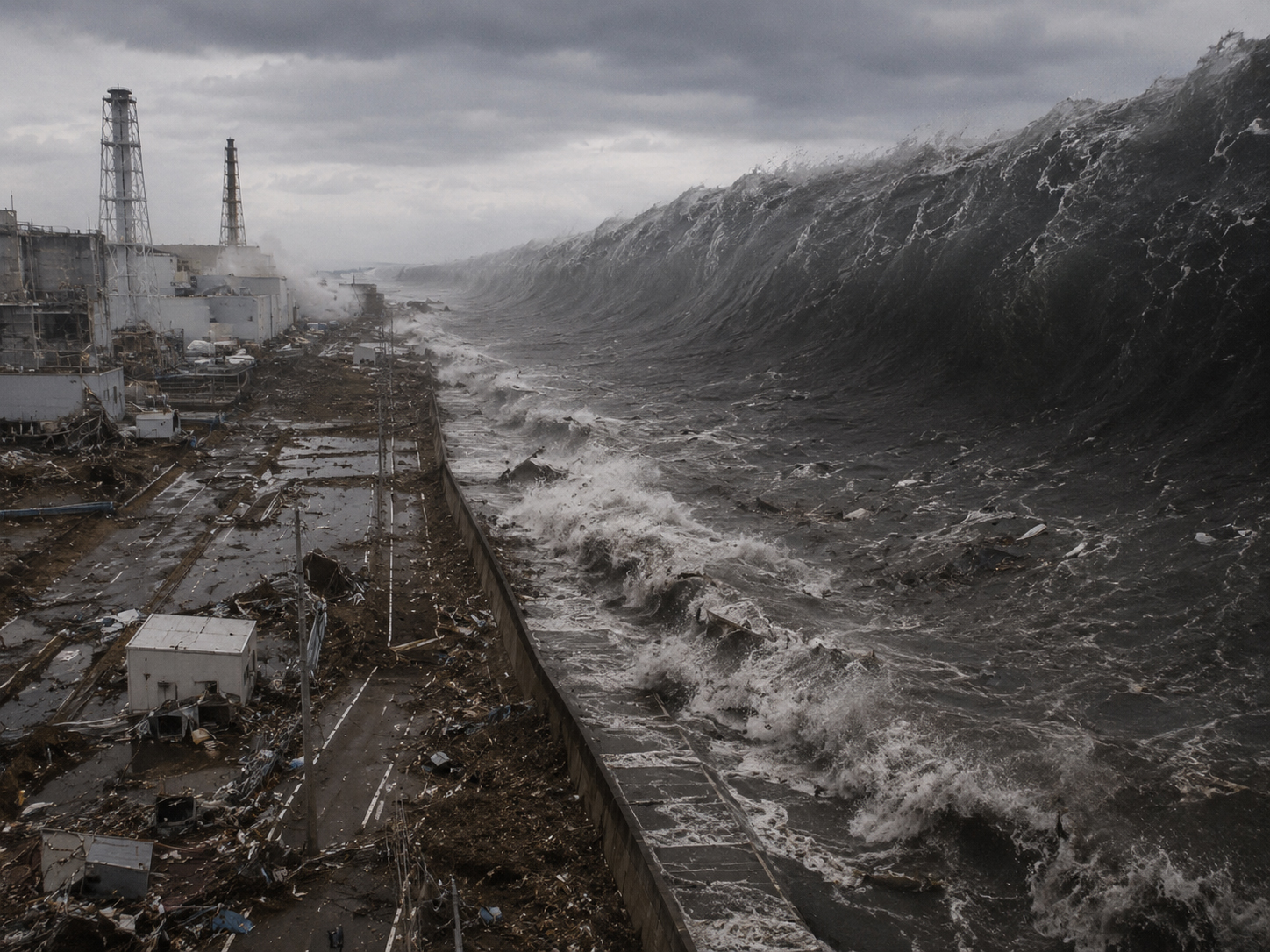
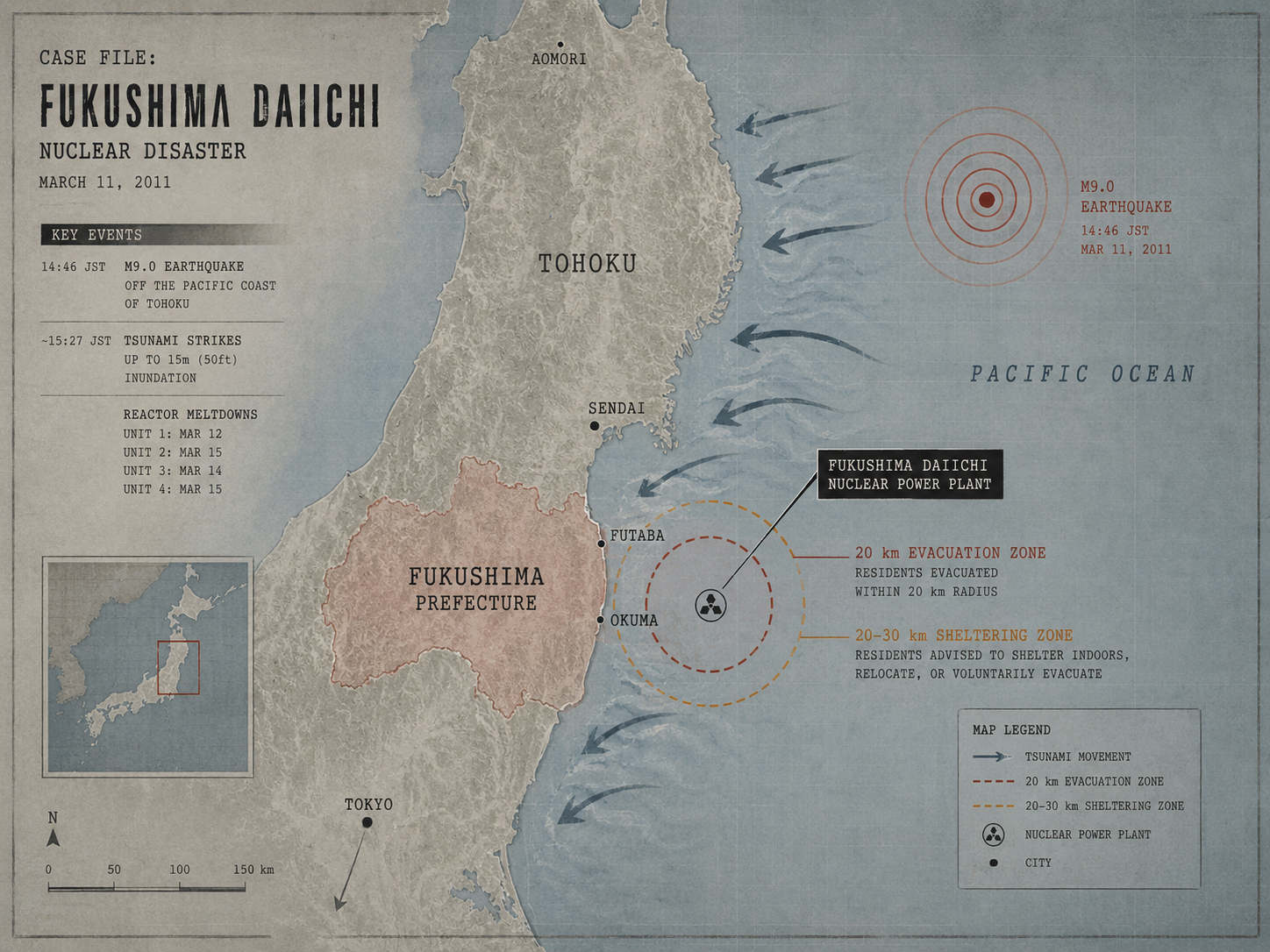
On the afternoon of March 11, 2011, the Great East Japan Earthquake struck off the Pacific coast of Tohoku. The tsunami that followed inundated parts of the Fukushima Daiichi site. Loss of external and emergency power made cooling increasingly difficult, and the crisis moved into core damage, fuel melting, hydrogen explosions, radioactive releases, and evacuation orders.
The case cannot be closed by saying “unexpected tsunami.” It exposed assumptions about nuclear safety, the relationship between operators and regulators, crisis communication, evacuation planning, public trust, and the long social cost of technological disaster.
Why It Belongs as Case File 007
Case 001 was the mythology of the perfect crime. Case 002 was corporate extortion. Case 003 was a modern forensic cold case. Case 004 was postwar justice. Case 005 was political corruption. Case 006 was urban terrorism. Case 007 is a disaster-and-system case.
Fukushima Daiichi is not a normal crime file. But it is absolutely a SHIMBUN case file because it asks about responsibility, foreseeability, public communication, evacuation, regulation, corporate judgment, and national memory.
Four archive axes
1Earthquake, tsunami, and station blackout
2Core damage, hydrogen explosions, and radioactive release
3Evacuation, public information, and long-term community impact
4TEPCO, government, regulators, and the nuclear safety myth
Timeline
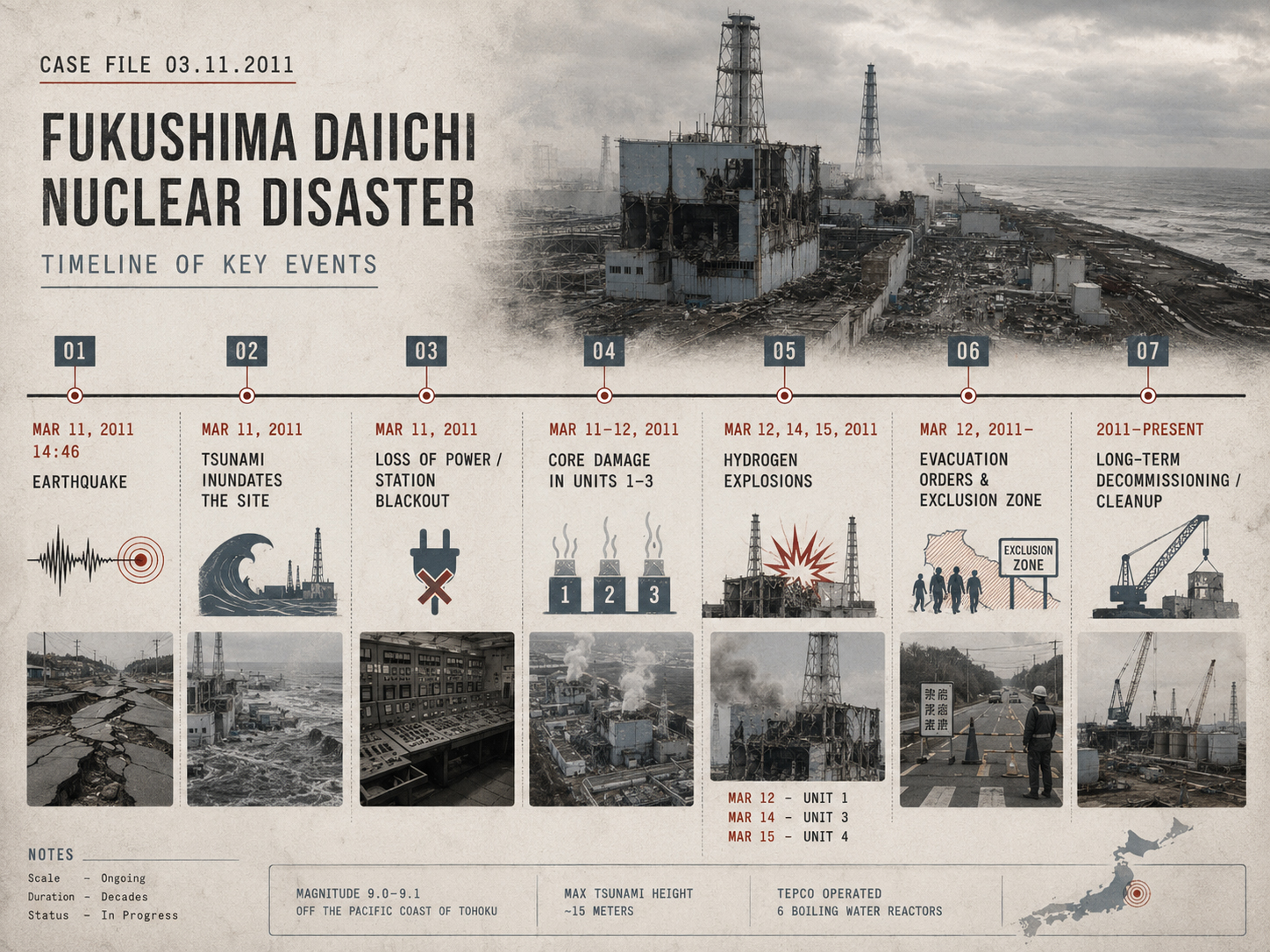
Fukushima Daiichi was not a single moment. It was a chain: earthquake, tsunami, power loss, cooling crisis, core damage, explosions, evacuation, and decades of decommissioning.
14:46
The Great East Japan Earthquake occurs. Operating reactors shut down automatically.
Evening
The tsunami inundates the site, and power loss becomes a central crisis.
Cooling becomes increasingly difficult, and core damage develops in Units 1–3.
Explosions damage reactor buildings and deepen public fear of radioactive releases.
Residents are ordered or advised to evacuate or shelter, creating long-term displacement.
Decommissioning, treated water, return policy, health anxiety, stigma, and regional recovery continue.
Evacuation and Community
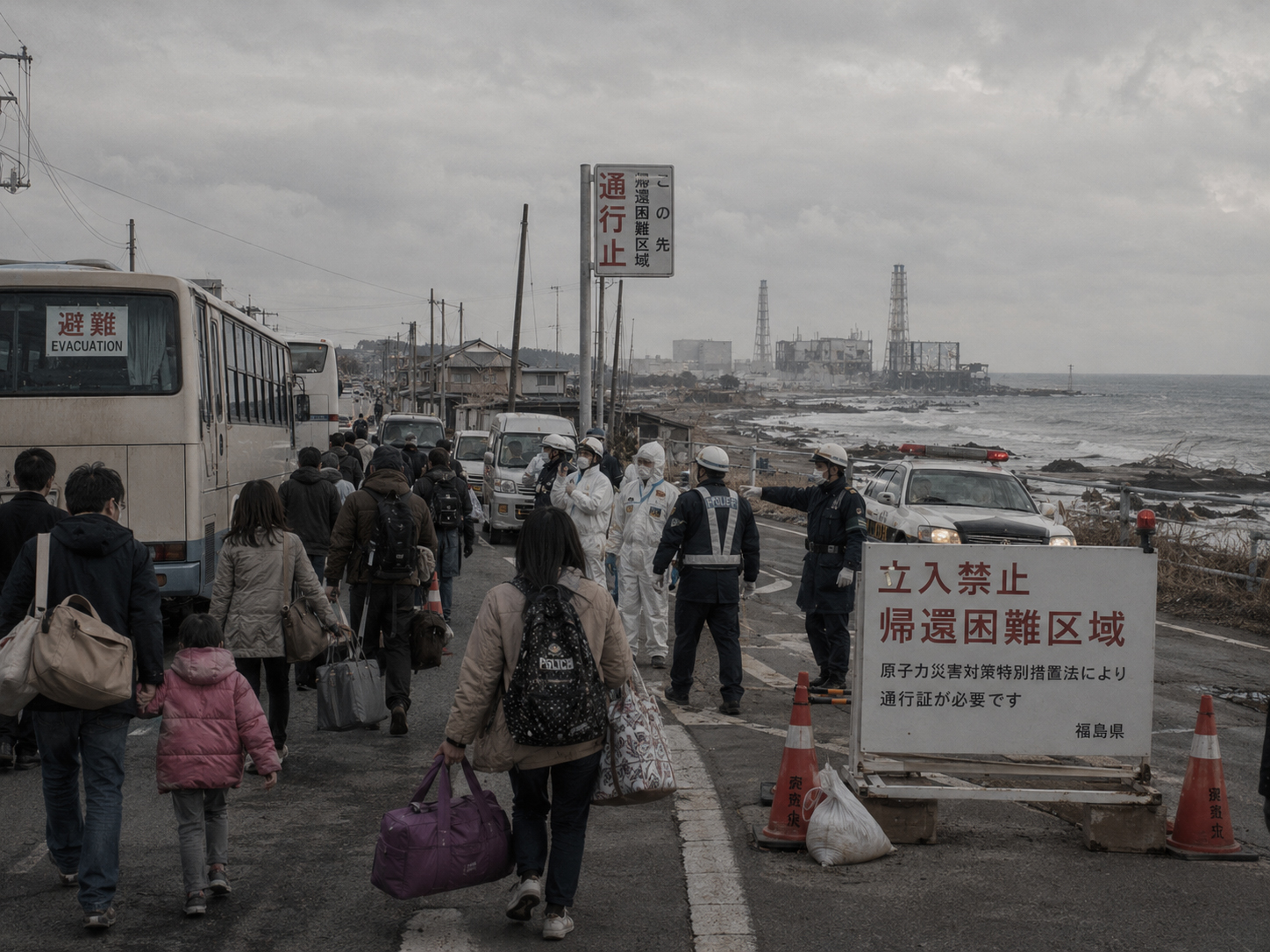
A nuclear accident does not stay inside a plant. Evacuation orders divided lives, schools, work, agriculture, fishing, rituals, graves, and places of memory. Any archive of Fukushima must record displacement and return alongside reactors and radiation.
Some returned. Some did not. Some places reopened. Some remained difficult to return to. Those choices continue beyond the technical timeline.
Media, Memory, and Public Trust
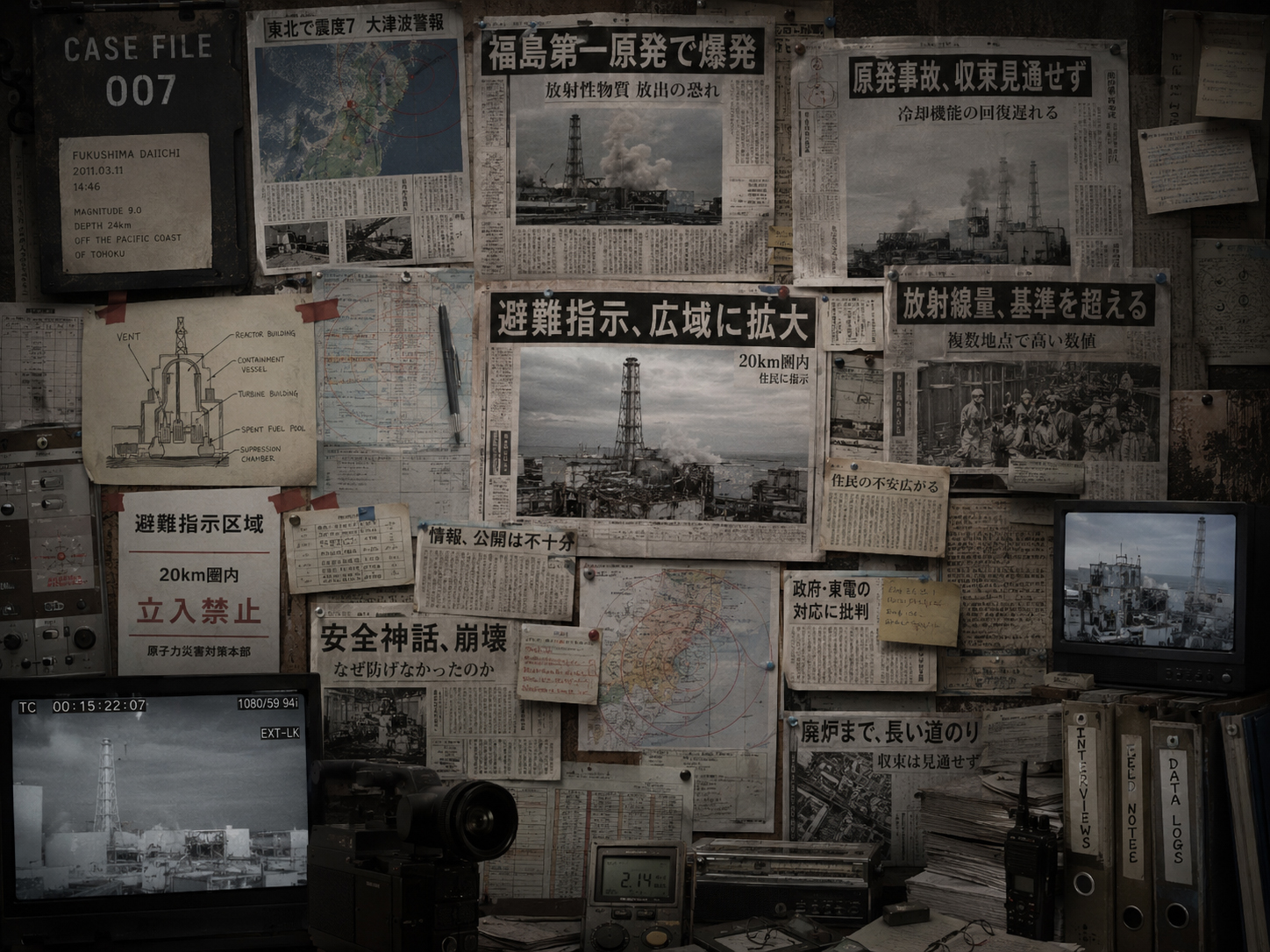
Fukushima Daiichi entered public memory through television, newspapers, government announcements, TEPCO press conferences, expert commentary, international reporting, social media, and local testimony. The public had to understand unfamiliar technical language while deciding what was safe, what was official, and what was trustworthy.
The record is not only about the past. It is evidence for how future disasters, energy policy, regulation, evacuation, science communication, and public trust should be handled.
Source Notes
This page is based on public material from the IAEA, Japanese investigation commissions, TEPCO, international agencies, research institutions, and major reporting. Where numbers or responsibility assessments differ among official reports, court records, or scholarship, the page separates confirmed facts from disputed judgments.
- IAEA “The Fukushima Daiichi Accident” and related materials
- National Diet and government investigation commission reports
- TEPCO accident-review materials
- UNSCEAR, OECD/NEA, and nuclear-safety agency assessments
- Public materials and reporting on evacuation, return, decommissioning, treated water, and regional recovery