Editorial Promise
This is not a page for consuming fear. It is a record of an attack on ordinary life: the morning train, the station platform, the staff member, the passenger, the responder, and the city.
This page does not describe how to make or use chemical agents. It does not glamorize Aum Shinrikyo. It focuses on confirmed facts, victims, rescue, routes, public safety, investigation, and memory.
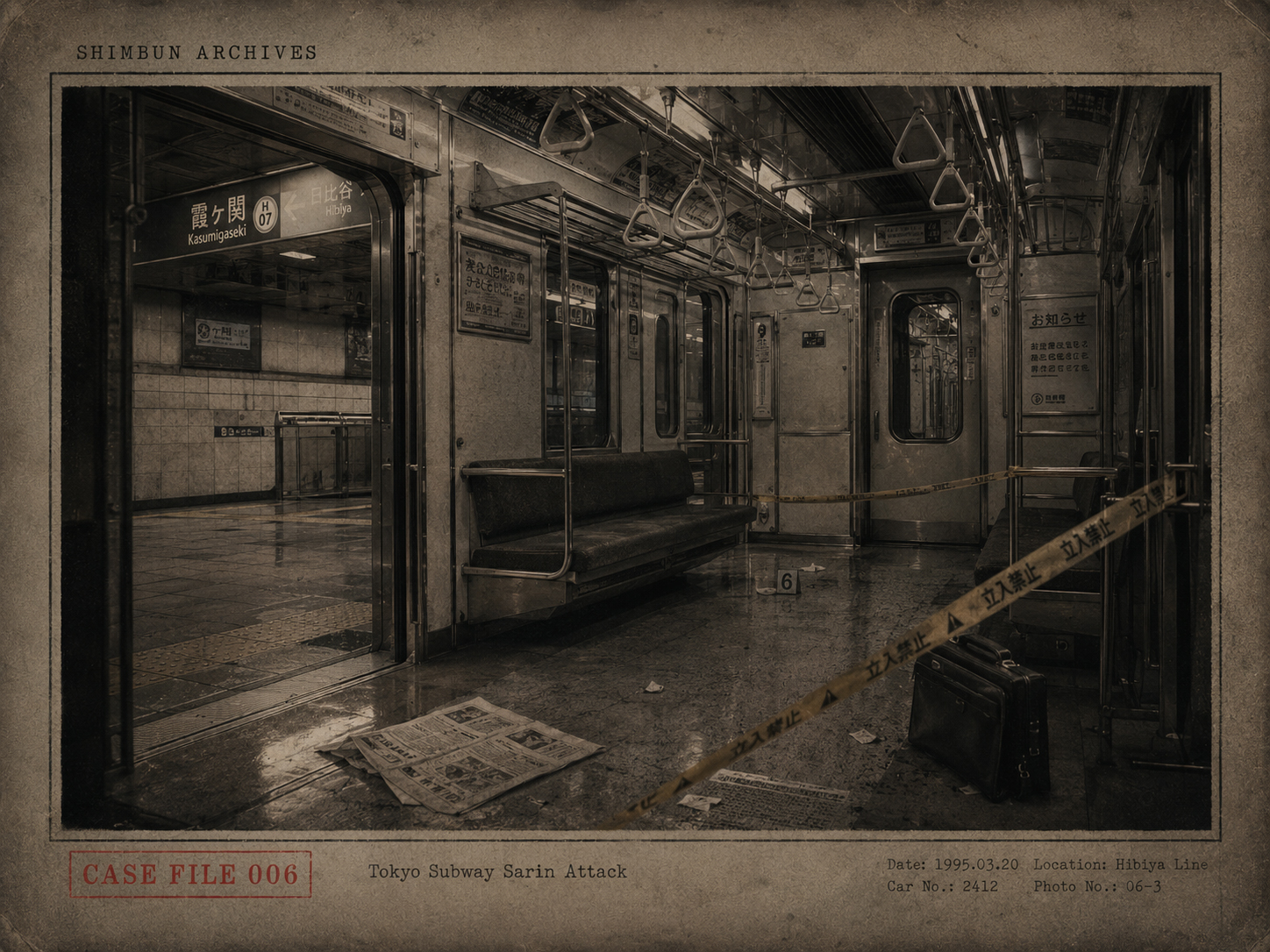
The Shape of the Case
On the morning of March 20, 1995, sarin was released on Tokyo subway trains. The Public Security Intelligence Agency states that the chemical weapon was dispersed in five train cars on three subway lines that passed through Kasumigaseki Station, causing mass casualties.
The subway is the bloodstream of the city. Station staff, passengers, emergency workers, hospitals, police, firefighters, and journalists were all thrown into a situation where the cause was not immediately clear. The attack became a turning point in Japanese public safety, crisis management, religious-organization monitoring, and counterterrorism.
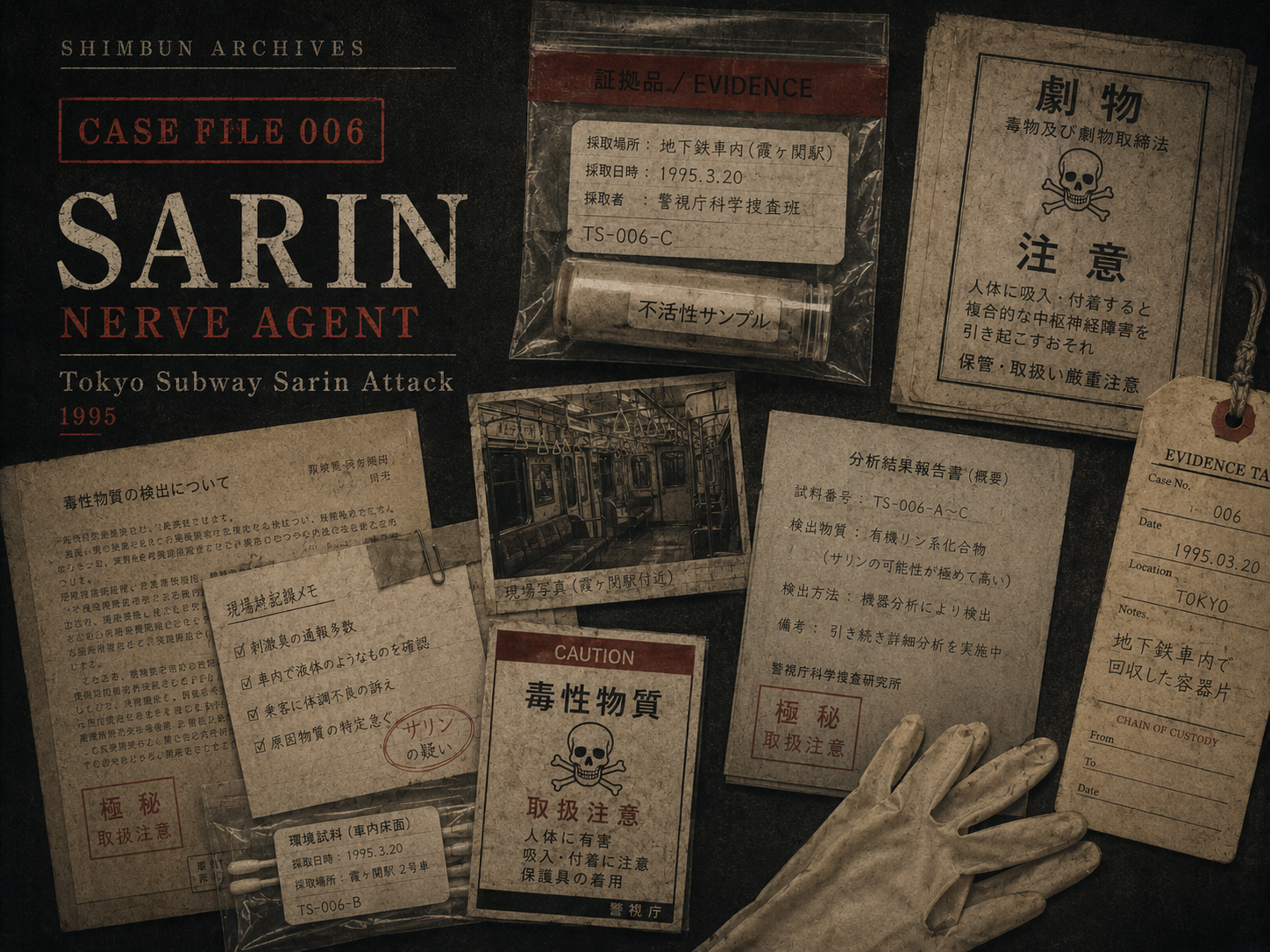
Why It Belongs as Case File 006
Case 001 was the mythology of the perfect crime. Case 002 was corporate extortion and media fear. Case 003 was a modern forensic cold case. Case 004 was postwar justice and poison. Case 005 was political corruption and power. Case 006 is a public-space terrorism case.
The attack belongs in the archive because it crosses many categories: crime history, religious terrorism, urban transit, emergency medicine, state response, media ethics, survivor memory, and public preparedness.
Four archive axes
1The everyday space of the morning commute
2Chemical terror in an urban transit network
3Emergency response by station staff, responders, hospitals, police, and fire services
4Investigation of Aum Shinrikyo and long-term monitoring of successor groups
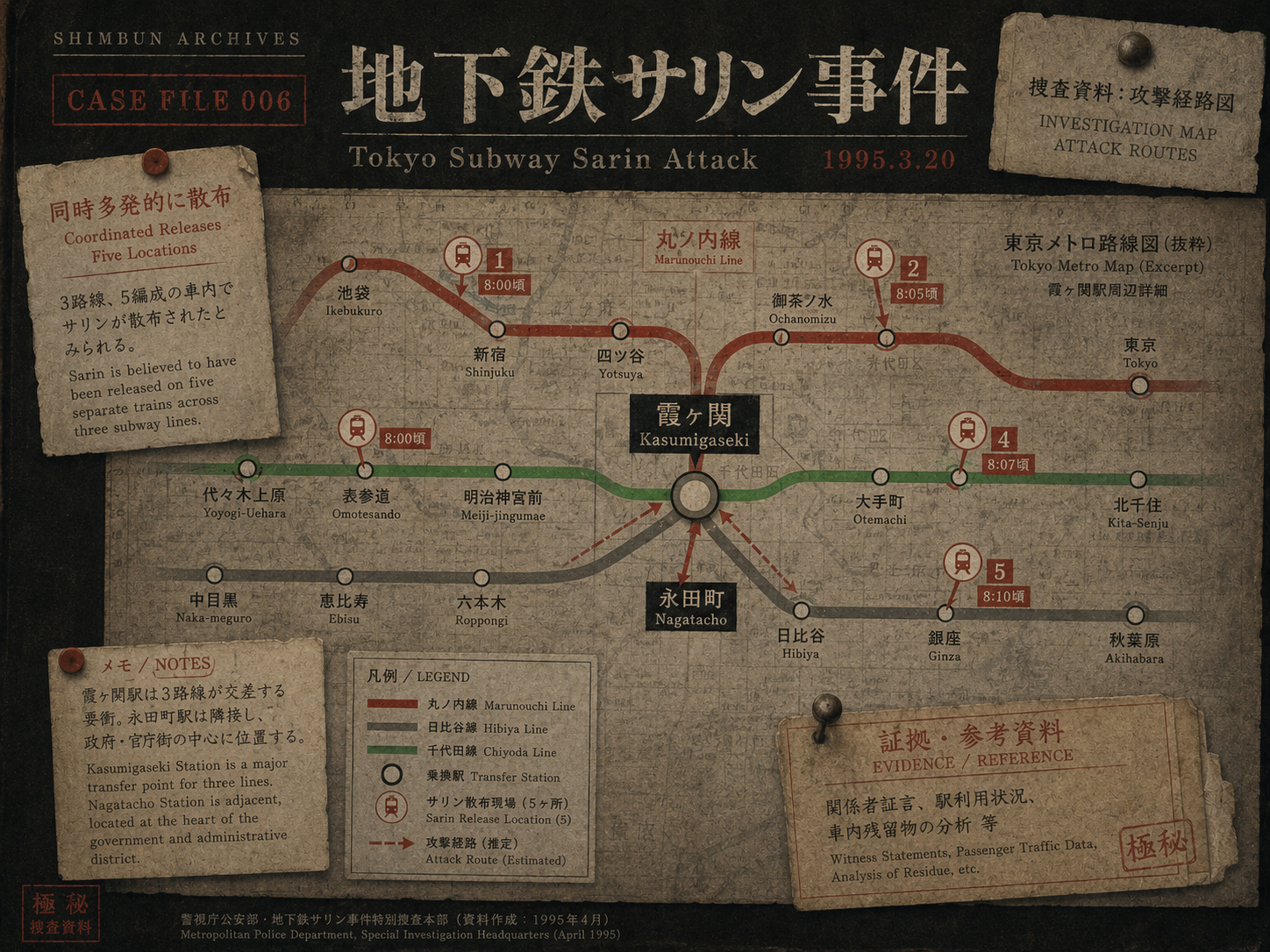
Timeline
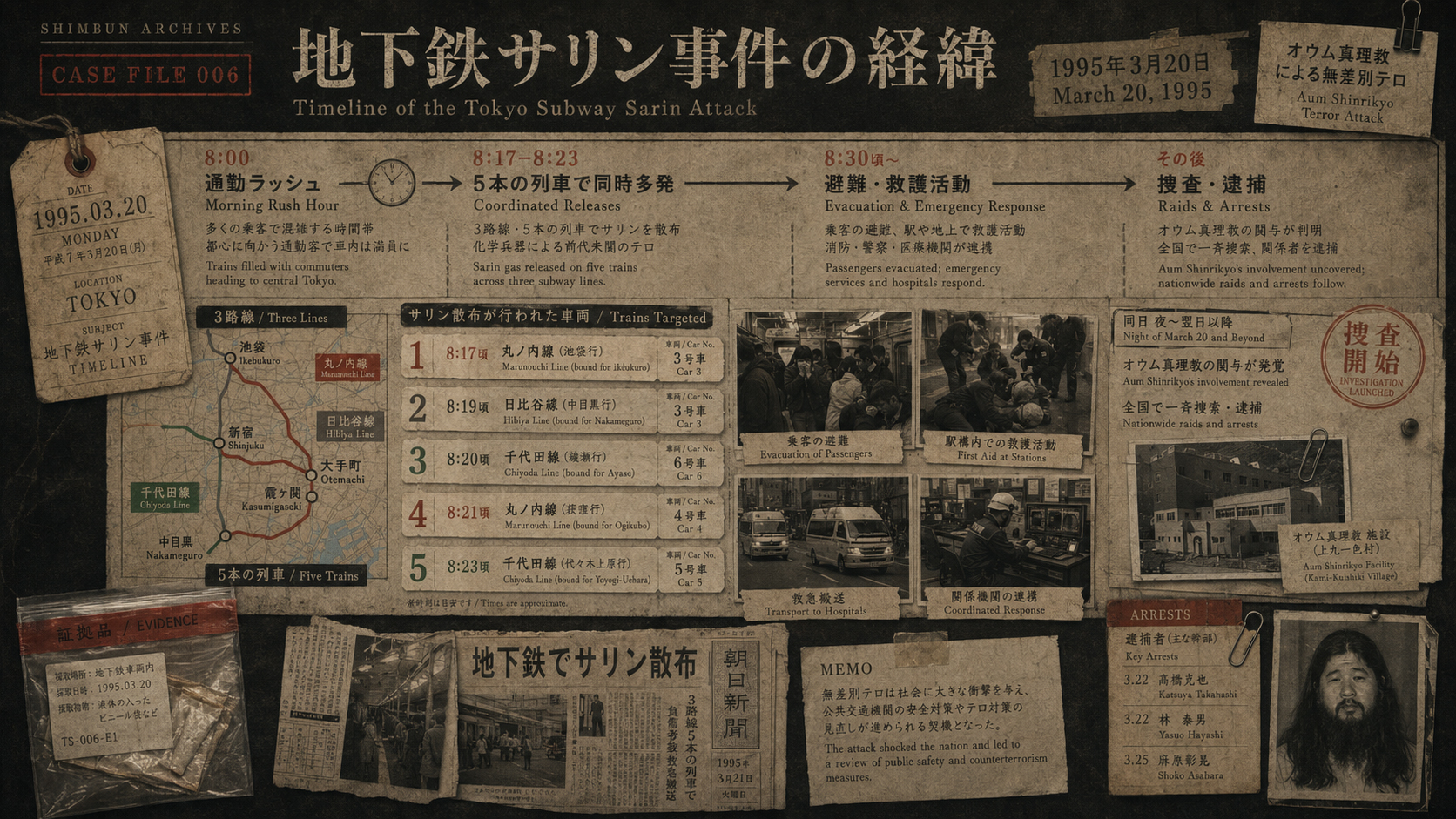
The attack occurred in a compressed morning window. Its consequences have lasted for decades. The timeline includes the attack, evacuation, emergency response, raids, arrests, public memory, and long-term lessons.
Morning
Subway trains carried commuters into central Tokyo.
Sarin was released on five train cars across three subway lines.
Station staff, passengers, emergency workers, firefighters, police, and hospitals responded.
Searches, arrests, and prosecutions involving Aum Shinrikyo followed.
Counterterrorism, transit safety, victim support, and successor-group monitoring became long-term issues.
The case continues to ask how society remembers terrorism without reproducing fear.
Response and Rescue
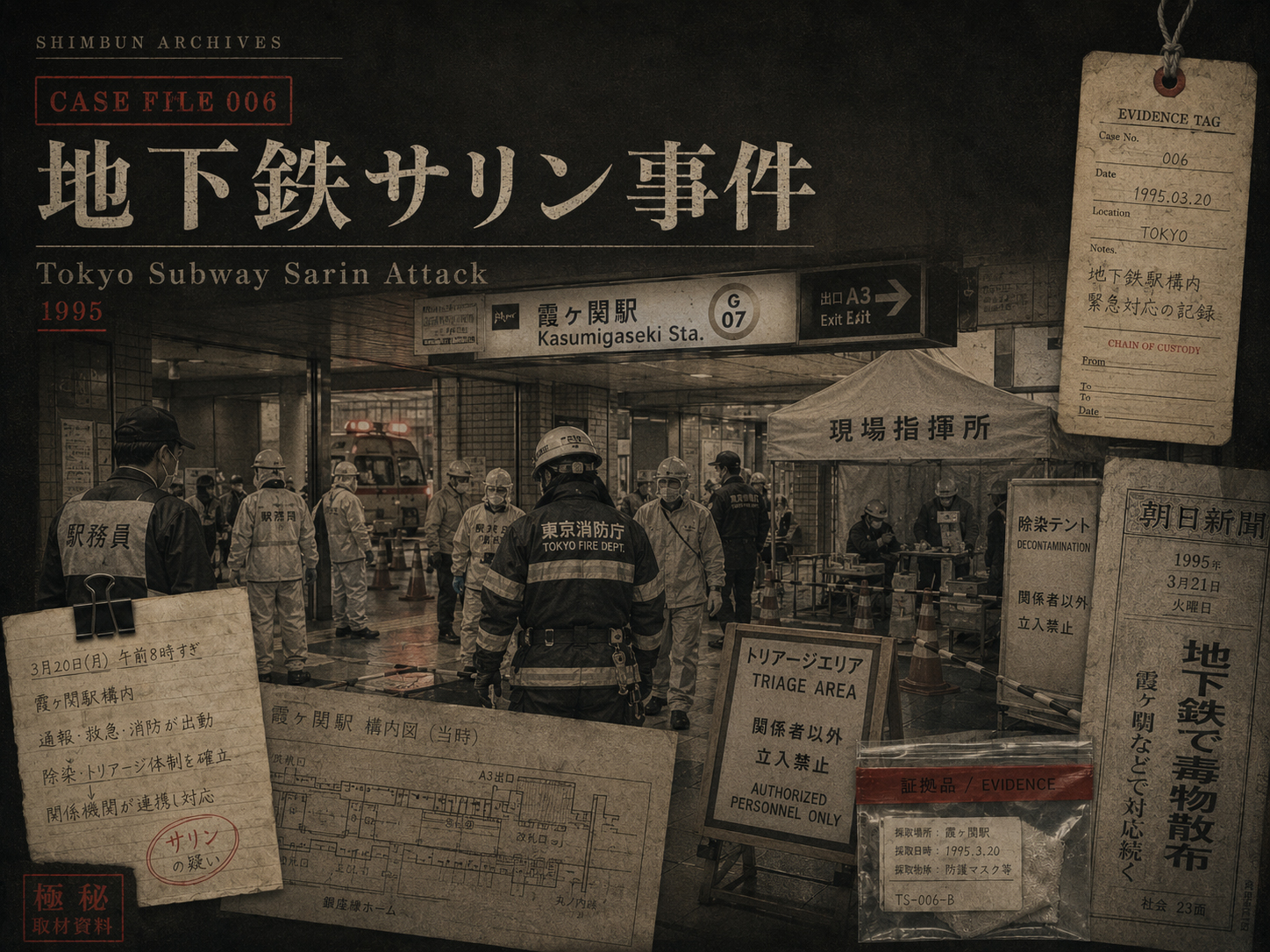
In the immediate aftermath, passengers, subway staff, emergency responders, firefighters, police, and medical workers faced a crisis whose cause was not immediately obvious. The incident exposed the difficulty of responding to an urban chemical attack in real time.
Any archive of this case must include those who helped: station workers who guided people, passengers who supported one another, responders who entered uncertain scenes, and hospitals that received large numbers of patients.
Media, Memory, and Public Safety
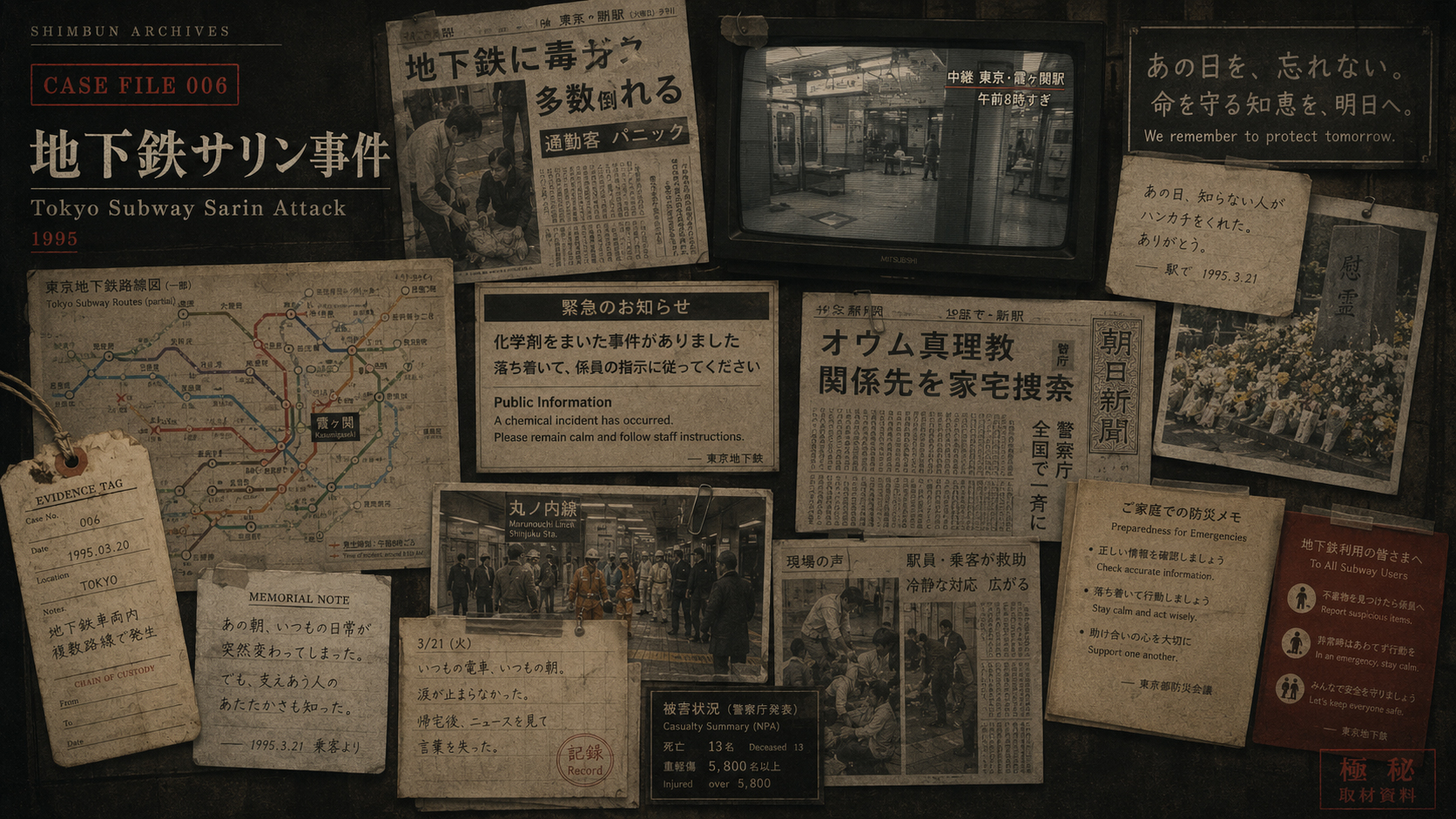
The Tokyo Subway Sarin Attack entered Japanese memory through television, newspapers, trial reporting, documentaries, survivor testimony, and memorial practice. It was a story about Aum Shinrikyo, but also about whether society recognized danger early enough.
Media can spread fear. It can also preserve witness, verify facts, and keep victims from disappearing into abstraction. SHIMBUN.co.jp treats this case as a record of safety and memory, not a spectacle of terror.
Source Notes
This page is based on public materials from Japanese security and police agencies, public reporting, and victim-support documentation. It deliberately excludes chemical-agent methods and cult-glorifying detail.
- Public Security Intelligence Agency materials on the Tokyo Subway Sarin Gas Attacks
- National Police Agency public materials on Aum Shinrikyo-related crimes and successor-group monitoring
- Public victim-relief and victim-support materials
- Major anniversary reporting used only where facts can be separated from fear-driven description.