Overview
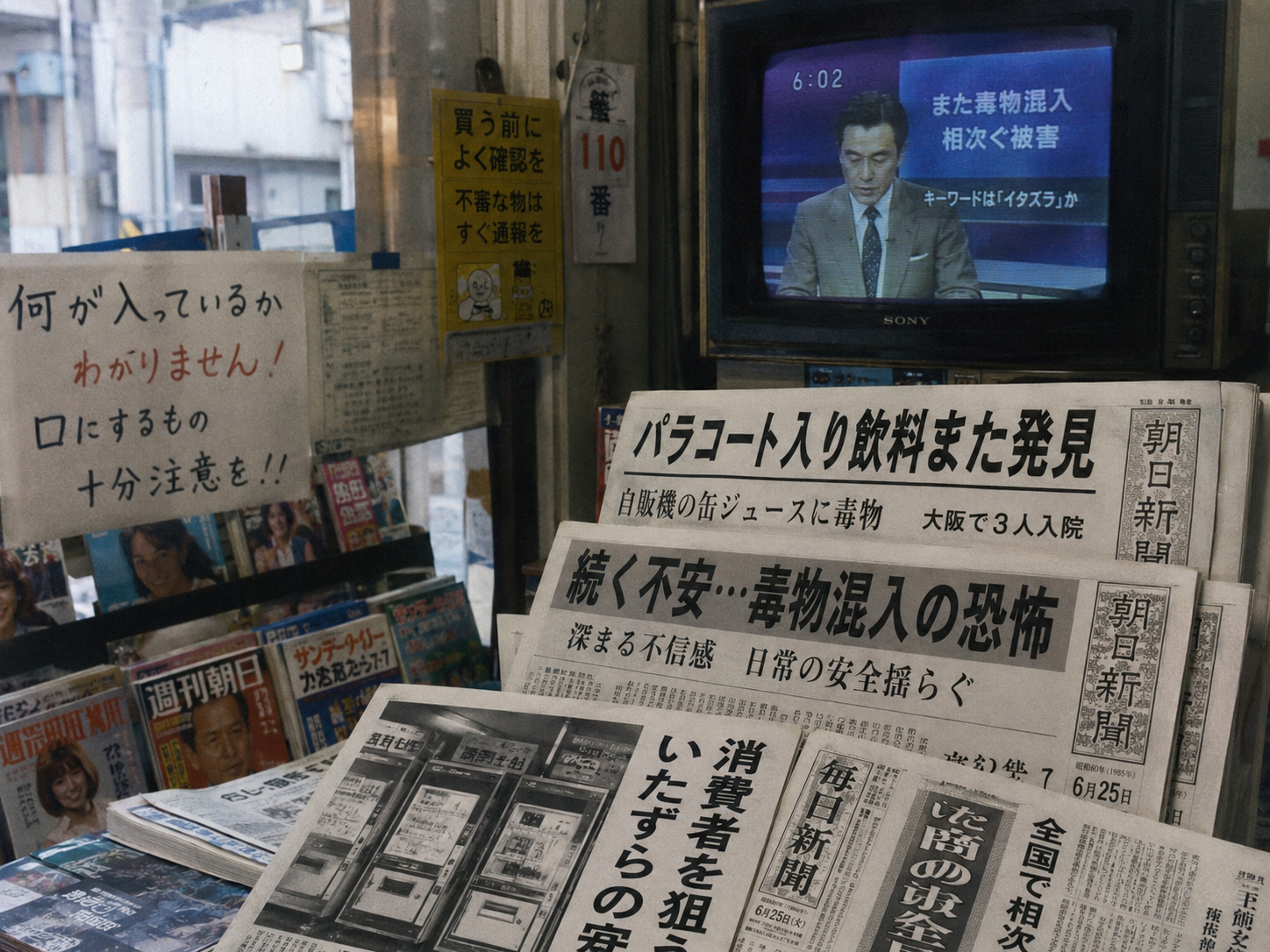
The terror of the case was not merely that the poison was invisible. It was that the object looked ordinary. Buying, retrieving, drinking: these small acts usually require no suspicion. In 1985, that assumption broke.
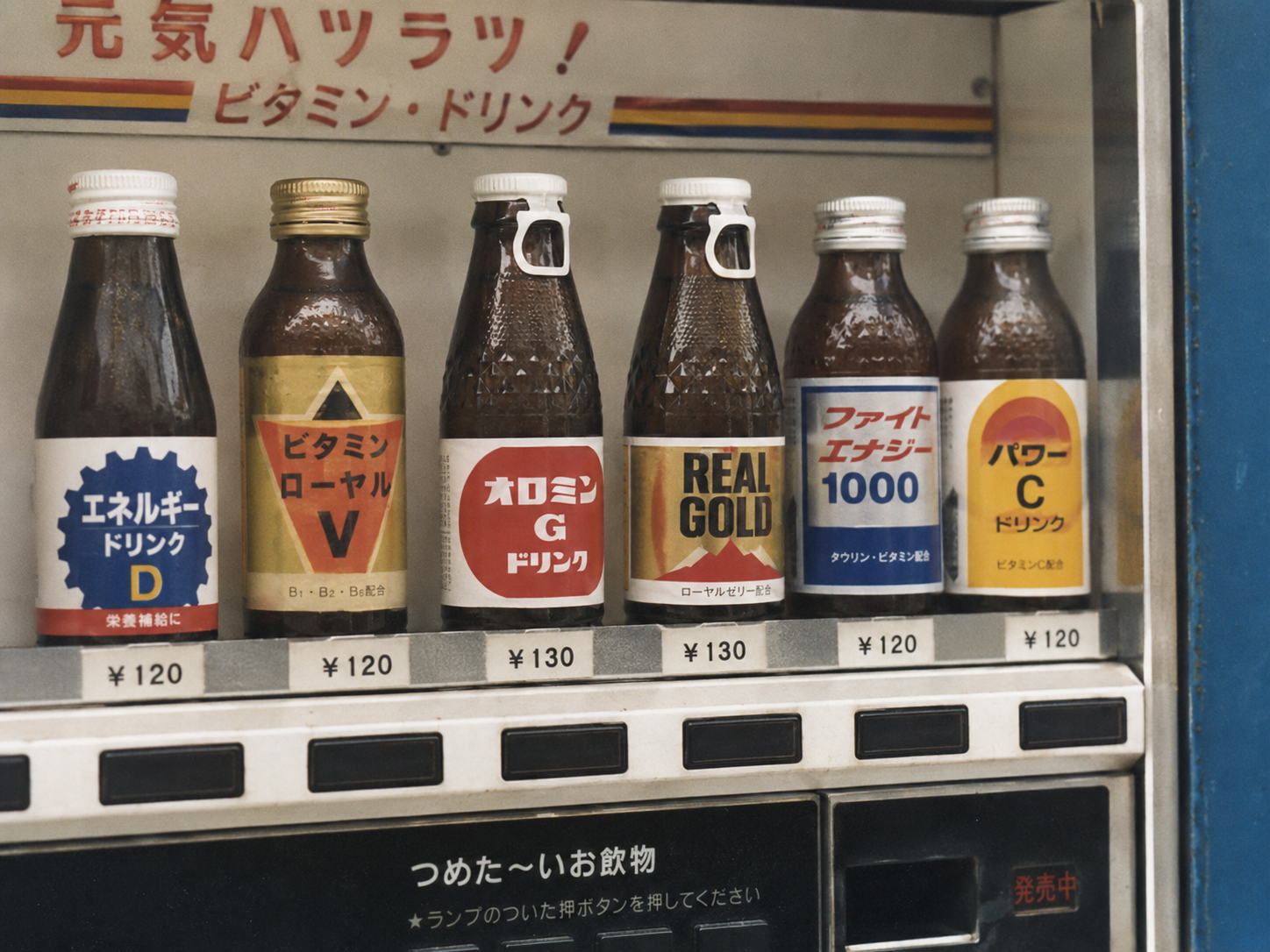
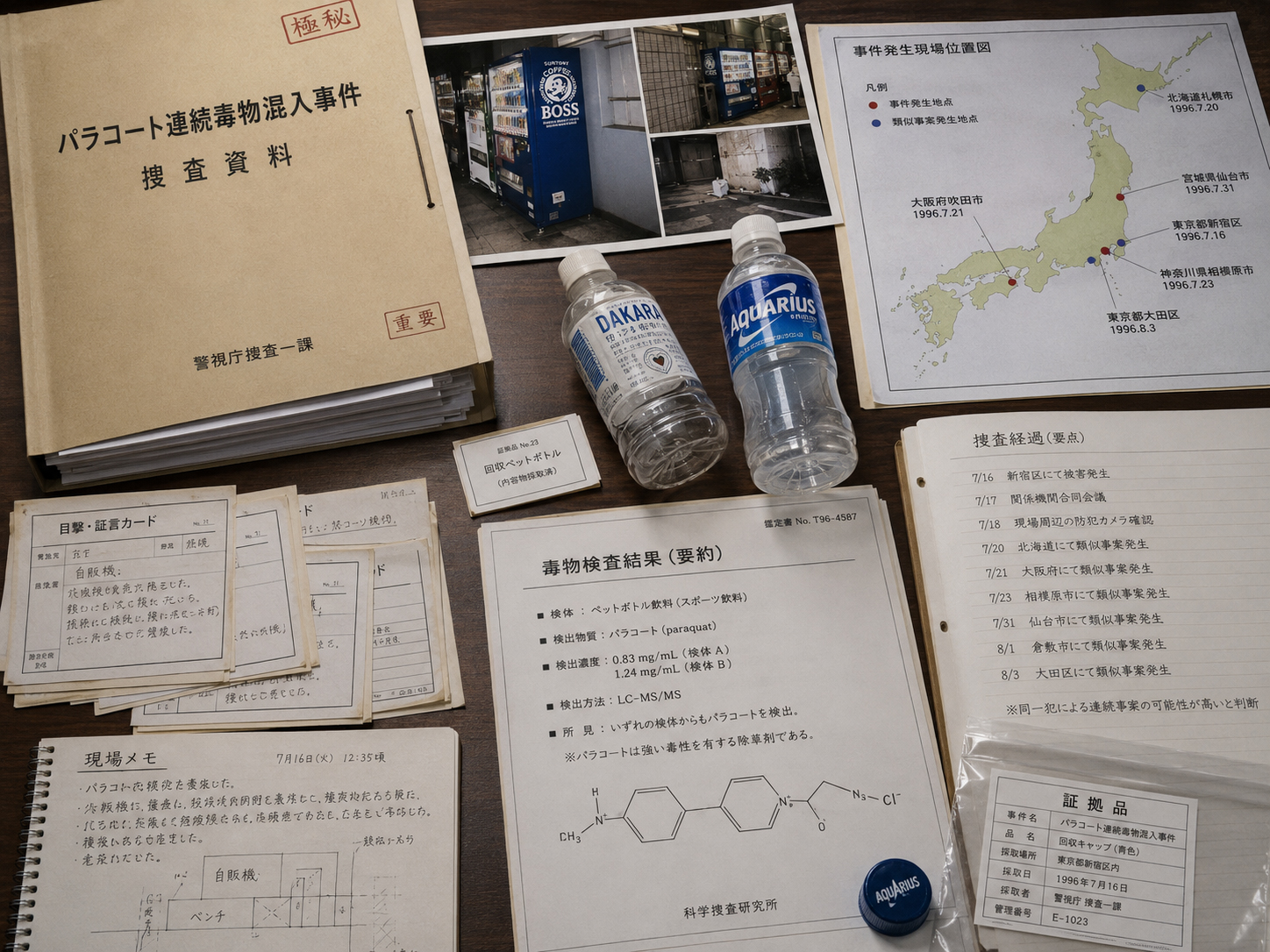
Later case summaries commonly place the series between April 30 and November 24, 1985, with poisonings clustered in western and central Japan and also reported in the Tokyo area. Most summaries identify paraquat dichloride as the main poison and note that one case is often described as involving diquat. The bottles were not exotic. They resembled the vitamin drinks, energy drinks, and soft drinks that ordinary people bought from vending machines every day.
The record is not perfectly uniform. UPI reported at least five deaths in September 1985 and ten deaths by late October; later summaries often cite 12 or 13 deaths and more than 30 poisonings. SHIMBUN treats those numbers carefully: contemporaneous reports are one layer, later compiled case lists are another.
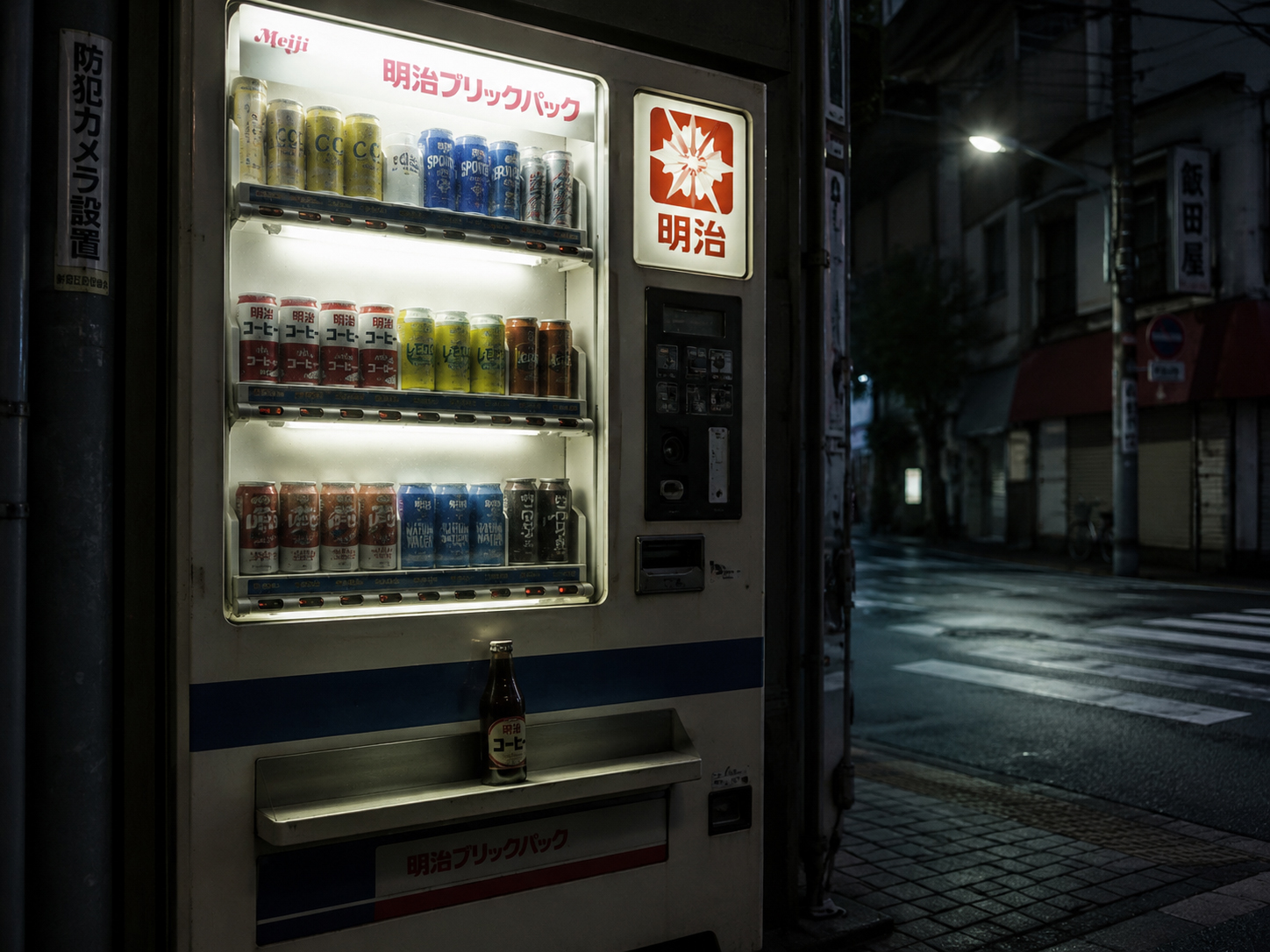
1985: the year ordinary drinks became suspect
The case remains powerful because the victims appeared to be anyone. They were not a single political or corporate target. They were people who encountered a bottle that seemed safe, plausible, and familiar.
The earliest case in many later summaries is a poisoning in Fukuyama, Hiroshima Prefecture, where a man reportedly drank an Oronamin C bottle left on or near a vending machine, became ill, and later died. The alleged trick was simple and devastating: make a poisoned drink look like a forgotten bottle or a promotional extra.
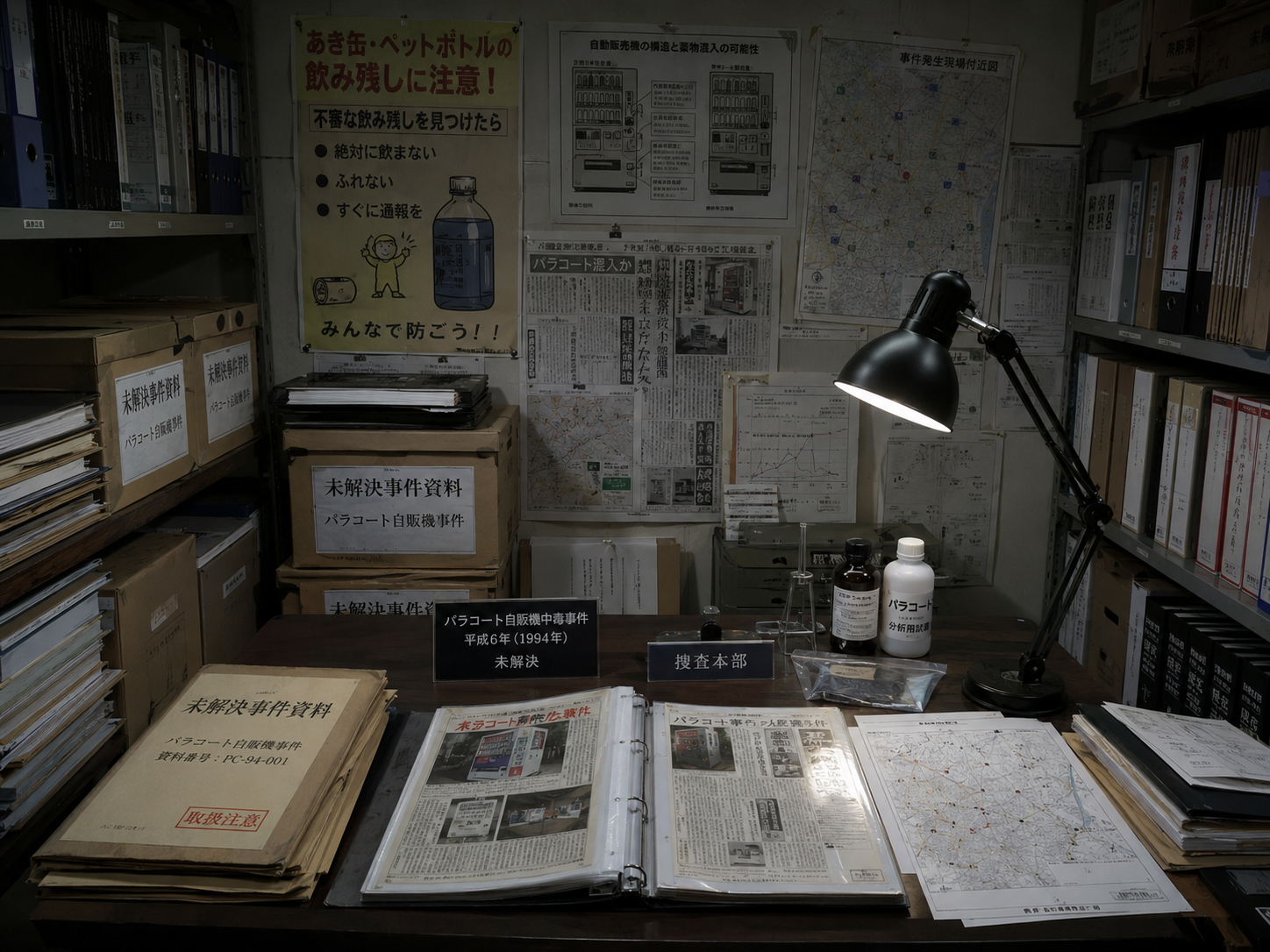
In September 1985, UPI reported that tainted vending-machine beverages had killed at least five people and that National Police Agency chief Hideo Yamada called the poisonings an “unforgivable crime.” Two days later, UPI reported that authorities were warning the public, vending-machine operators, and toxic-substance retailers and preparing a nationwide campaign.
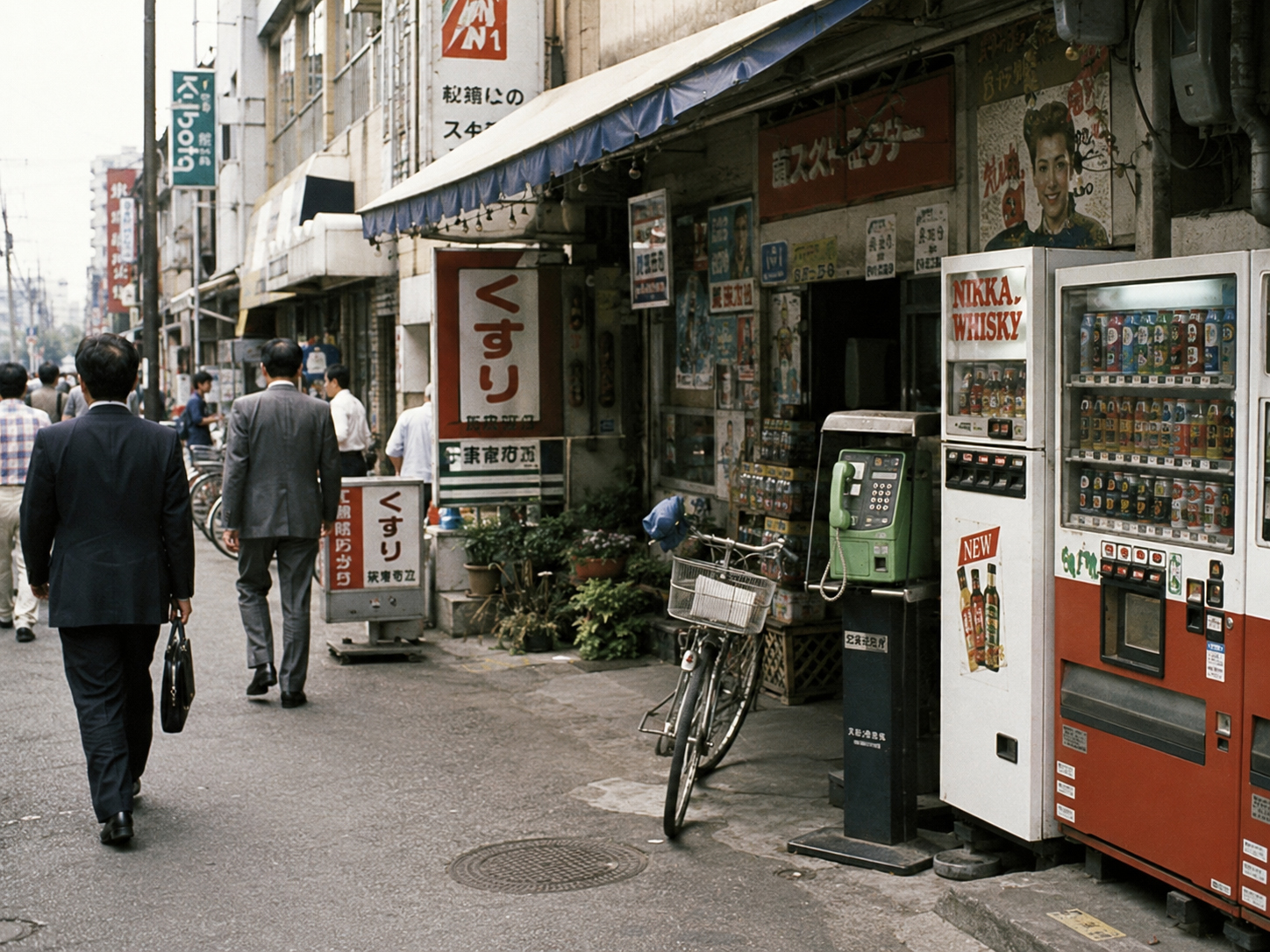
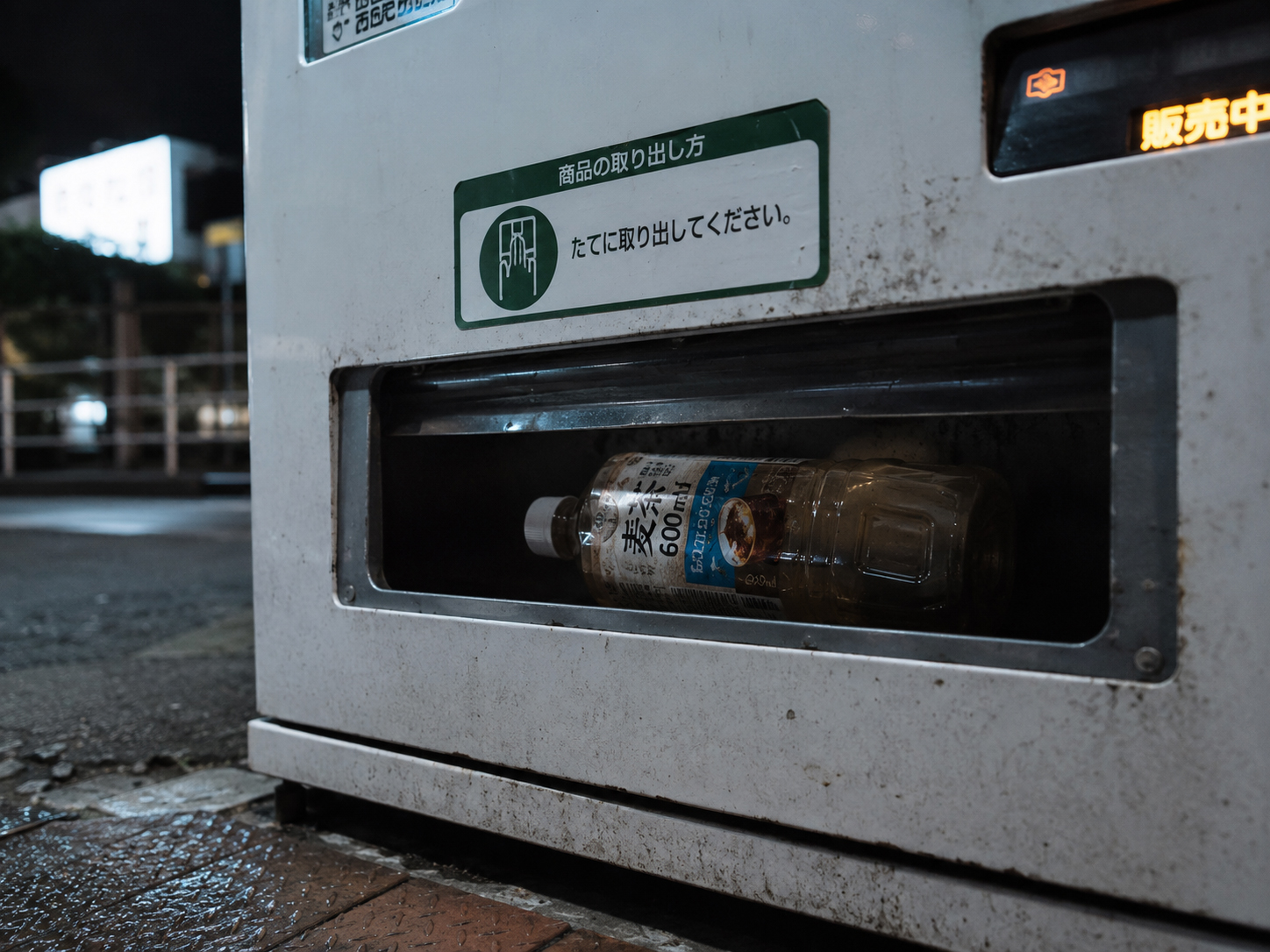
The trap of the “forgotten” bottle
Many later accounts describe the suspect method as leaving a tainted drink in the vending-machine return slot, on top of a machine, or nearby, so that a passerby might assume it was a forgotten bottle or an extra from a promotion. The crime did not only manipulate the contents of a bottle. It manipulated the way people read a public object.
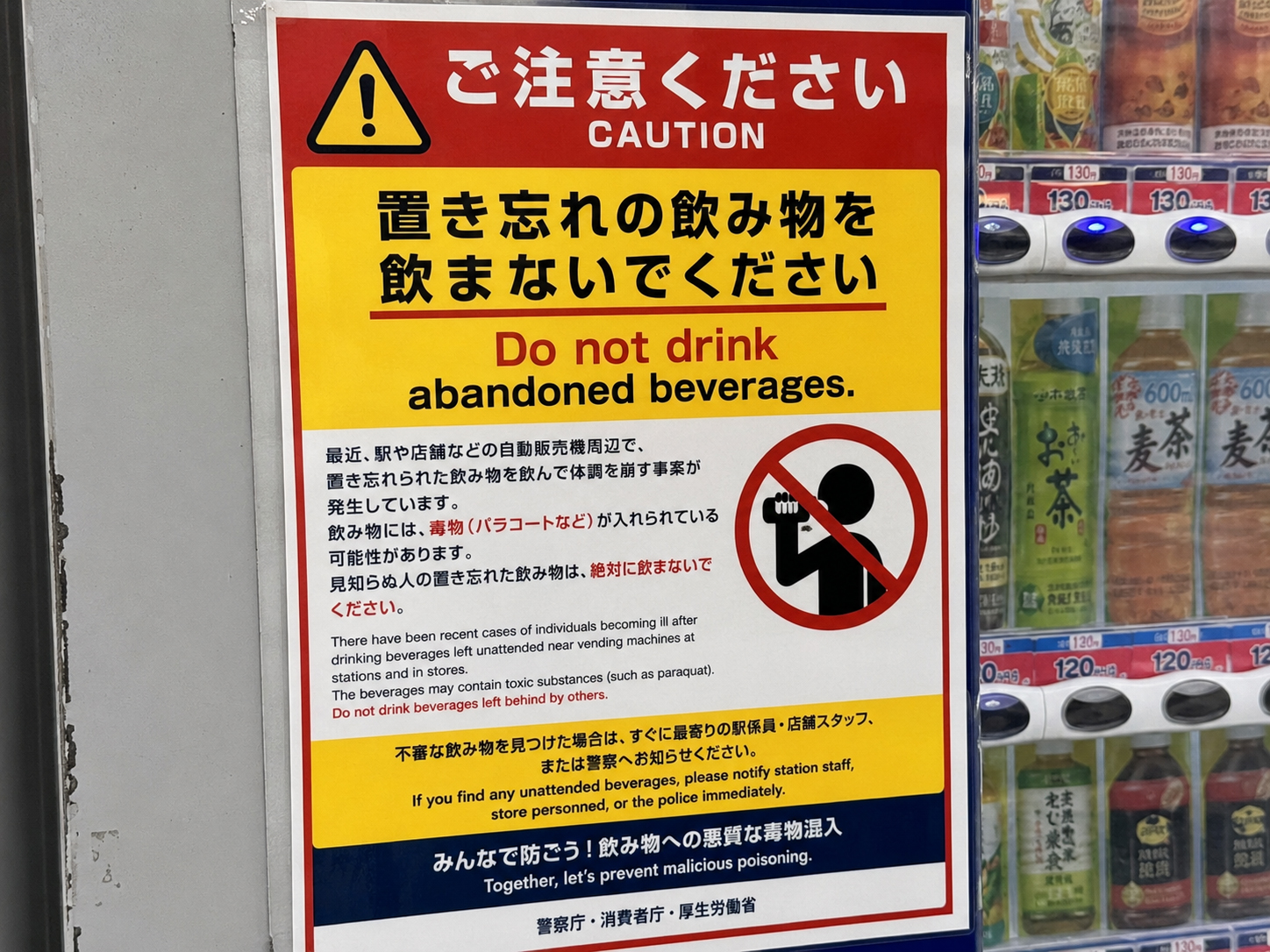
Vending machines work because they are predictable. Same goods, same slot, same price, same ritual. That predictability is precisely what made the incident socially shocking. Afterward, a new rule had to be learned: if you did not buy it yourself, do not drink it.
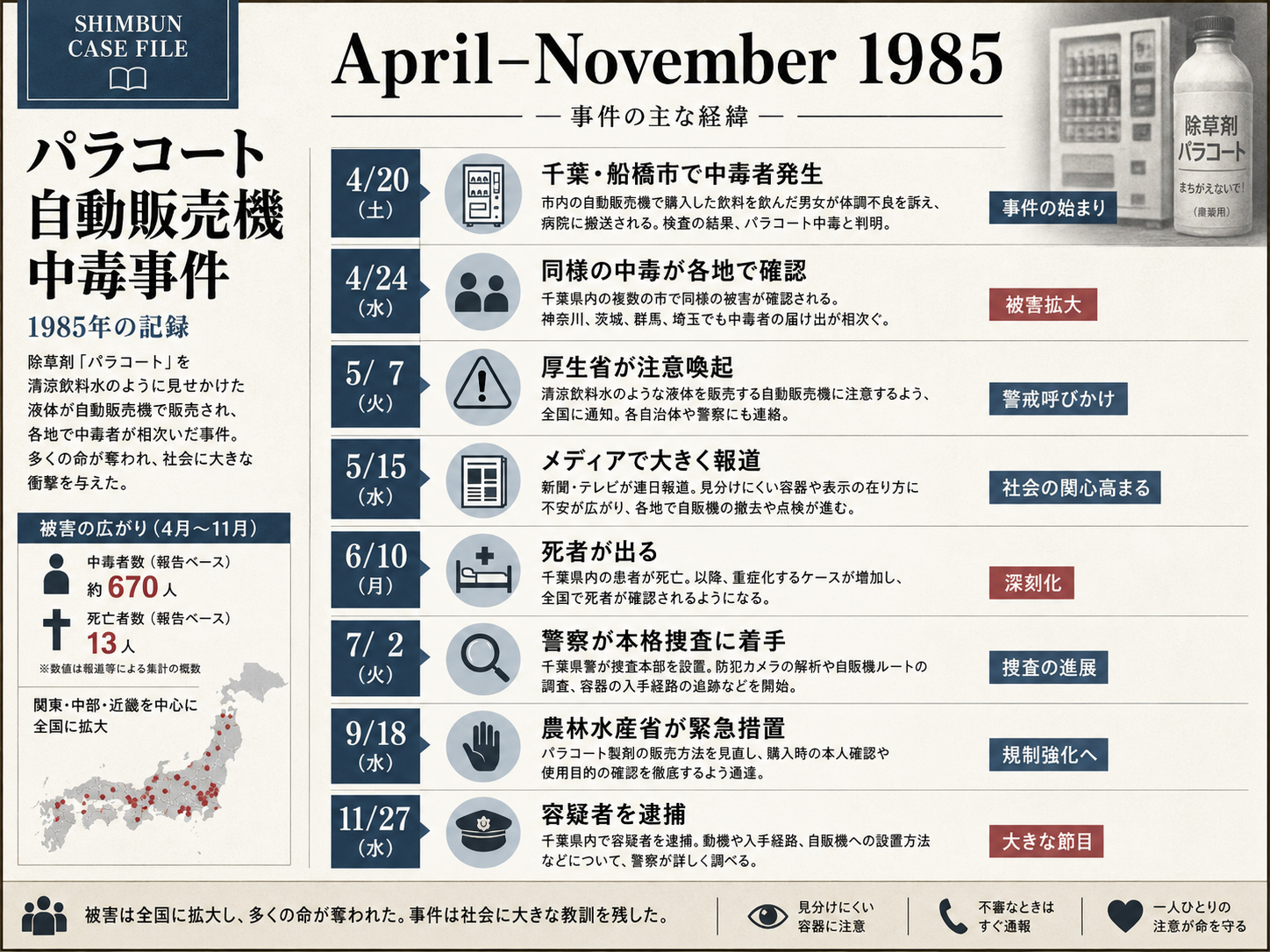
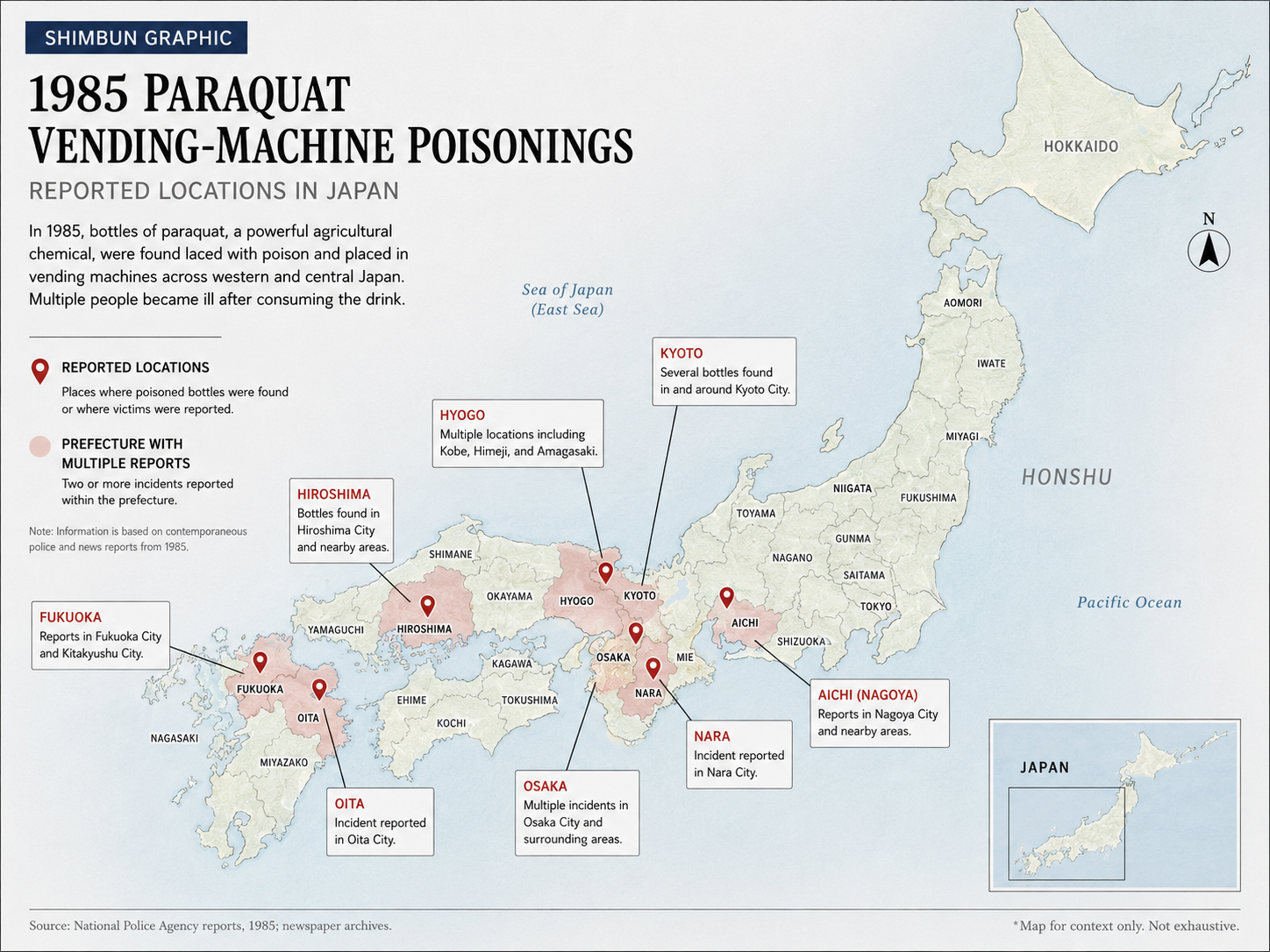
From local poisonings to national anxiety
Once the cases began to look connected by product type, location type, and poison, they stopped being local incidents. A bottle left at a vending machine in one city changed how people looked at vending machines everywhere.
By late October 1985, UPI was reporting ten deaths over six months from beverages laced with paraquat. Later summaries often cite 12 or 13 deaths and more than 30 serious poisonings. The differences likely reflect the date of counting, the inclusion or exclusion of related cases, and whether cases involving other substances were grouped together.
That ambiguity is part of the case. Because no offender was convicted and no court established a single complete series, readers must distinguish between a “reported cluster” and a legally proven single-offender case.
What paraquat is
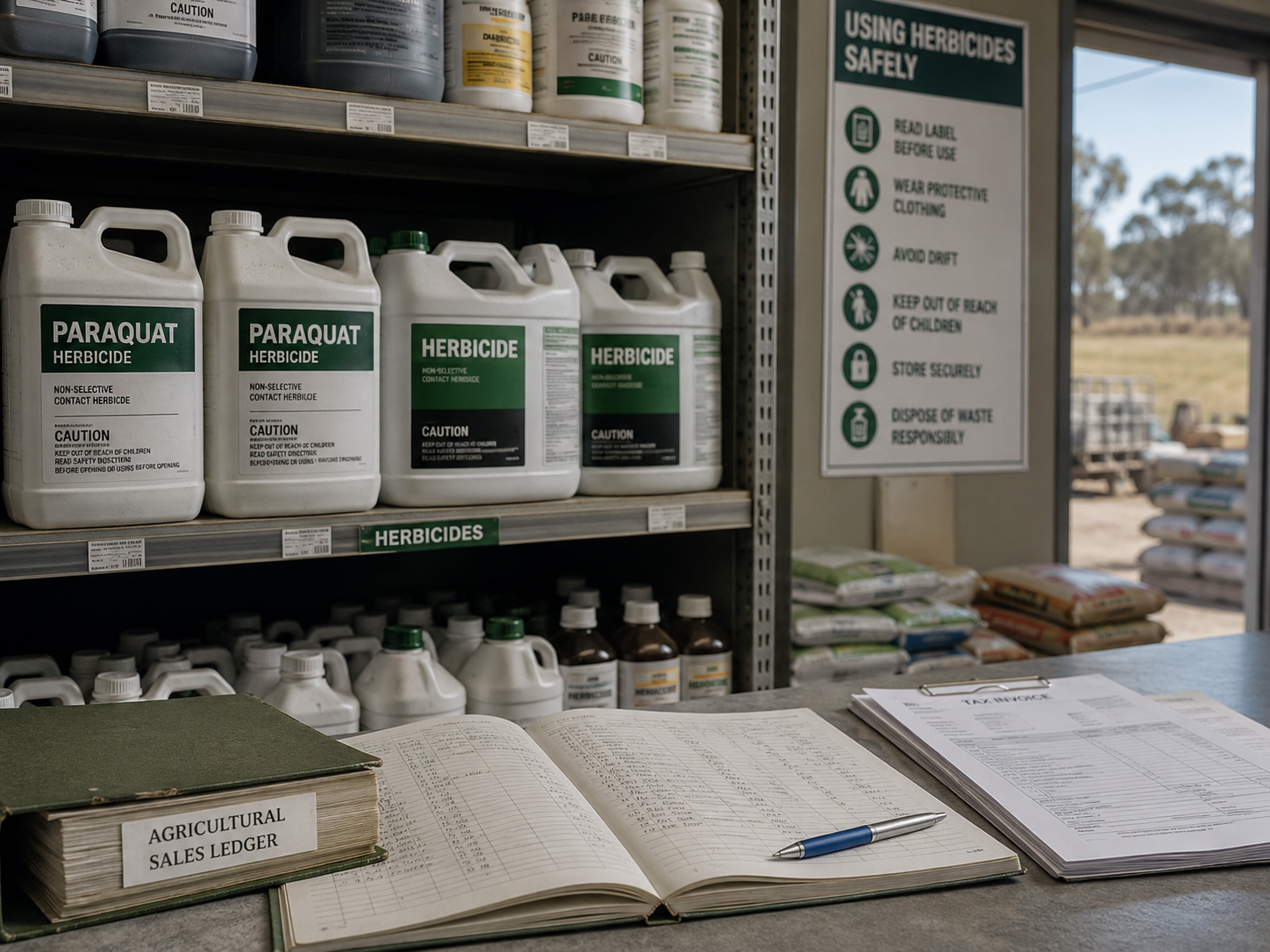
Paraquat is a herbicide with extremely high human toxicity. The U.S. Environmental Protection Agency states that one small sip can be fatal and that there is no antidote. It also warns that paraquat must never be transferred into food, drink, or other containers.
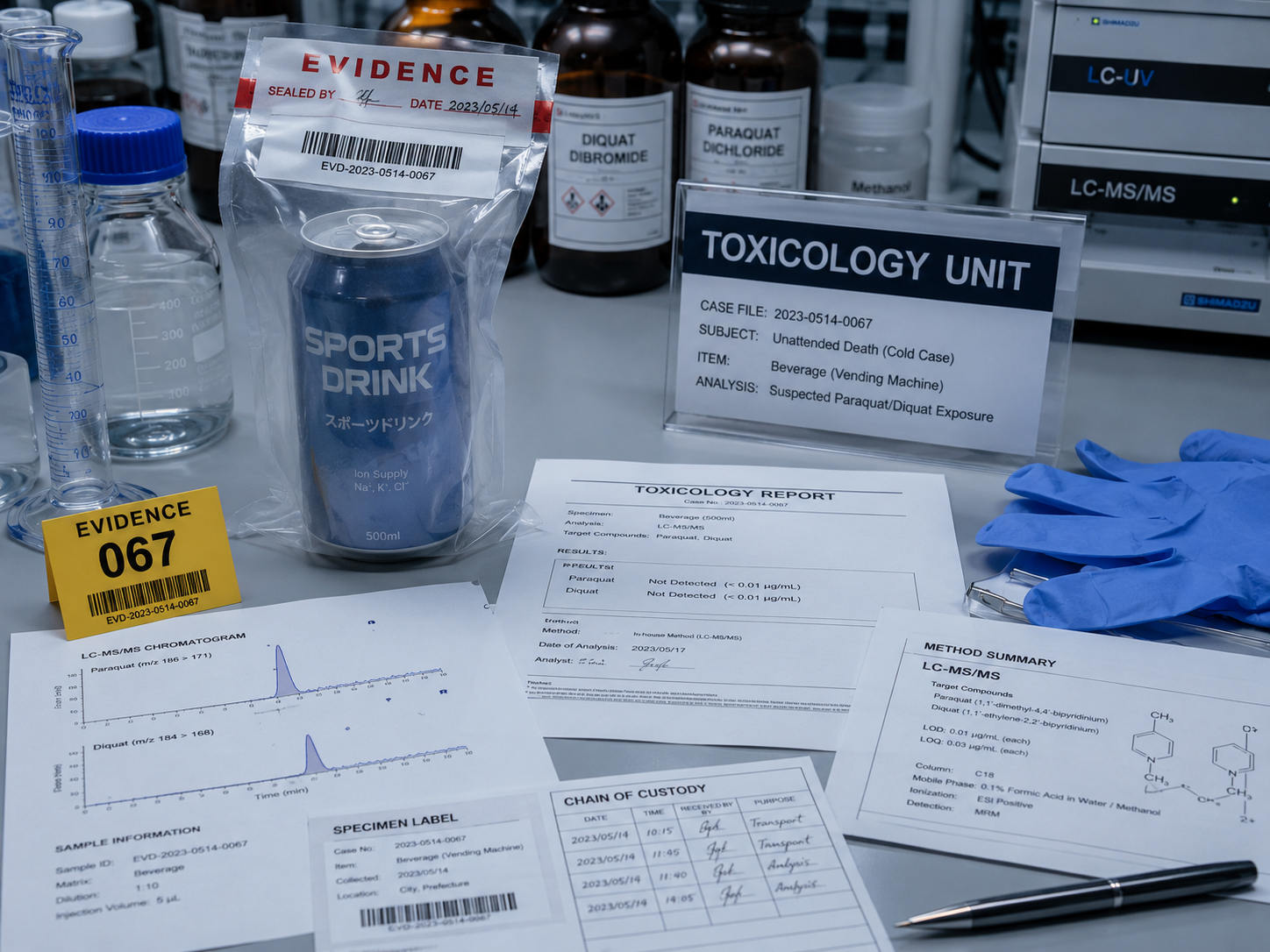
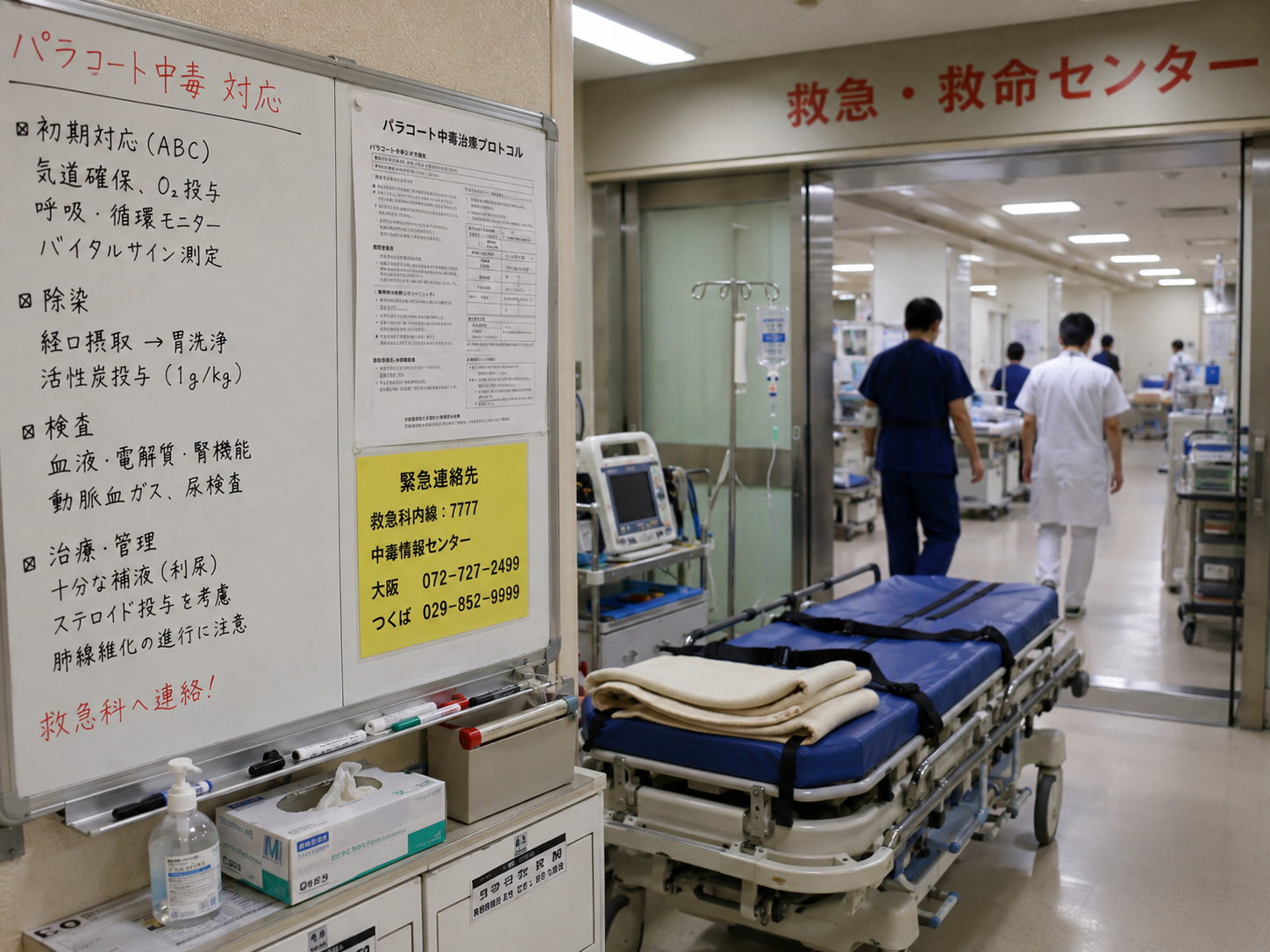
The Japanese Society for Clinical Toxicology describes testing reactions for paraquat and diquat: paraquat can produce a blue radical under reduction conditions, while diquat can appear green. For a case file, the point of chemistry is not decoration. It shows why detection, chain of custody, and rapid medical response mattered.
For emergency medicine, paraquat poisoning is a race against time. Dose, concentration, time to care, lung and kidney injury, and the lack of a simple antidote all make the word “poisoned drink” much more than a headline.
The product-tampering era
The poisonings landed in a Japan already unsettled by product-tampering fears. The Glico-Morinaga case had shaken confidence in food distribution. The earlier cyanide-cola cases had already taught a grim lesson about drinks left in public places.
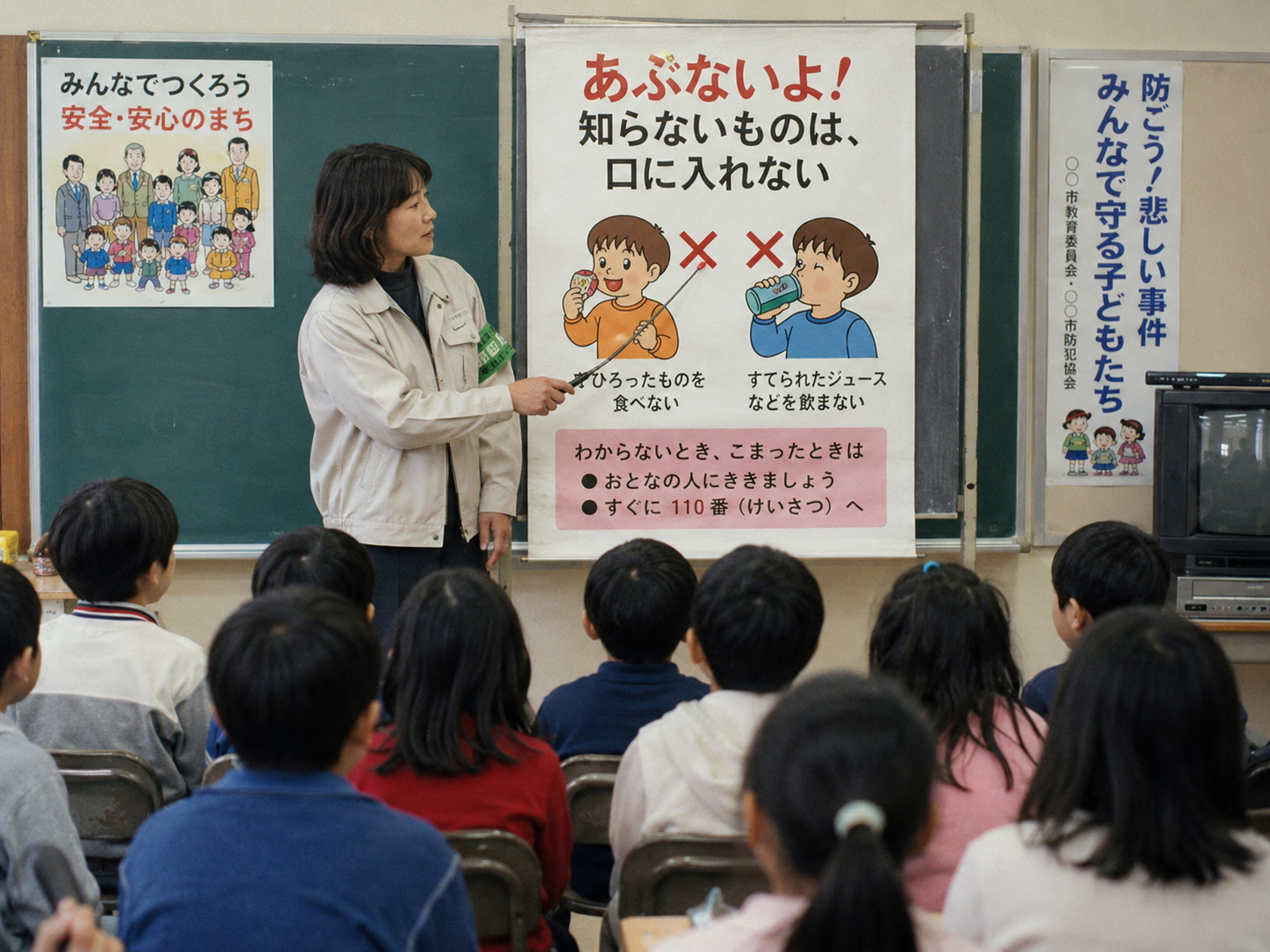
A TBS archive article on the cyanide-cola case notes that after those incidents, pull-top cans became more common for vending-machine drinks and schools taught children not to eat or drink found items even if they appeared sealed. The same article refers to the 1985 paraquat poisonings as another unsolved case that deepened public anxiety.
The unresolved offender matters. But the case’s deeper legacy is behavioral. A stranger’s bottle, a free-looking drink, an item left behind: after 1985, those objects no longer meant the same thing.
Unresolved questions
- Was there one offender, more than one offender, or copycat incidents?
- Were all the listed poisonings part of the same series?
- Where was the paraquat obtained, and how was it transferred into beverage containers?
- How much did the “free bottle” or “forgotten bottle” interpretation contribute to victim behavior?
- What old witness records, retail records, bottle production details, or toxicology records could still be re-examined?
Sources and update policy
This page is based on contemporaneous UPI reporting, toxicology references, EPA paraquat safety information, a TBS archive article on product-tampering anxiety, and later public case summaries. Because counts and location lists differ across later summaries, death totals, injury totals, and reported locations are presented with caution.
- UPI Archives, “Tainted soft drinks have killed five people,” September 25, 1985.
- UPI Archives, “Japanese warned against poisoned soft drinks,” September 27, 1985.
- UPI Archives, “Beverage poisonings kill 10 in Japan,” October 27, 1985.
- Japanese Society for Clinical Toxicology, “Paraquat,” toxicology reference archive.
- U.S. Environmental Protection Agency, “Paraquat Dichloride,” basic toxicity and safety information.
- TBS NEWS DIG archive article on the 1977 cyanide-cola case and its later effect on product-tampering anxiety and school safety lessons.
- Because later summaries vary on exact totals and date lists, this page labels disputed counts as “reported” or “later summaries.”