Overview
This case should not begin with a suspect. It begins with Junko Kobayashi: a student, a daughter, a young woman preparing to step into the world.
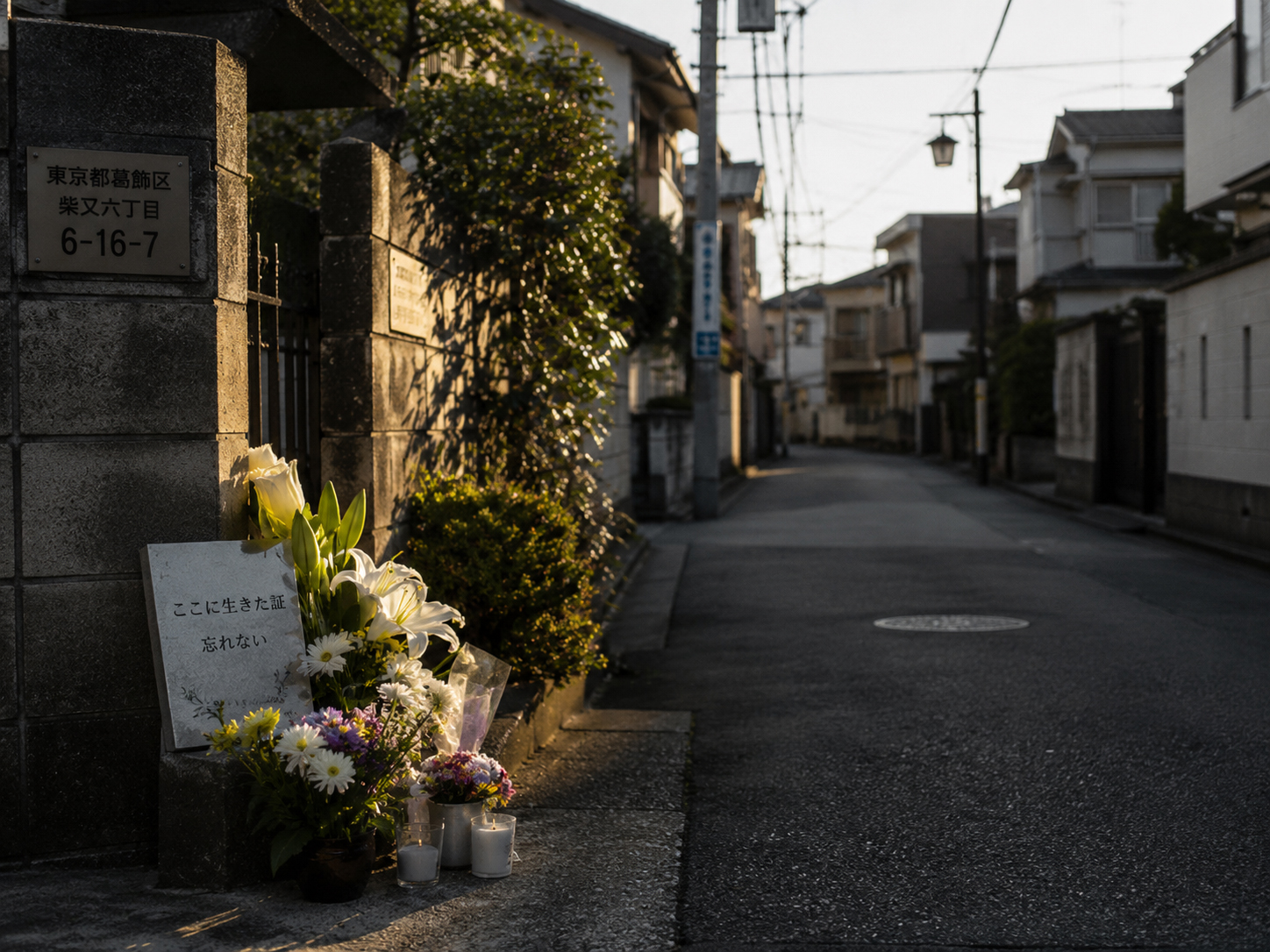
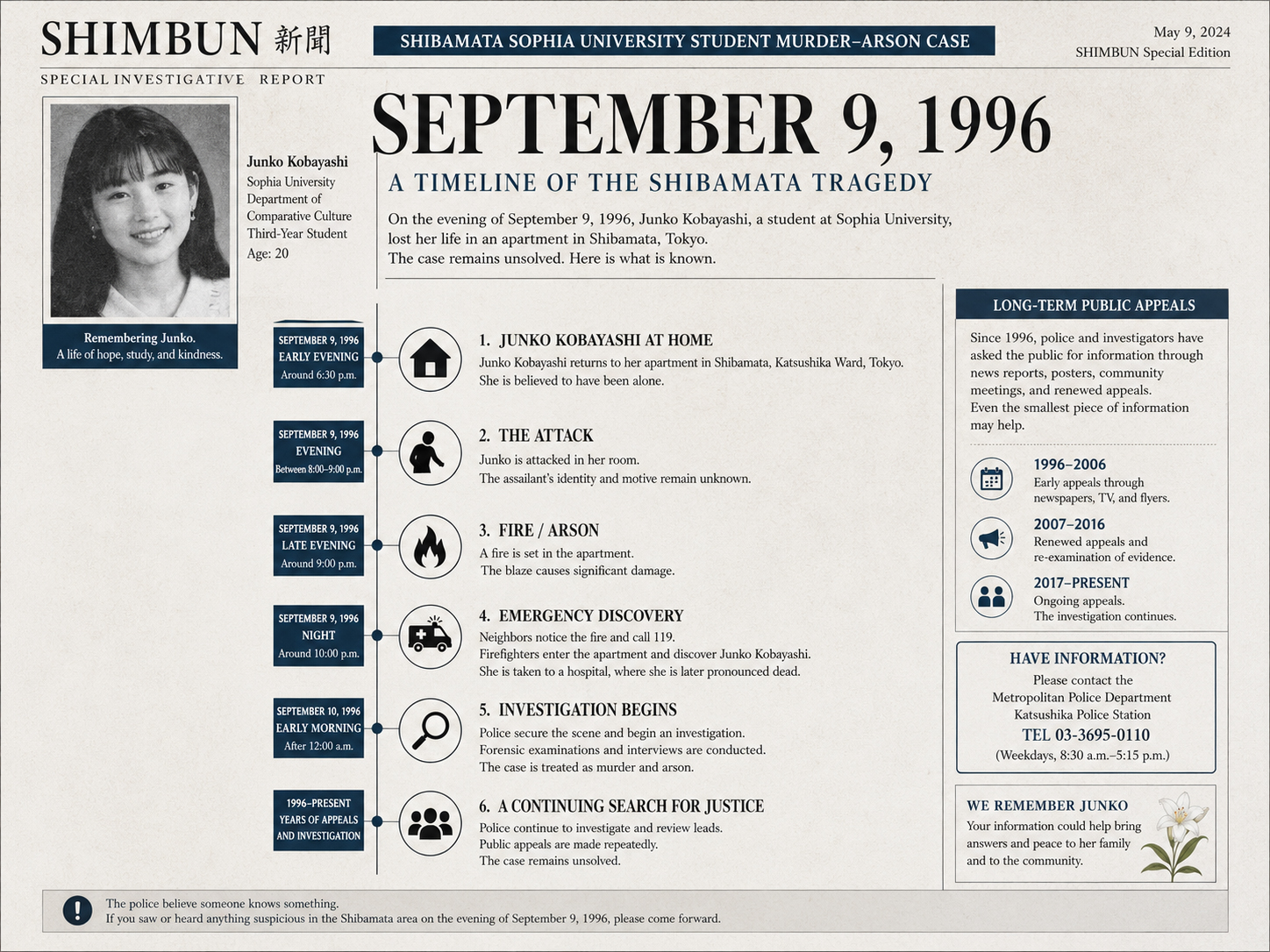
According to the Tokyo Metropolitan Police Department, the incident occurred between around 3:50 p.m.—after the victim’s mother left home—and 4:39 p.m., when the 119 emergency call was made. The location was the victim’s two-story home in Shibamata 3-chome. Kobayashi was killed with a blade on the second floor, and the home was set on fire. The weather had been rainy from the morning and the day was unusually chilly.
The fixed record
The hard spine of the case comes from the MPD public file. The date was Monday, September 9, 1996. The time window was between about 3:50 p.m. and 4:39 p.m. The place was a two-story private home in Shibamata 3-chome. The victim was a 21-year-old fourth-year student in an English department.
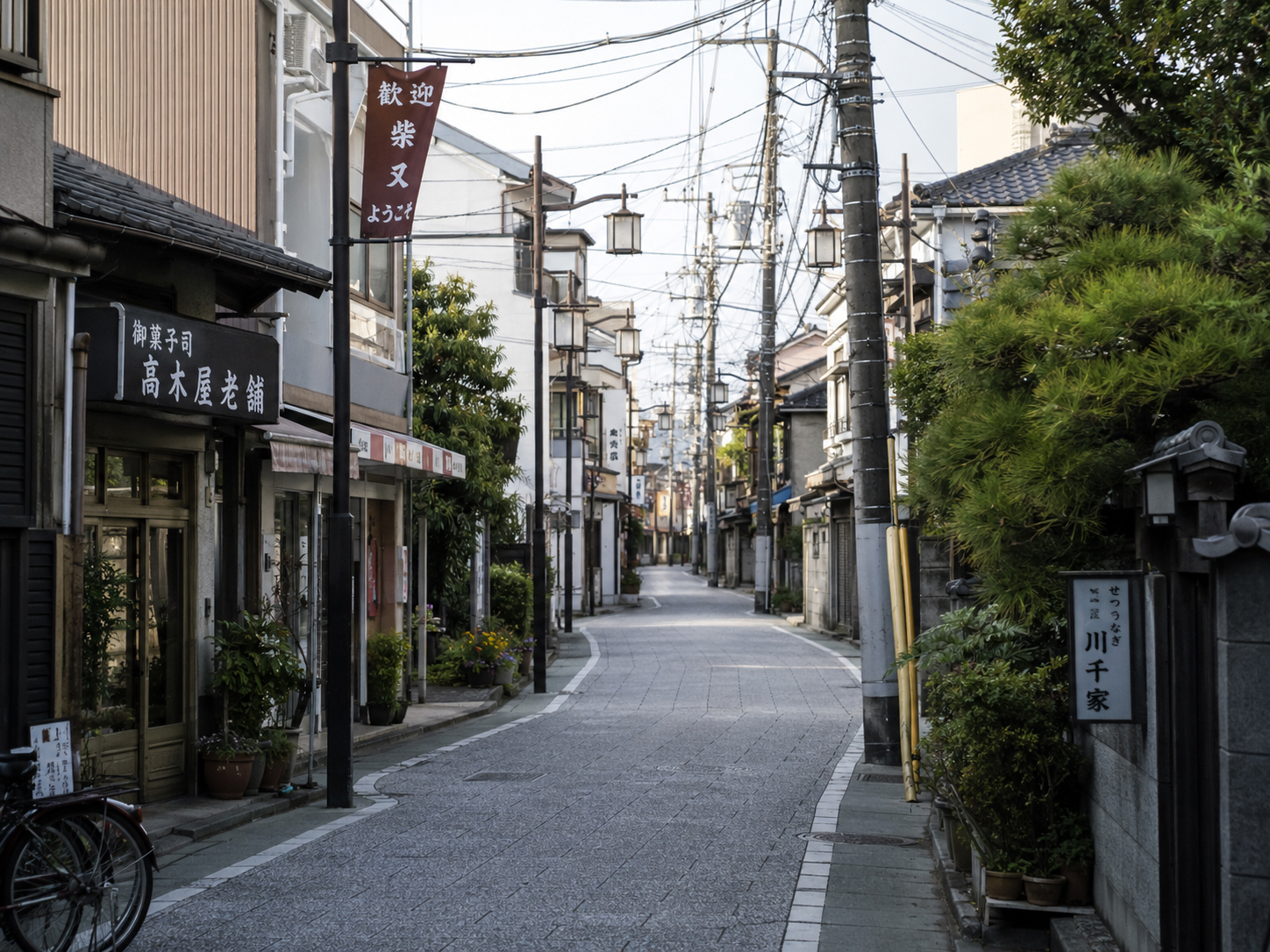
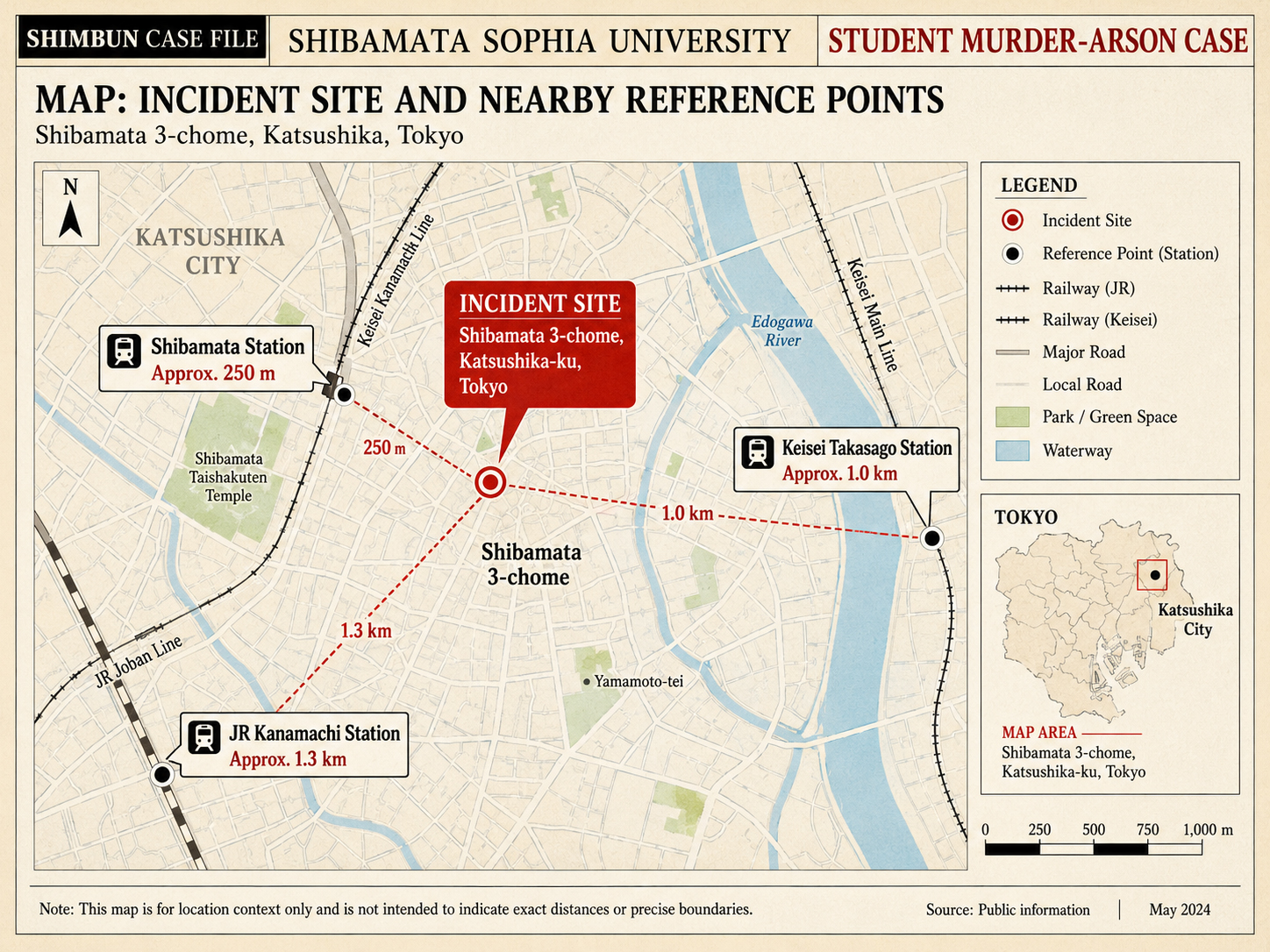
The site lies about 250 meters northwest of Shibamata Station, about 1,300 meters south of JR Kanamachi Station, and about 1,000 meters northeast of Keisei Takasago Station. East of the station, Shibamata is remembered for Taishakuten, the approach road, and old Tokyo charm. West of the station, where the home stood, the neighborhood was and remains largely residential.
That split matters. Public Shibamata is nostalgia. Private Shibamata is ordinary family life. This case pierced the private side.
Junko’s time
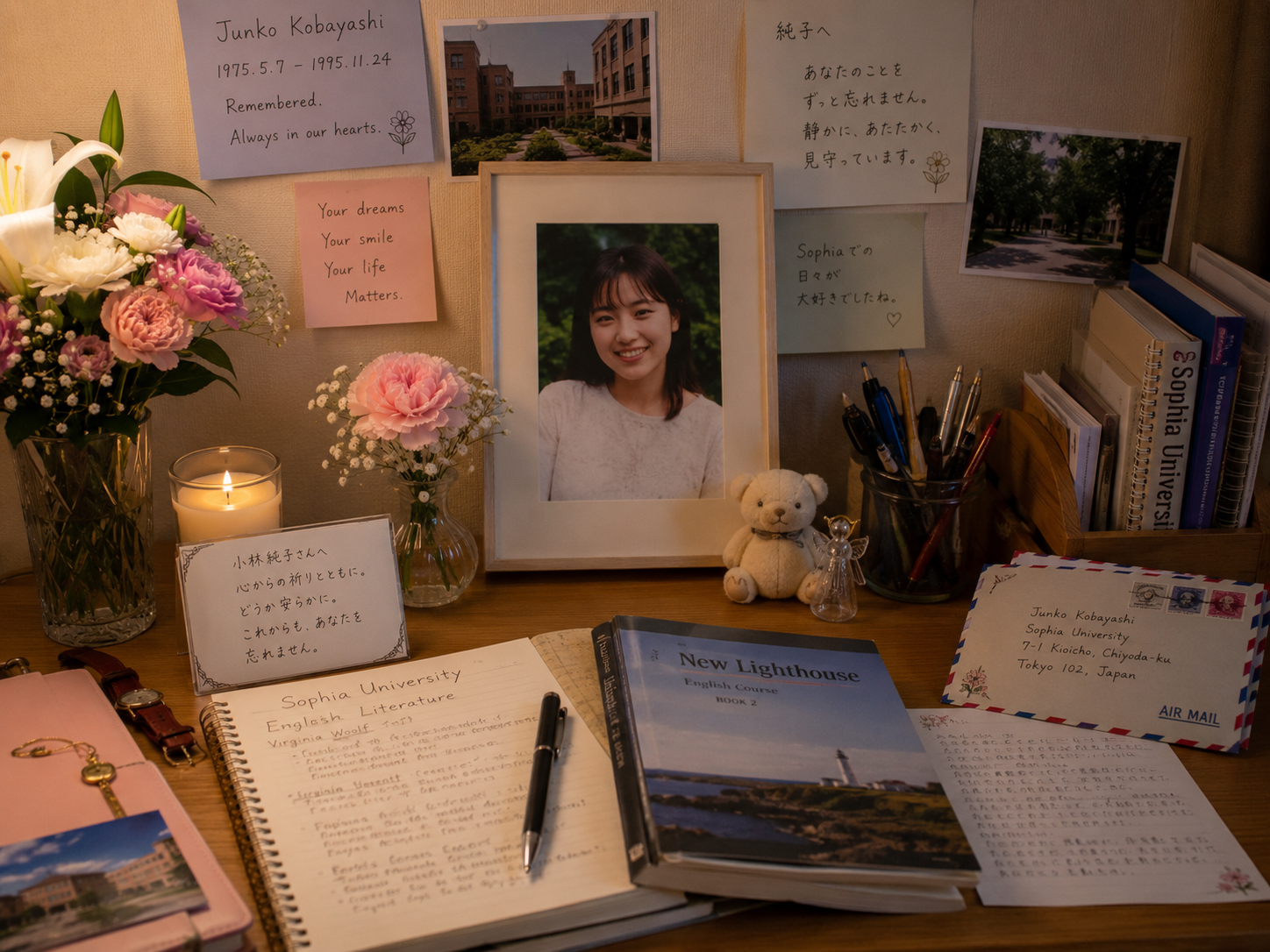
Kobayashi was studying English at Sophia University and had a future in motion. Reporting has described her as close to leaving for study in the United States. SHIMBUN treats that not as pathos, but as factual context: she was building a life beyond the case.
Cold-case writing often moves too quickly to weapon, blood type, and suspect sketches. Those details matter. But the first fixed fact is that a person existed before the evidence table. She studied. She wrote. She planned. She was loved.
September 9, 1996
The official chronology is narrow. The responsible task is not to fill every gap, but to preserve the gaps honestly.
The MPD places the beginning of the offense window after the victim’s mother left home.
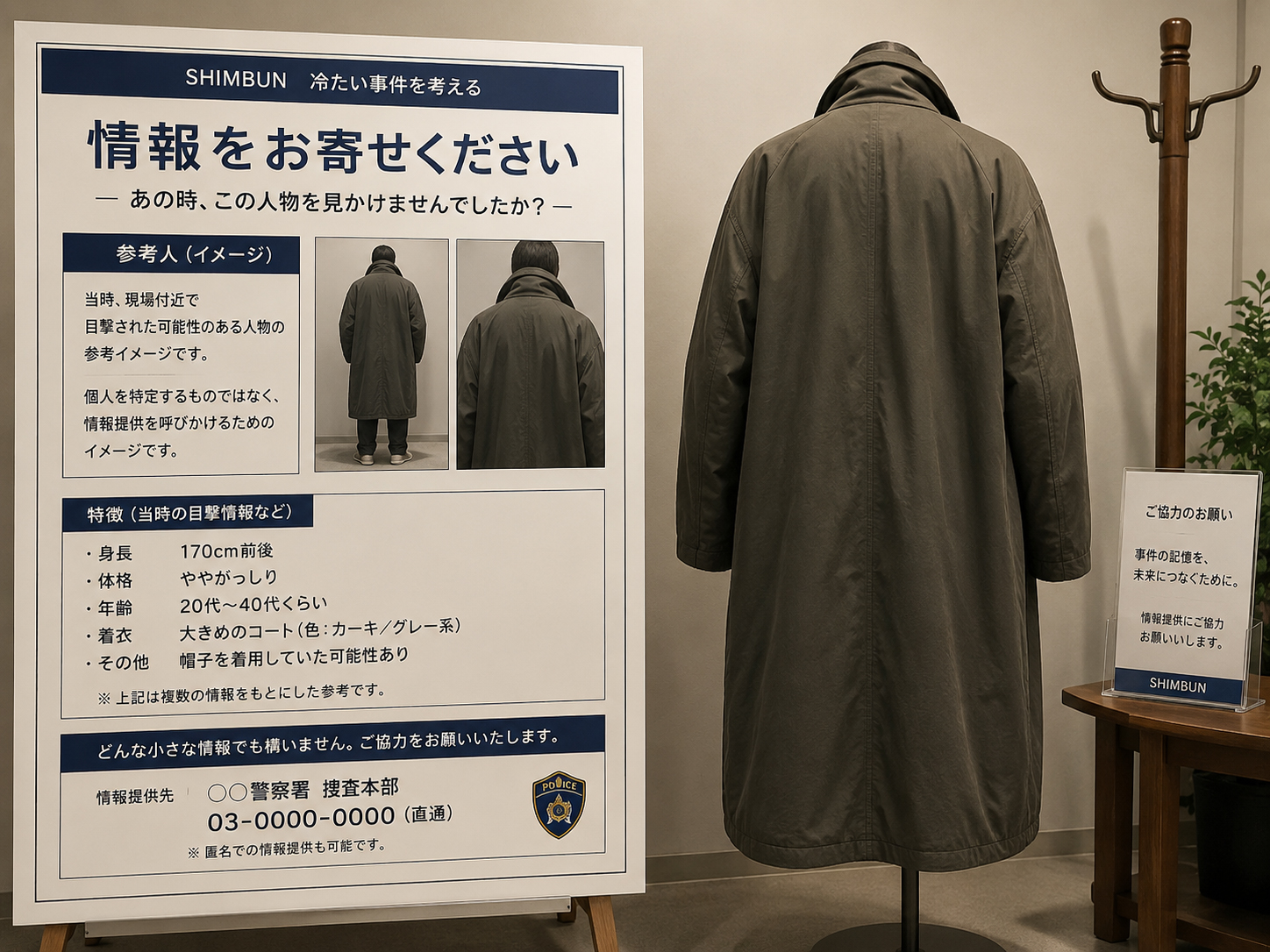
A man with a black umbrella was reportedly seen at an intersection south of the scene, wearing an oversized ocher-colored coat and dark pants.
A man without an umbrella was reportedly seen standing in front of the home, looking toward the nameplate or second-floor area.
By this time, the fire had been reported and the case began to surface as murder and arson.
The Kameari Police Station special investigation headquarters continues to seek information.
Evidence: blade, tape, blood
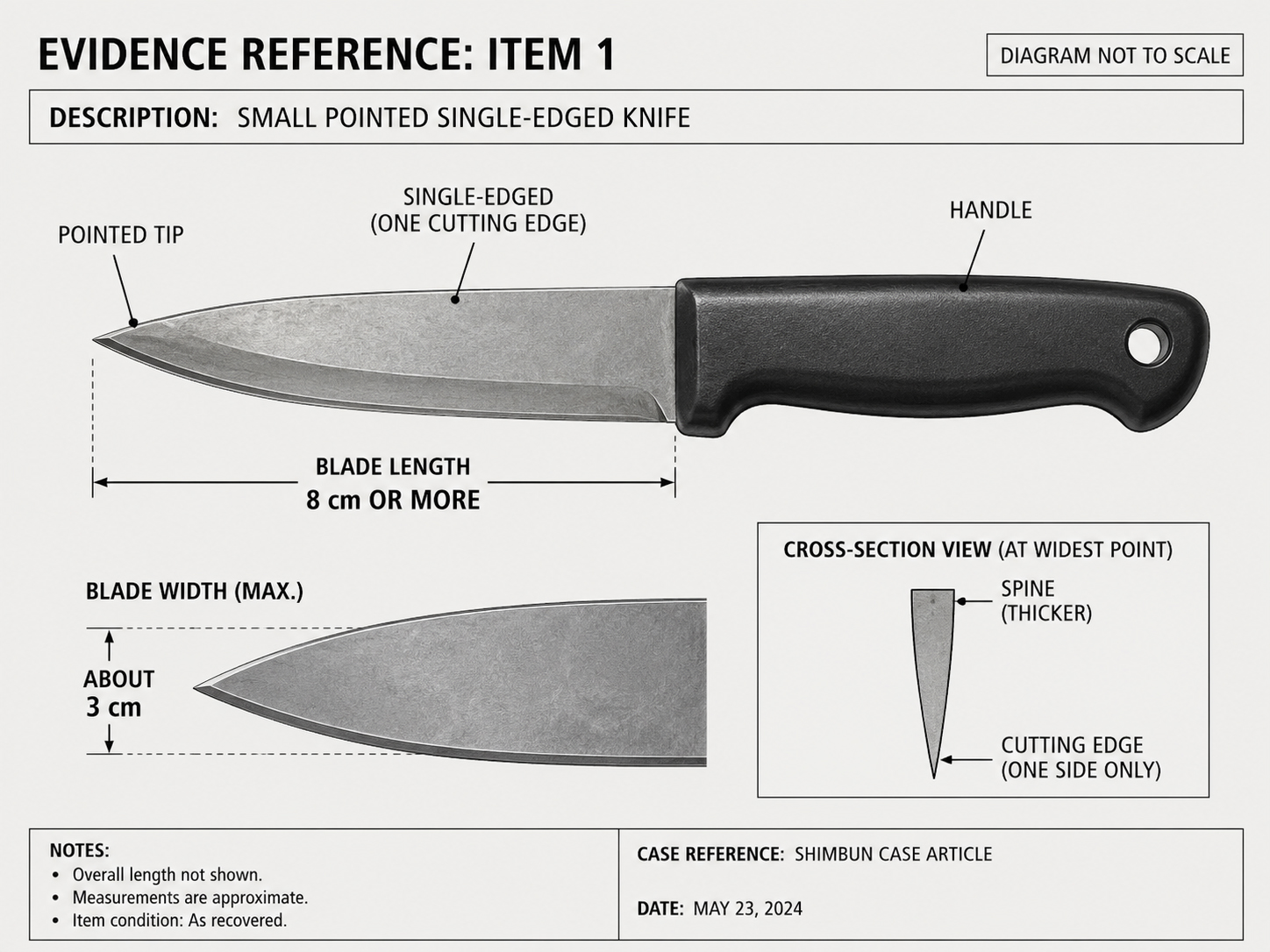
The MPD believes a small blade was used. The described profile is precise: blade length of at least 8 centimeters, width of about 3 centimeters, and a pointed single-edged blade. Fruit knives and petty knives are shown as examples of possible types, not as a specific make or product.
The cloth adhesive tape used in the case was manufactured at a factory in Shizuoka Prefecture after January 1994. It was a relatively expensive packing tape, 50 millimeters wide and 25 meters long, priced around ¥700–¥800, and widely distributed through business deliveries, home centers, stationery shops, and other outlets. Plant fragments, wood fragments, and dog hair were found on the adhesive side, possibly brought in from outside through the offender’s clothing or belongings.
The MPD has also stated that the offender was male, suffered some injury and bleeding during the offense, and had blood type A. That does not solve the case. It gives the public a reason to search memory: sudden injuries, cuts, absences, resignations, moves, or a coat in an old photograph.
The oversized ocher coat
The MPD has a separate public page on a suspicious man seen near the offense window. Two reports describe a man in a coat near the scene. One of those reports was submitted in 2020, long after the case, which is one reason the appeal remains alive.
Witness report 1 places a man at about 3:30 p.m. at an intersection south of the home. He was said to be 150–160 centimeters tall, thin, holding a black umbrella, and wearing an ocher-colored coat with a collar and no hood. The coat was reportedly too large for his height and build. He wore dark sweatpants-like trousers.
Witness report 2 places a man at about 3:55 p.m. in front of the home, without an umbrella, looking toward the nameplate or second floor. He was described as around 160 centimeters tall, medium or slightly thin build, wearing an ocher coat or raincoat with collar and no hood, and dark trousers.
The MPD says that based on time, place, and clothing, the two reports are likely to concern the same person. SHIMBUN does not call this person the perpetrator. The public value of the report is narrower and more careful: old photographs, albums, commutes, workplaces, and neighborhood memory may still contain a clue.
Why the appeal continues
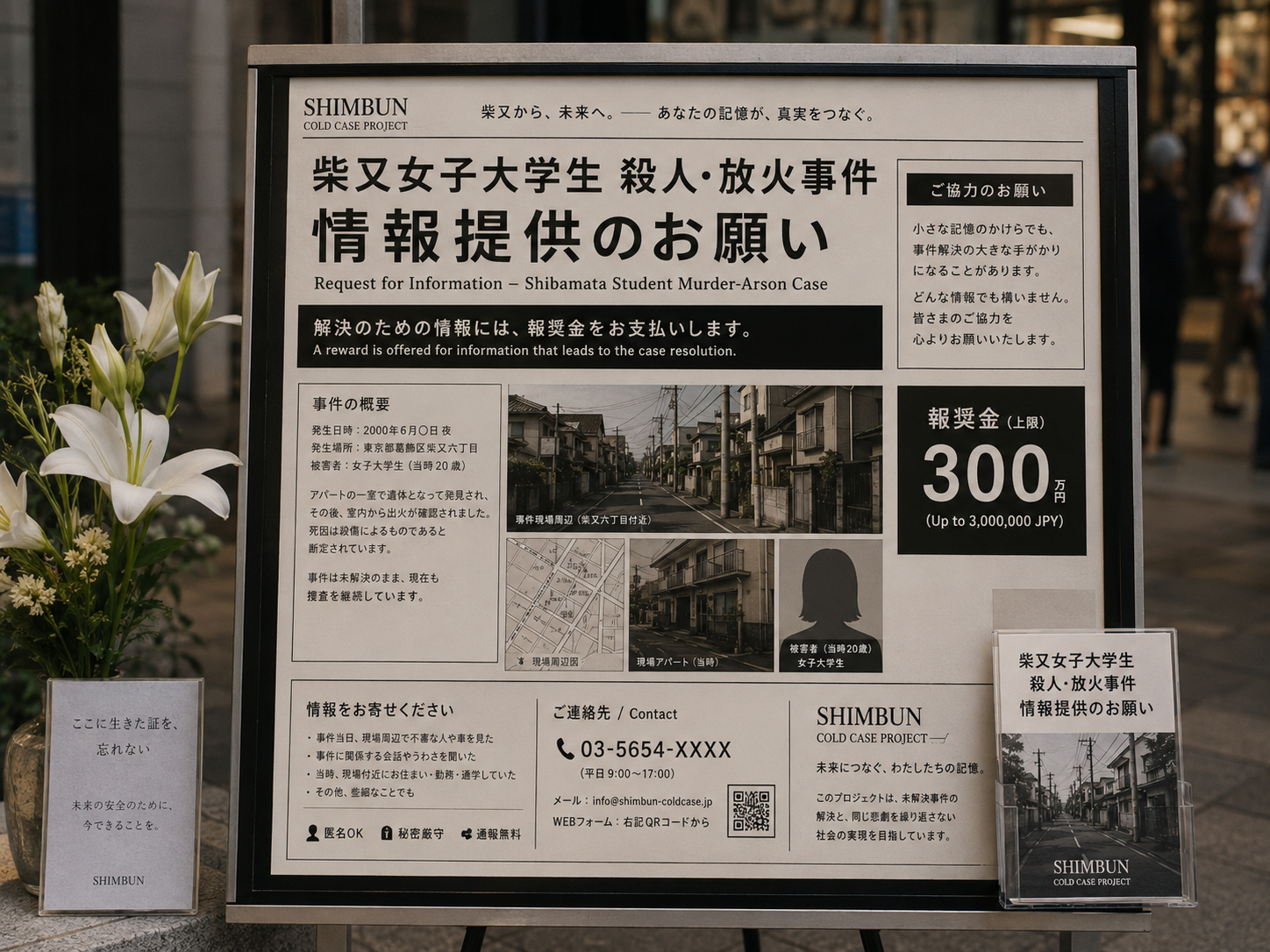
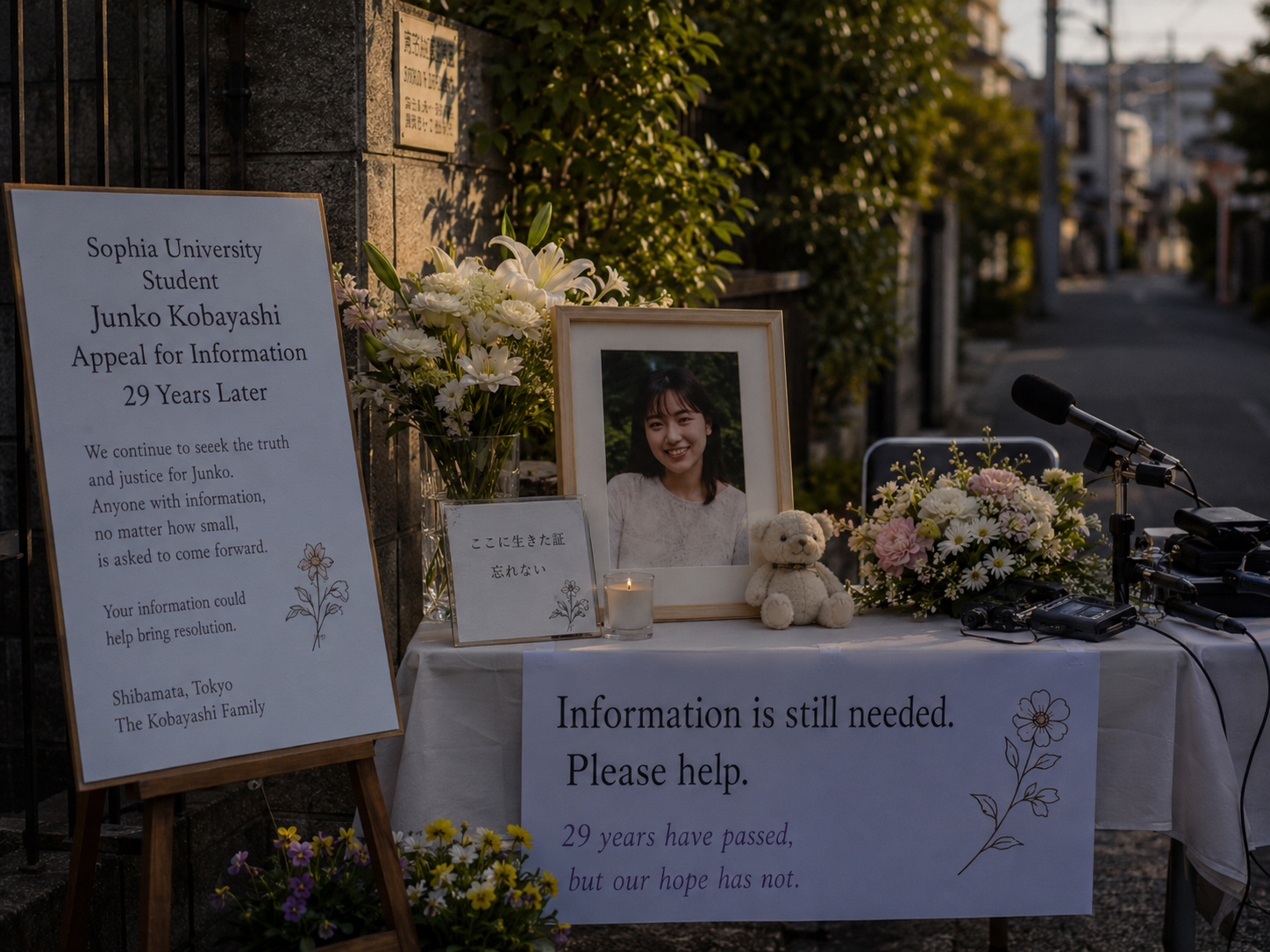
On September 9, 2025, the Kameari Police Station held a flower-laying ceremony at the scene and distributed flyers and memo pads near Shibamata Station, again asking the public for information. The wording remains simple: even a small detail may matter.
The maximum reward is currently ¥8 million: up to ¥3 million under the public special investigation reward system and up to ¥5 million from the association supporting the investigation into Kobayashi’s murder. The current reward period runs from September 9, 2025 to September 8, 2026. The contact point is the Kameari Police Station special investigation headquarters at 03-3607-0110.
What remains unknown
- How did the offender enter and leave the home?
- What can the tape’s origin, adhesive fragments, and distribution still tell investigators?
- How do blood type A, an injury, rain, and the oversized ocher coat intersect?
- Did someone suddenly miss work, quit, move away, or conceal an injury around the date?
- Do old photographs, videos, school-route memories, workplace albums, or commuting memories still contain an overlooked clue?
Sources and update policy
This page is built from the Tokyo Metropolitan Police public file, the MPD page on the suspicious man seen near the offense time, the MPD 3D video notice, reward information, the 2025 MPD photo-news update, and geographic context for Shibamata. It excludes unsupported suspect theories, anonymous rumor threads, and private-person accusation.
- Tokyo Metropolitan Police: official Shibamata 3-chome murder-arson case page.
- Tokyo Metropolitan Police: suspicious man seen near the offense time.
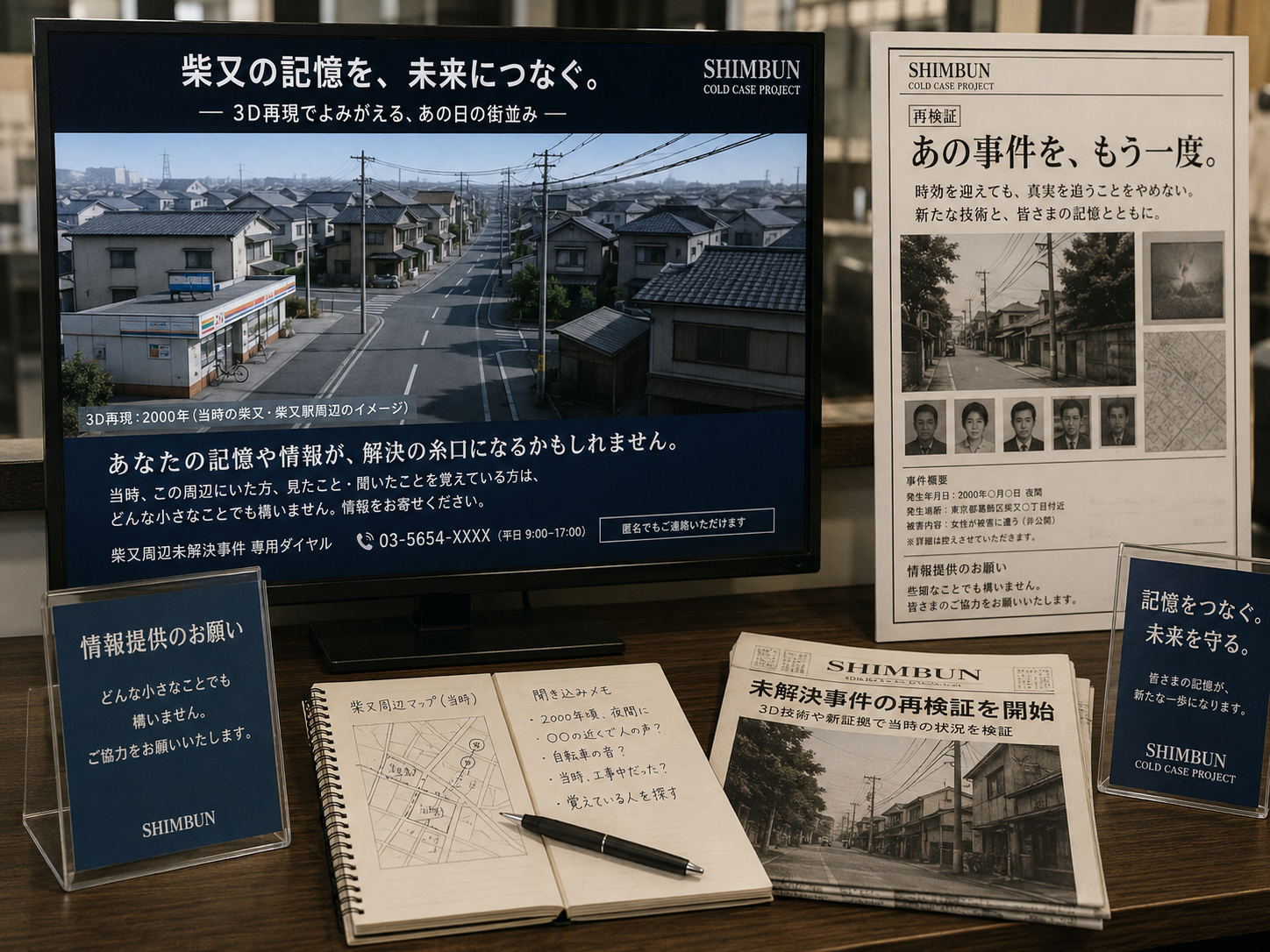
- Tokyo Metropolitan Police: 3D video notice for witness-memory appeal.
- Tokyo Metropolitan Police photo news, November 2025, covering the September 9, 2025 appeal.
- Tokyo tourism and Shibamata local materials for neighborhood context.