Editorial Promise
The Lockheed scandal is not an unsolved case. But it is also not a fully transparent one. SHIMBUN.co.jp treats it as a case of power: aircraft, money, prosecutors, parliament, media, and the postwar political machine.
This page separates what was established in court, what was disclosed in the United States, what Japanese investigators pursued, what the Diet debated, and what remains murky about informal money networks and political influence.
これは単なる汚職事件ではなく、権力事件である。
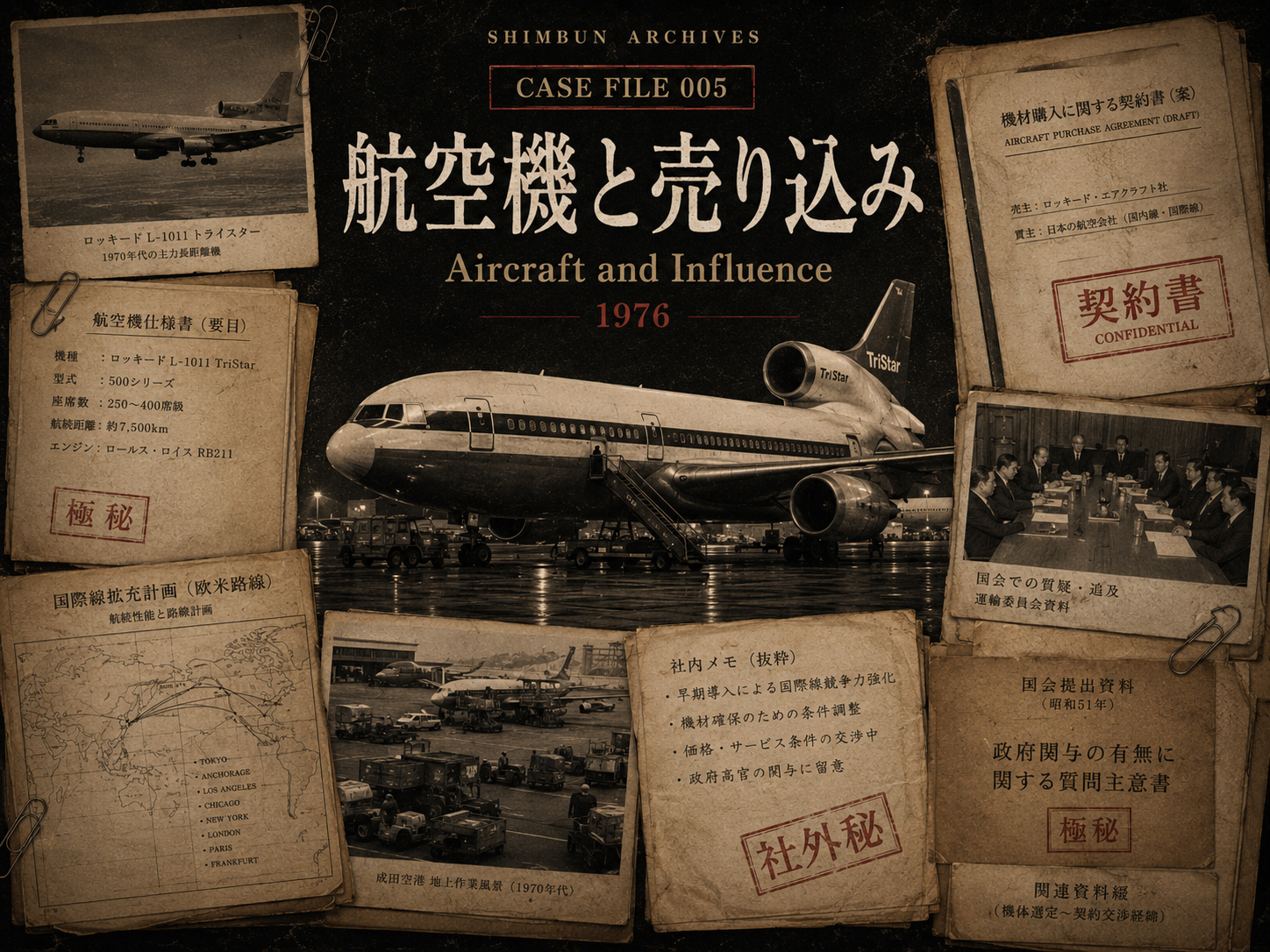
The Shape of the Case
The Lockheed scandal was one of postwar Japan’s largest political corruption cases. It began with revelations in the United States about Lockheed’s overseas payments and quickly reached Japanese aviation policy, trading companies, public officials, prosecutors, and the Diet.
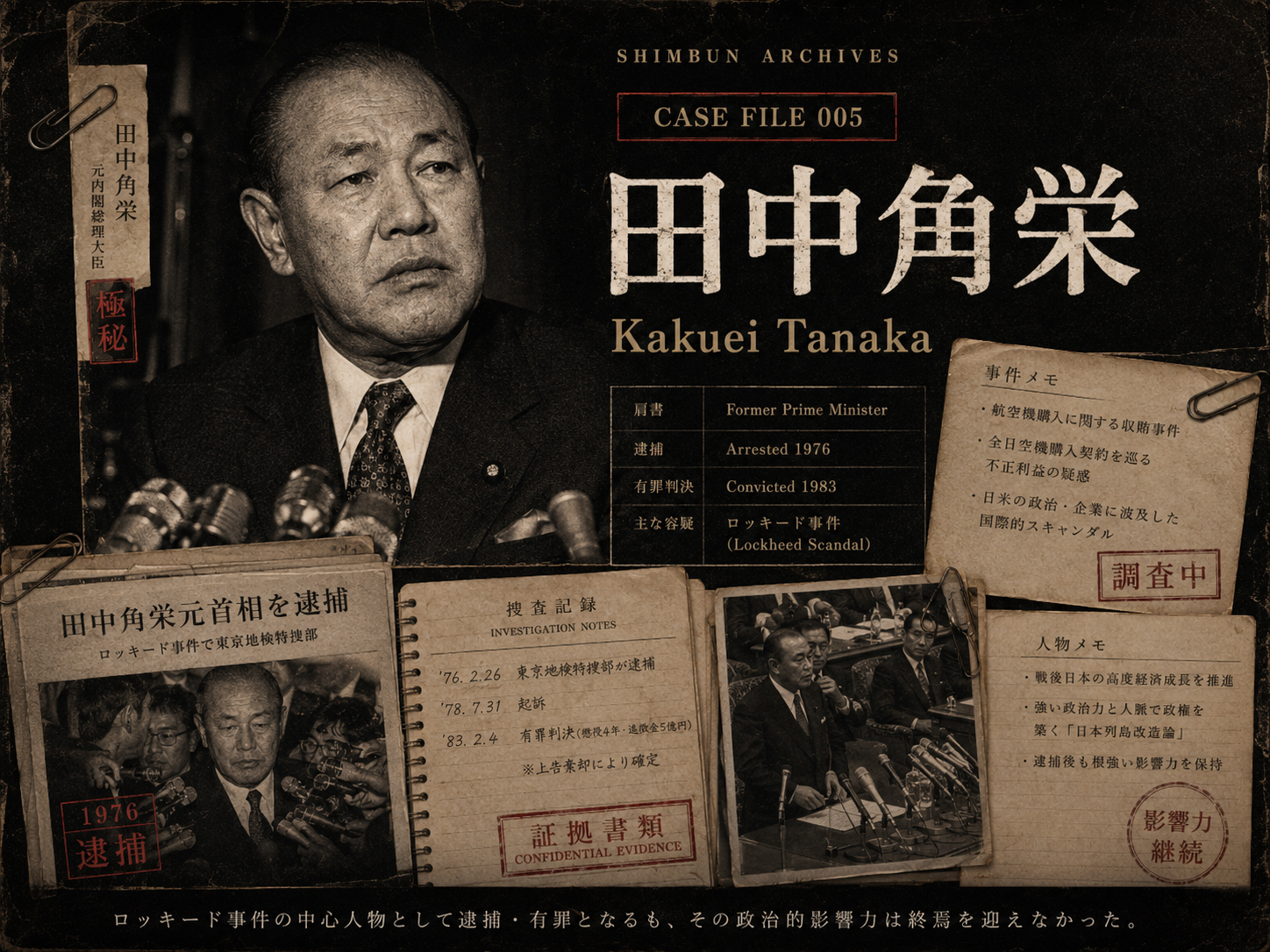
At the center stood Kakuei Tanaka: former prime minister, builder of networks, symbol of machine politics, and a figure whose influence did not disappear after arrest or conviction.
Kakuei Tanaka at the Center
Kakuei Tanaka was one of the most unusual figures in postwar Japanese politics. He did not fit the elite bureaucratic mold. He rose through construction, local networks, Diet maneuvering, factional power, and a politics of delivery: roads, infrastructure, budgets, and favors.
The Lockheed scandal exposed both the strength and weakness of that system. What had once looked like practical power could also be read as structural corruption.
Why It Belongs as Case File 005
Case 001 was the mythology of the perfect crime. Case 002 was corporate extortion and media fear. Case 003 was a modern forensic cold case. Case 004 was postwar justice and poison. Case 005 moves the archive into the architecture of power.
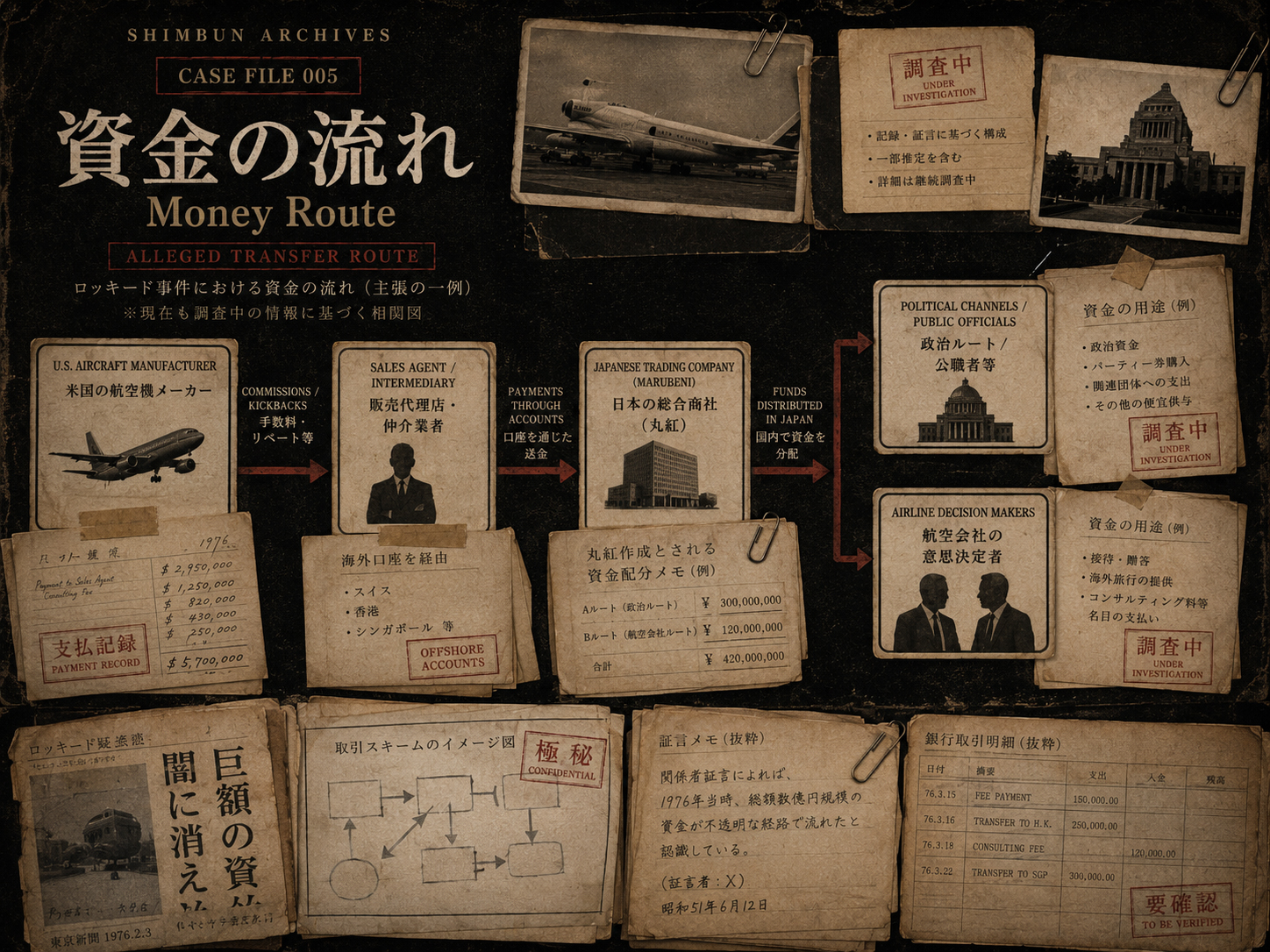
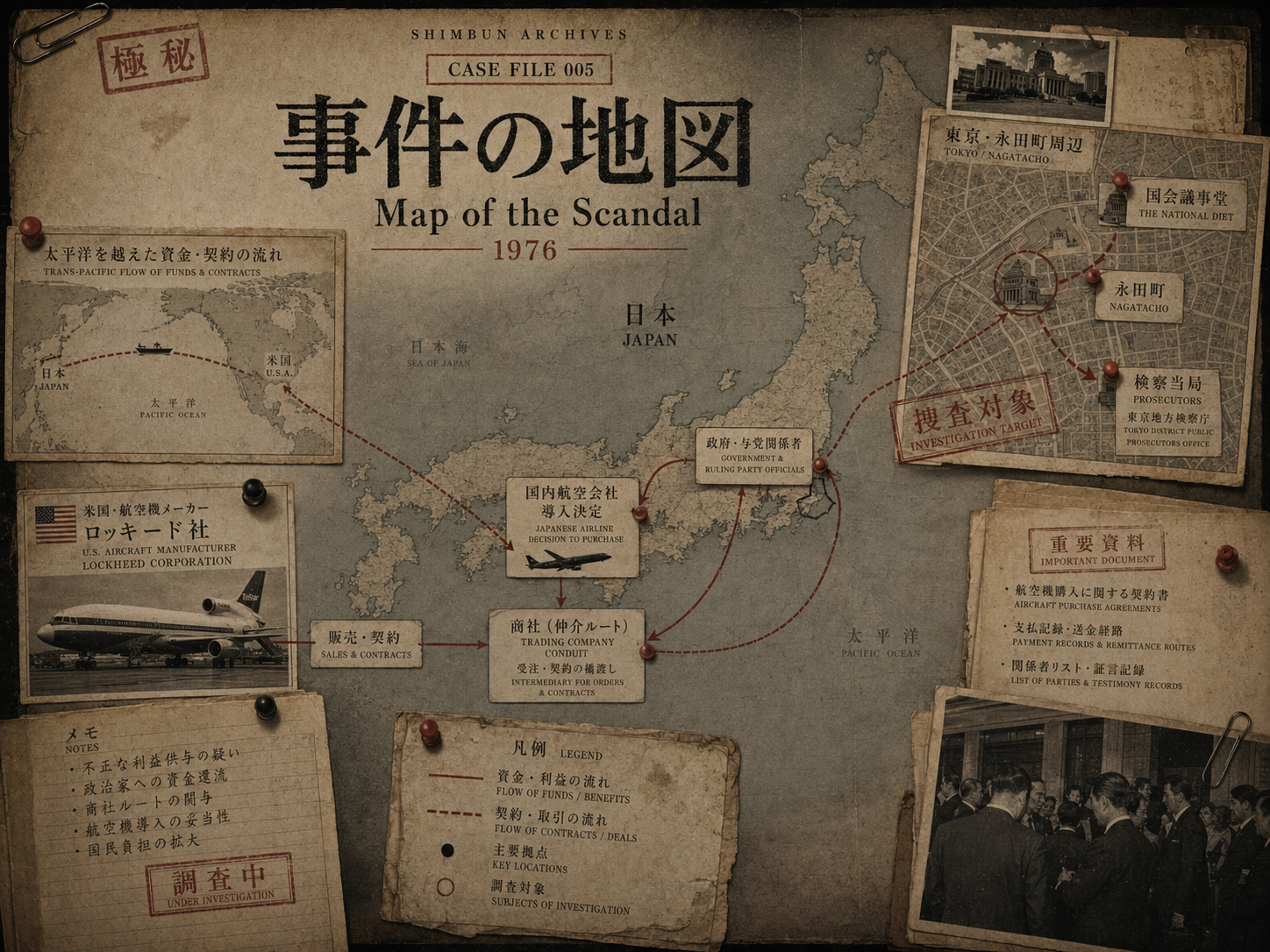
The Lockheed scandal asks a broader question: how do foreign corporate sales, domestic policy decisions, trading-company conduits, prosecutors, parliamentary hearings, and public outrage become one national scandal?
Four archive axes
1Aircraft procurement and international sales
2Intermediaries, trading companies, and political channels
3Tokyo prosecutors and Diet hearings
4Tanaka’s conviction and continuing political influence
Timeline
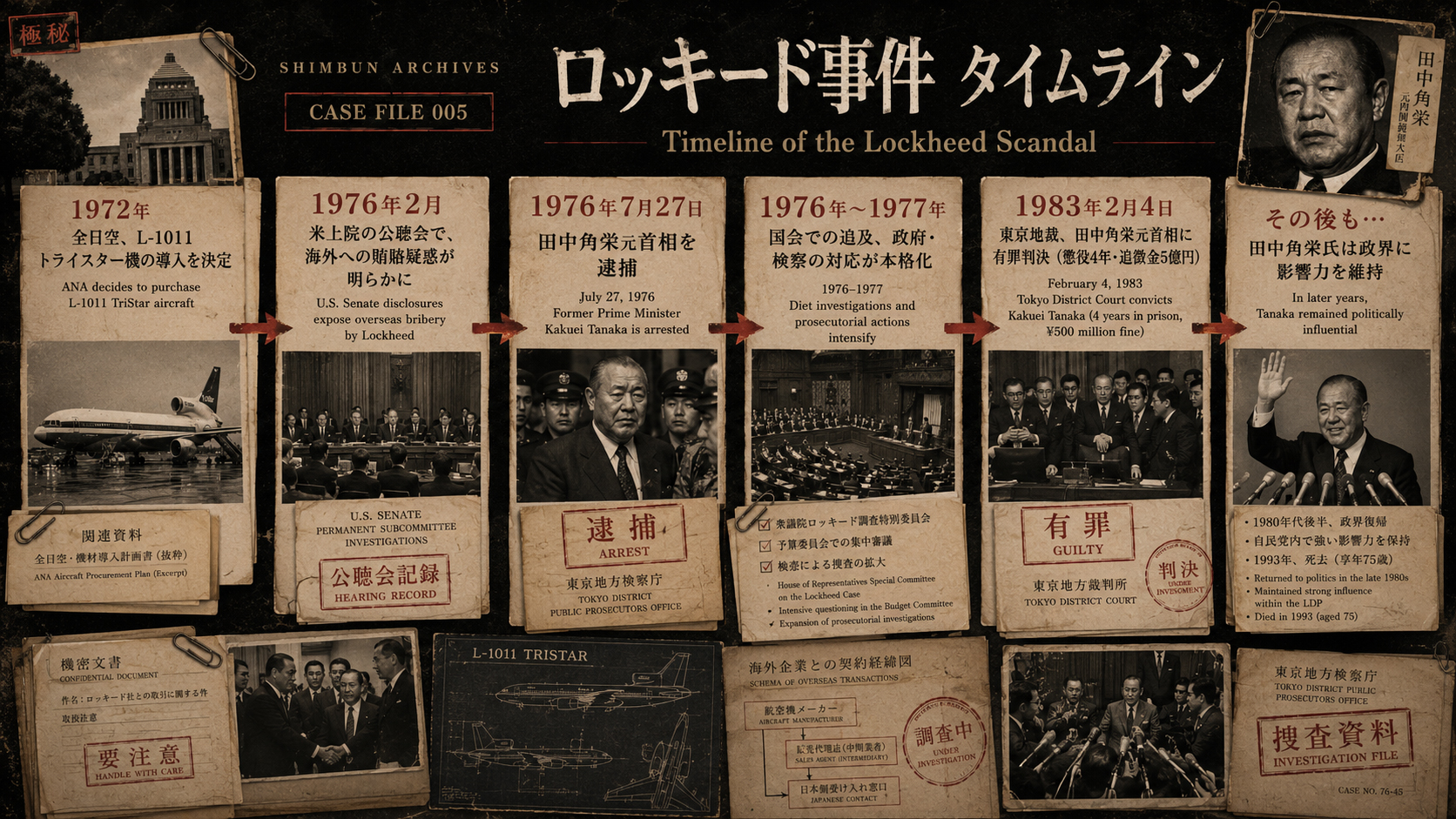
The Lockheed timeline begins before the 1976 explosion. It runs from aircraft procurement decisions to U.S. Senate disclosures, Japanese arrests, parliamentary fallout, conviction, and the continuing political afterlife of Tanaka’s power.
All Nippon Airways decides to purchase L-1011 TriStar aircraft.
Overseas bribery disclosures by Lockheed trigger political fallout in Japan.
Tokyo prosecutors arrest former Prime Minister Kakuei Tanaka.
Parliamentary hearings, questioning, and investigations expand.
Tokyo District Court convicts Tanaka.
Tanaka remains a major political presence even after conviction.
Media, Memory, and Power
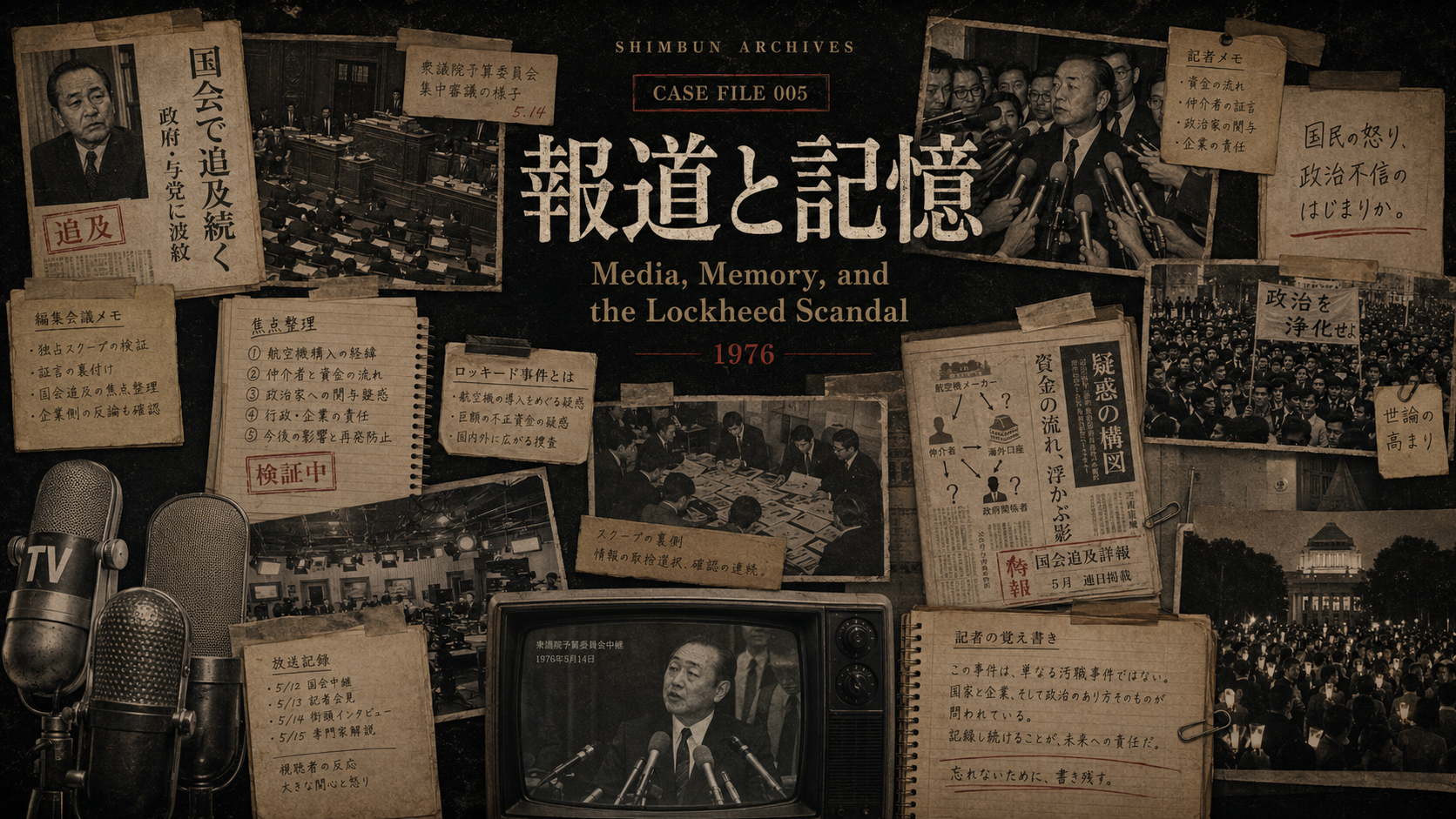
The Lockheed scandal became a massive media event: newspapers, television, Diet hearings, prosecutors’ office reporting, weekly magazines, and political commentary turned corruption into national theater.
The public memory is complicated. Tanaka was arrested and convicted, yet his political machine did not immediately collapse. That contradiction is why the case remains more than a court record. It is a structural record of postwar Japanese politics.
Source Notes
This page relies on public documents, U.S. diplomatic records, court and press reporting, and political-history research. Money routes are separated into established facts, reported claims, and disputed or incomplete areas.
- U.S. State Department Office of the Historian documents on Tanaka’s arrest and the Lockheed investigation
- Prime Minister’s Office profile of Kakuei Tanaka
- Major reporting and wire-service archives on arrest, trial, conviction, and political aftermath
- Political-history scholarship on the Lockheed case and postwar money politics