Overview
The case endures not because it happened somewhere extraordinary, but because it happened somewhere ordinary: a suburban supermarket, a closing shift, an upstairs office, an outside staircase, shoppers, a summer festival nearby. Into that ordinary geography came the rarest and most terrifying element in Japanese daily life: a handgun murder.
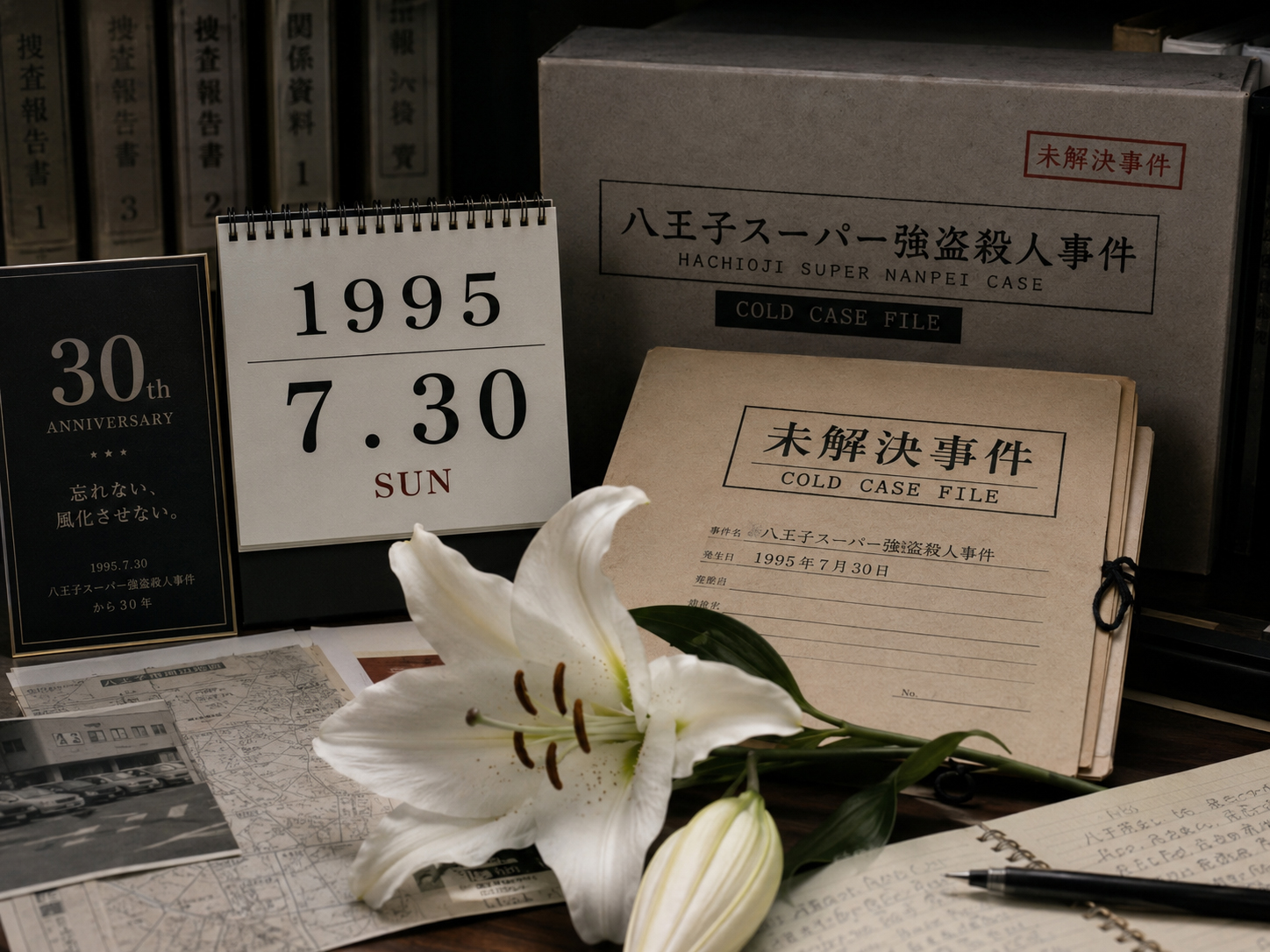
According to the Tokyo Metropolitan Police Department, the crime occurred around 9:15 p.m. on Sunday, July 30, 1995, inside the second-floor office of Super Nanpei Owada. Three unresisting female employees were shot dead, and the offender remains at large. Nearby, at Kitanohara Park, a Bon Odori festival had started at 6:00 p.m. and ended around 9:06 p.m.
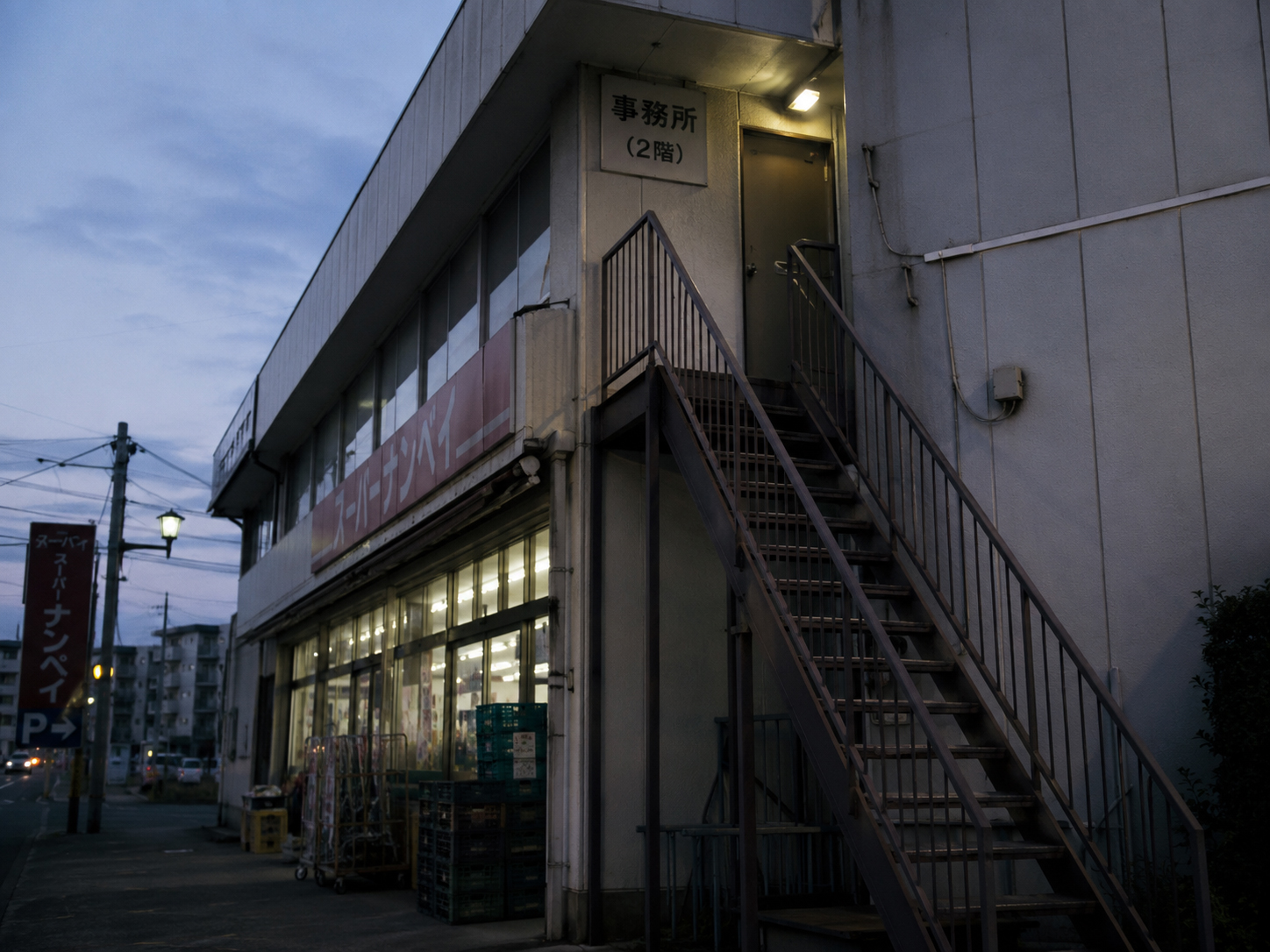
The official frame
The official Japanese case name is the “Owada-cho supermarket office handgun robbery-murder case.” It is commonly known as the Hachioji supermarket robbery-murder or the Super Nanpei case. The MPD’s public page, updated on March 25, 2026, continues to request information about the scene, the shoes believed to match a footprint, the last customers, fireworks visitors, passersby, and a 3D reconstruction of the area at the time.
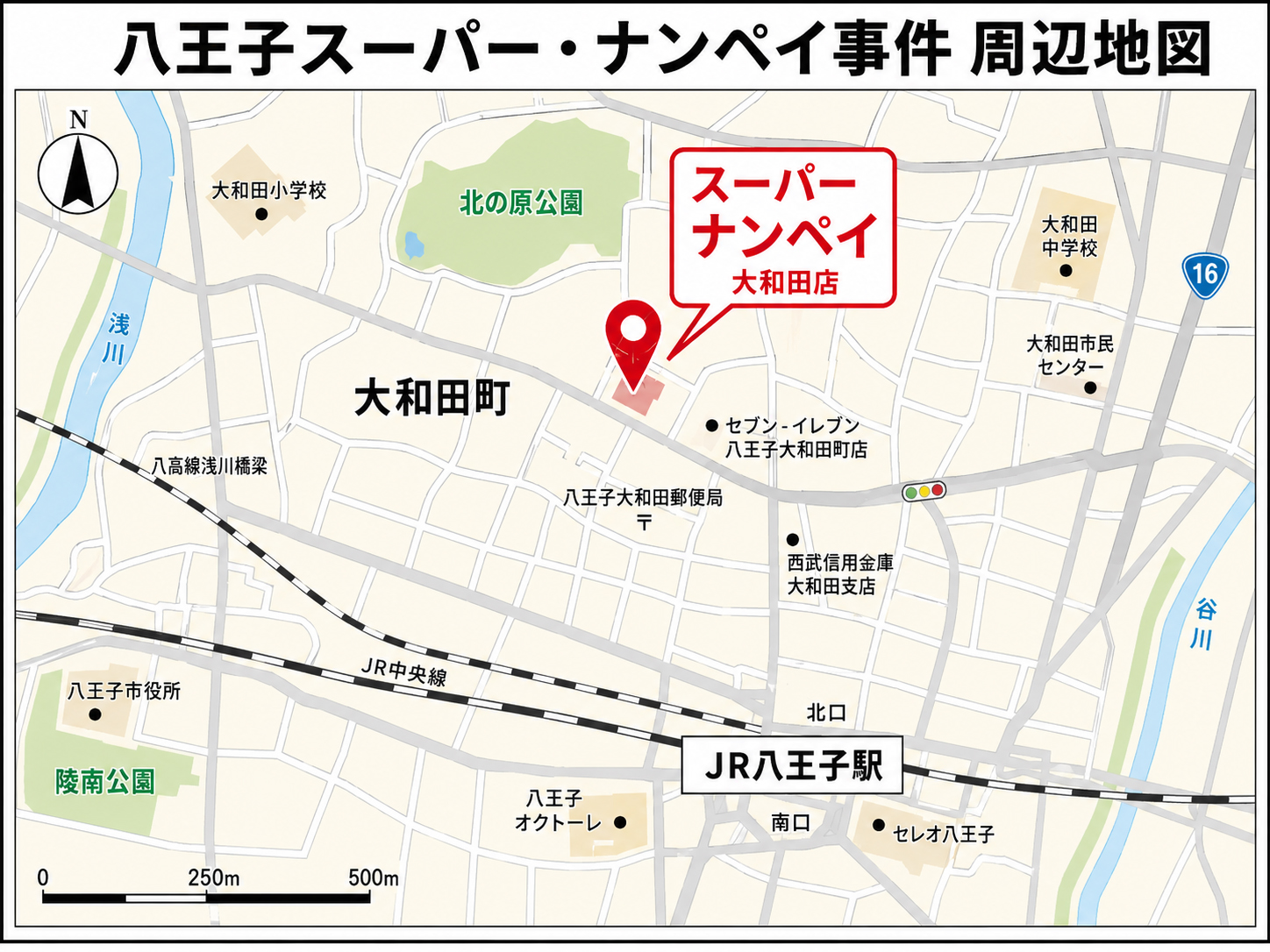
The scene was about two kilometers northeast of JR Hachioji Station and about 750 meters west-southwest of Kita-Hachioji Station on the JR Hachiko Line. The Hachioji Bypass ran to the west, National Route 20 to the south, and the surrounding area mixed homes, factories, and roads. The store was on the first floor. The office was upstairs. To reach the office, one had to use an exterior staircase.
July 30, 1995: an ordinary summer night
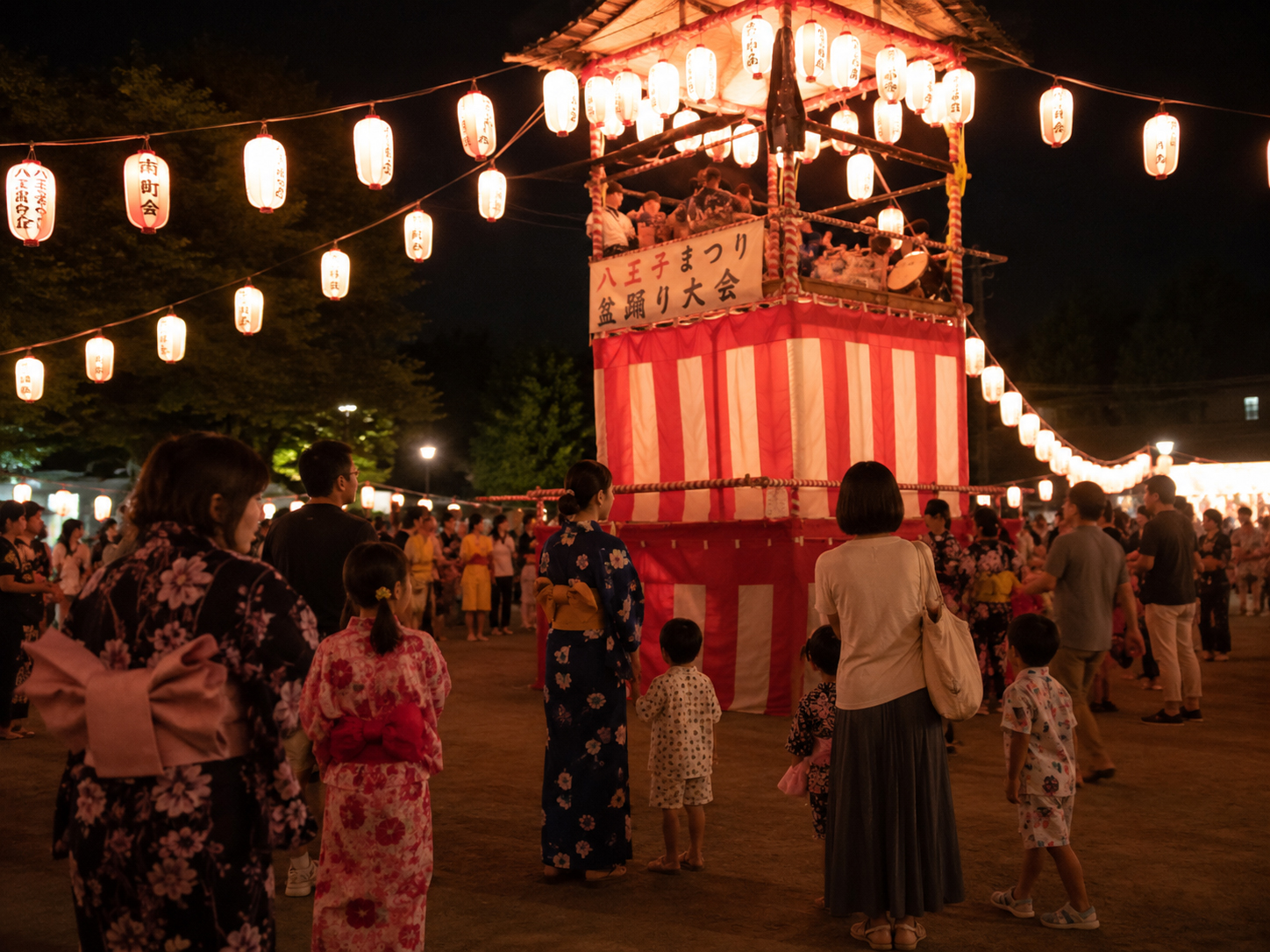
The MPD describes the day as very hot. At nearby Kitanohara Park, a Bon Odori festival ran from 6:00 p.m. until about 9:06 p.m. The crime occurred roughly nine minutes later. Lanterns, music, children, families walking home: the setting was not an empty stage but a living neighborhood.
The MPD also frames 1995 through the larger shocks of the year: the Great Hanshin-Awaji Earthquake on January 17, the Tokyo subway sarin attack on March 20, and the release of Windows 95 on November 23. It was a year in which Japan’s sense of safety and modernity was already being rewritten. That summer, the break in ordinary safety reached a supermarket office in Hachioji.
Minimum timeline
Cold cases attract speculation. A source-locked account starts with what can be fixed.
6:00 p.m.
The MPD says a festival began at nearby Kitanohara Park at 6:00 p.m.
Police seek a man and woman said to have paid at 8:56 p.m. and left in a white sedan.
The nearby Bon Odori ended around 9:06 p.m.
Three female workers were shot dead in the second-floor office of Super Nanpei Owada.
Japan abolished limitation periods for certain death-result crimes, meaning the case did not simply disappear with time.
Police released new posters, reconstruction materials, and renewed public calls for information.
Shoes, last customers, tape
The shoeprints
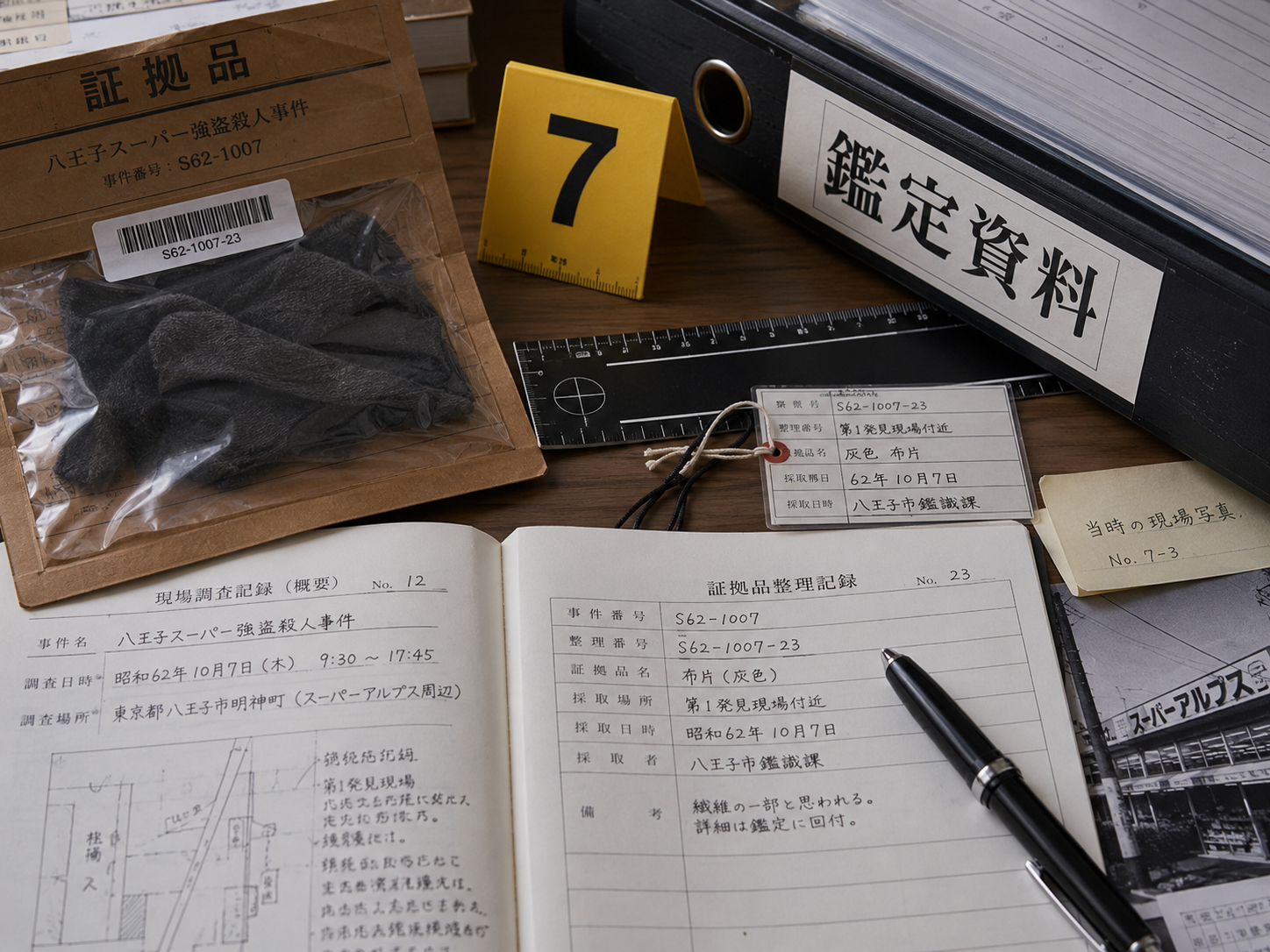
In 2018, the MPD released information about two types of sneakers believed to correspond to prints left at the scene. Both were size 26 centimeters and appeared to have been worn rather than brand-new. One type had been sold mainly at Marui stores around 1990–1991, with 439 pairs sold at 21 stores in Tokyo, Kanagawa, and Saitama. The other had been sold mainly at PARCO and Marui around 1993–1994, with 19 pairs sold in Tokyo and 94 pairs nationwide.
The last customers
Police are still seeking a man and woman who reportedly paid at 8:56 p.m., went to the Super Nanpei parking lot, and left in a white sedan. Their seven purchased items included produce, bean sprouts, okonomiyaki, yakisoba, and ham, for a total of 1,754 yen including tax. Police say the pair may have seen the offender.
The fingerprint report
In 2015, TV Asahi reported that a partial fingerprint taken from the adhesive side of tape used in the case almost matched a deceased Japanese man. That report is important, but it must be handled carefully. The person was not arrested, referred to prosecutors, or convicted. SHIMBUN records this as a reported investigative development, not as an identification of the offender.
The thirtieth-year appeal
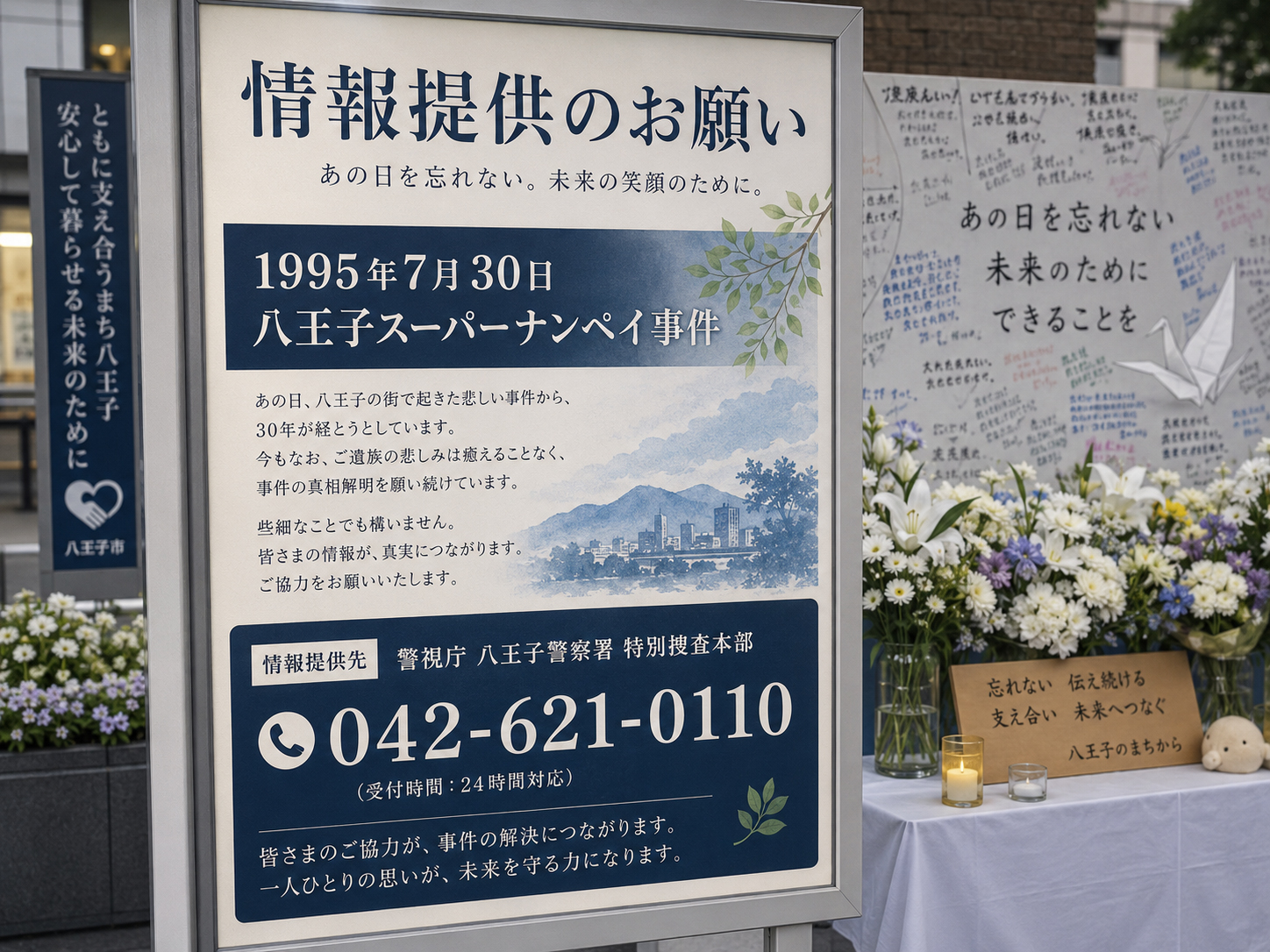
In July 2025, ahead of the thirtieth anniversary, the MPD released a reconstruction model and new posters. TV Asahi reported that roughly 226,000 investigators had been assigned to the case over the years, yet it remained unsolved. Public-information videos were also scheduled to run at locations including JR Hachioji Station.
The MPD page describes an official reward of up to 3 million yen and an additional reward of up to 3 million yen from a cooperating association, for a total of up to 6 million yen depending on contribution to arrest or resolution. The listed period runs from July 30, 2025, to July 29, 2026. The contact is the Hachioji Police Station special investigation headquarters at 042-621-0110.
The unresolved core
The unanswered question is not just who did it. It is why someone entered the second-floor office after closing and killed three unresisting workers. Was it money? Was it another motive? Was the offender alone? Did someone wait outside? Are the shoeprints, tape, last customers, fireworks visitors, and passersby part of one line—or many broken lines?
The case remains public because it remains present. The MPD updates its page. Hachioji City links to the appeal. News organizations return to the story on anniversaries. The official record asks a simple thing of the public: if a memory still exists, bring it forward.
Tip information
Tokyo Metropolitan Police Department, Hachioji Police Station
Special Investigation Headquarters for the Owada-cho supermarket office handgun robbery-murder case
Phone: 042-621-0110
For emergencies in Japan, call 110. For police consultation, use #9110. Case-specific information should go to the Hachioji Police Station special investigation headquarters.
Sources and update policy
This page relies on the MPD public investigation page, the MPD sneaker-information page, Hachioji City’s cooperation notice, and media reporting on the thirtieth anniversary and the 2015 fingerprint report. It separates confirmed facts from reported accounts and unresolved questions.
- Tokyo Metropolitan Police Department: “Owada-cho supermarket office handgun robbery-murder case”
https://www.keishicho.metro.tokyo.lg.jp/jiken_jiko/ichiran/ichiran_10/hachioji.html - Tokyo Metropolitan Police Department: “Characteristics of the shoes worn by the offender”
https://www.keishicho.metro.tokyo.lg.jp/jiken_jiko/ichiran/ichiran_10/hachioji_sneaker.html - Tokyo Metropolitan Police Department: 3D reconstruction page
https://www.keishicho.metro.tokyo.lg.jp/jiken_jiko/ichiran/ichiran_10/hachioji_image3d.html - Hachioji City: cooperation request from the Tokyo Metropolitan Police Department
https://www.city.hachioji.tokyo.jp/emergency/bousai/m7914685/016/p034802.html - TV Asahi: report on the thirtieth-year reconstruction model and new posters, July 24, 2025.
- TV Asahi: 2015 report on the partial fingerprint and the “almost match” development.
- National Police Agency victim-support white paper material on the 2010 statute-of-limitations reform.