Start by questioning the name
The first danger in this case is the name itself. “Wednesday Strangler” is memorable, but it can make uncertainty feel solved. It does not prove one offender. It does not prove every case belongs to one series.
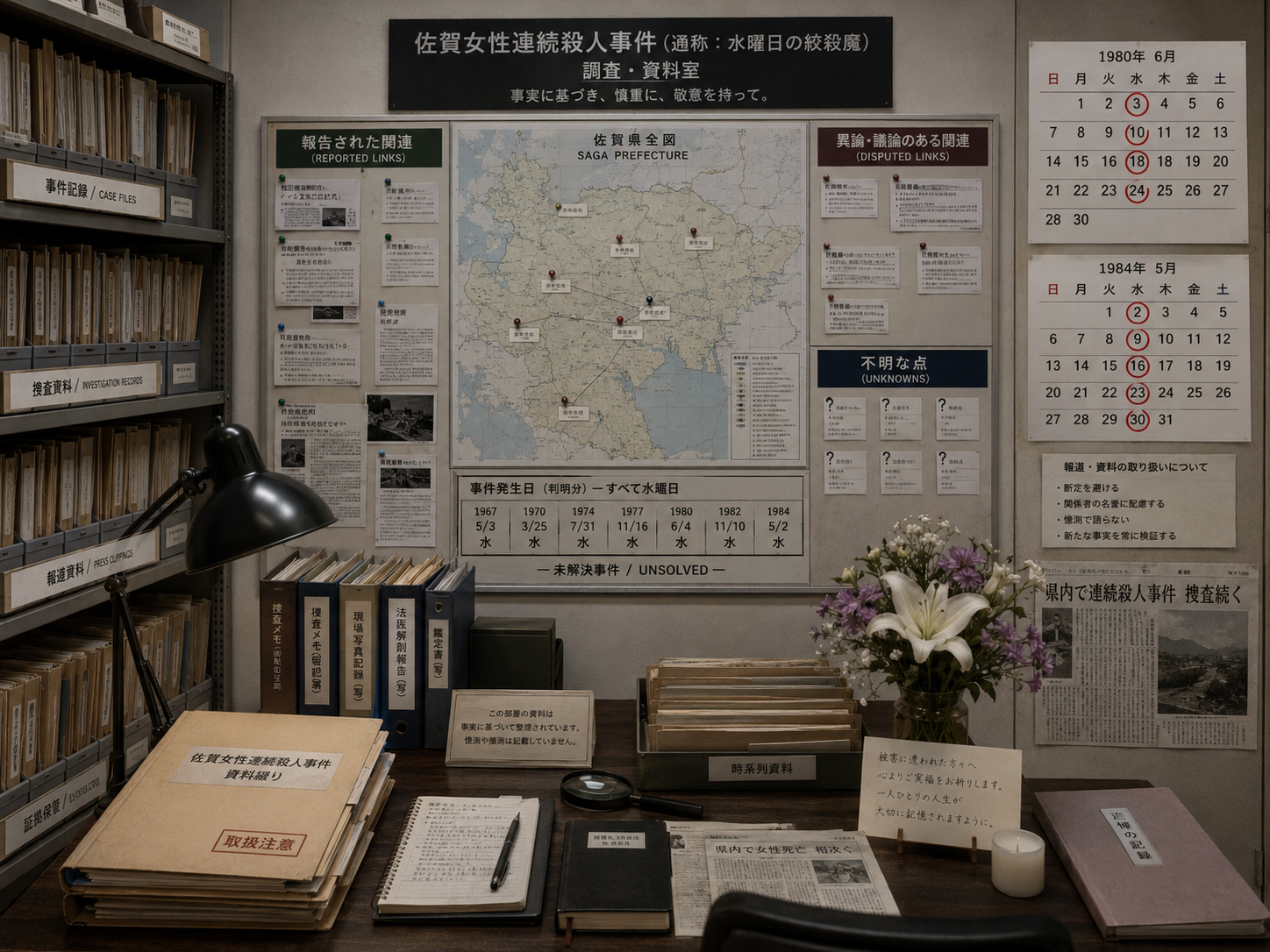
Later public summaries usually describe seven female victims in Saga Prefecture between 1975 and 1989. Six of the seven disappearances are said to have fallen on Wednesdays, and five deaths are commonly described as strangulations. But the record is layered: old investigations, limited public files, retrospective reporting, decomposed remains in some cases, statutes of limitation, and a later prosecution that failed.
This SHIMBUN page separates three things. First, the real case cluster: women and girls killed in Saga. Second, the reporting frame that grouped them through geography, Wednesday dates, and cause-of-death patterns. Third, the Kitagata Affair, in which three of the later cases were prosecuted and ended in acquittal.

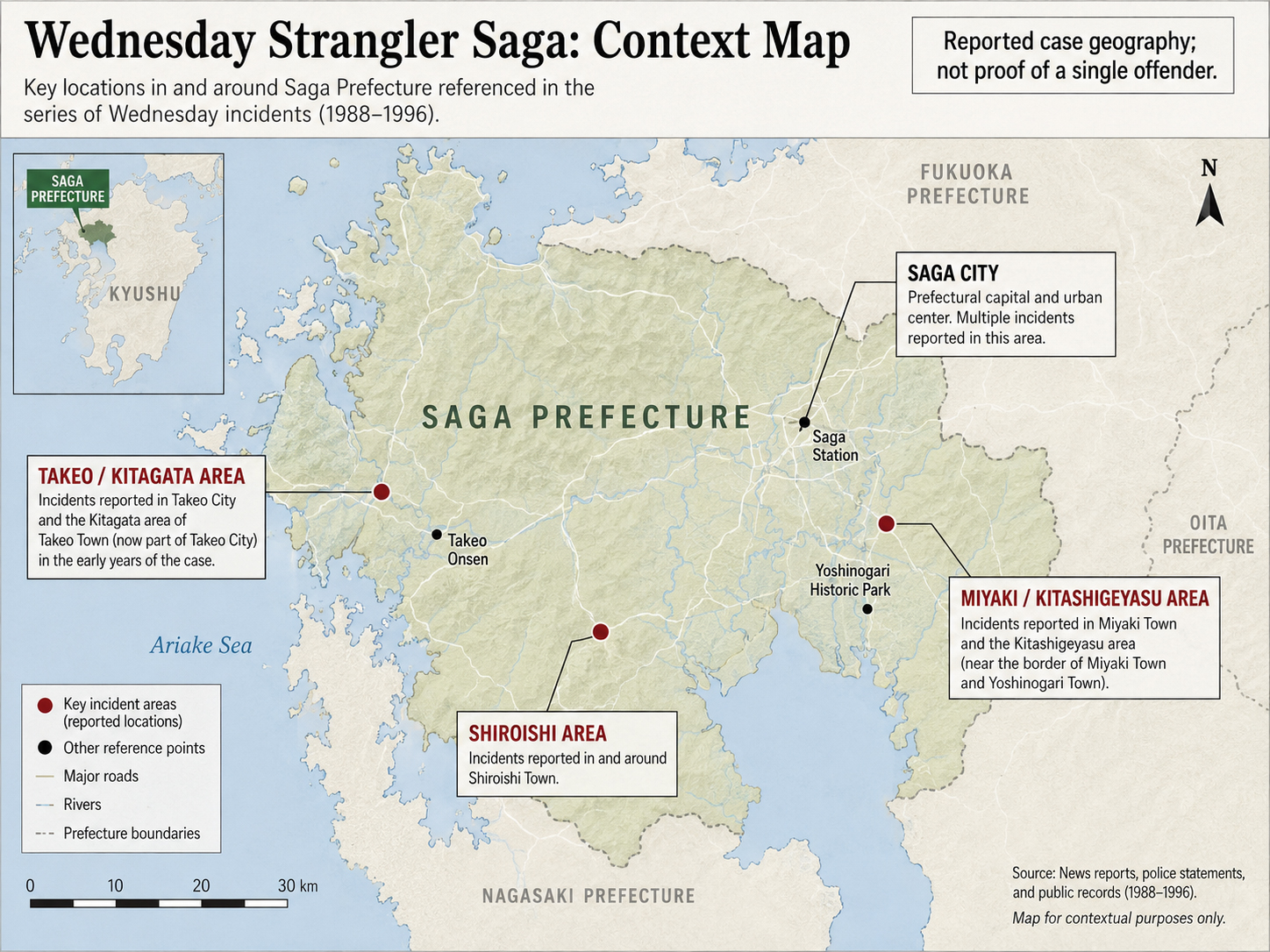
Saga, distance, and the risk of over-connection
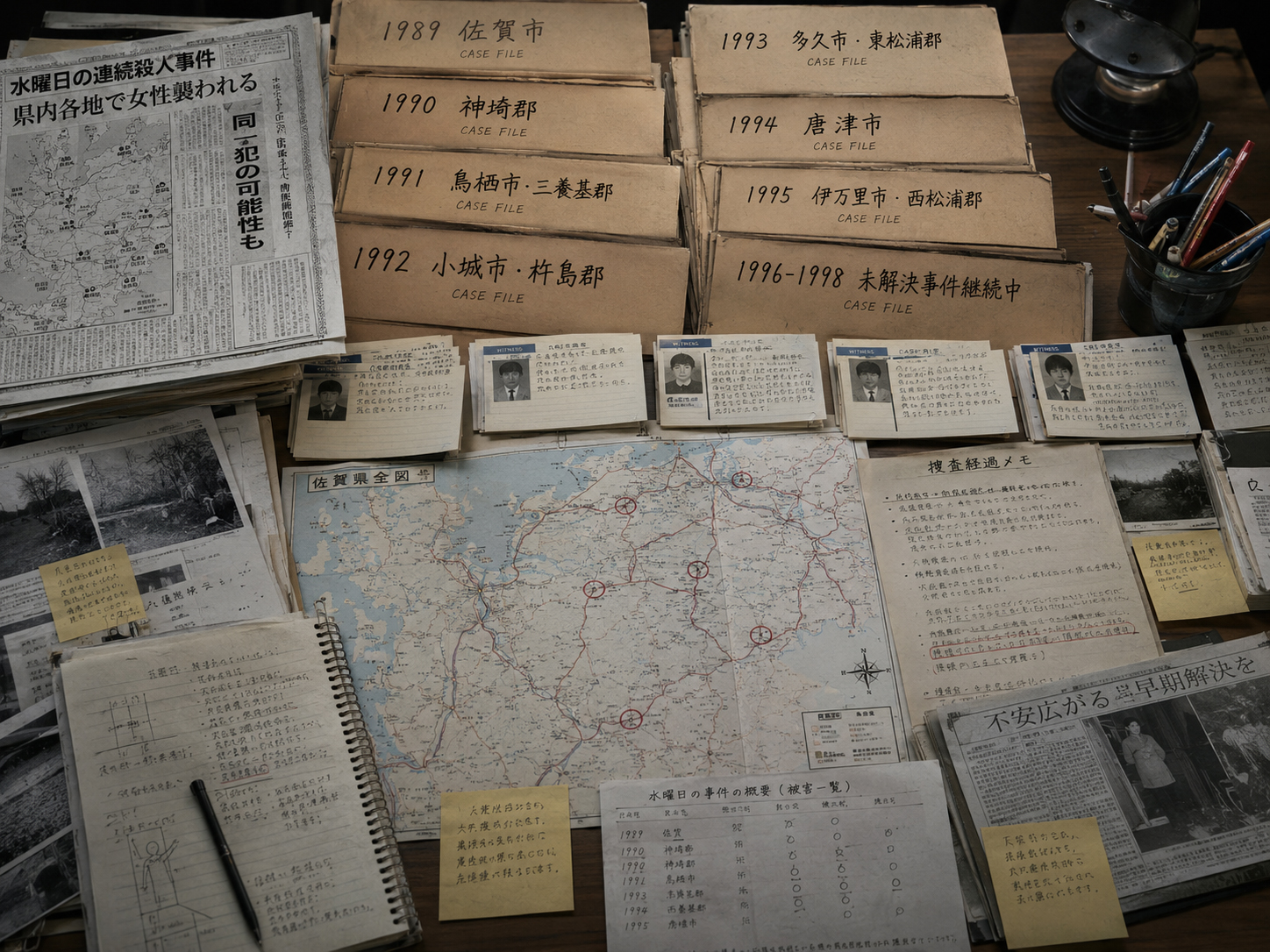
Many summaries place the cases in a relatively narrow area of Saga Prefecture, often around the former Kitagata town, Shiroishi, Kitashigeyasu, Takeo, and nearby communities. The proximity is important. But proximity is not identity.
A map can help readers understand daily life: roads, fields, workplaces, homes, buses, the routes between towns. A map can also tempt readers into false certainty. Pins and circles look persuasive. Lines look like conclusions. For that reason, SHIMBUN’s map is deliberately labeled as context only.
The region was not a fictional stage. It was home. That is why the page avoids serial-killer mythology and returns repeatedly to the victims, the documents, and the trial record.
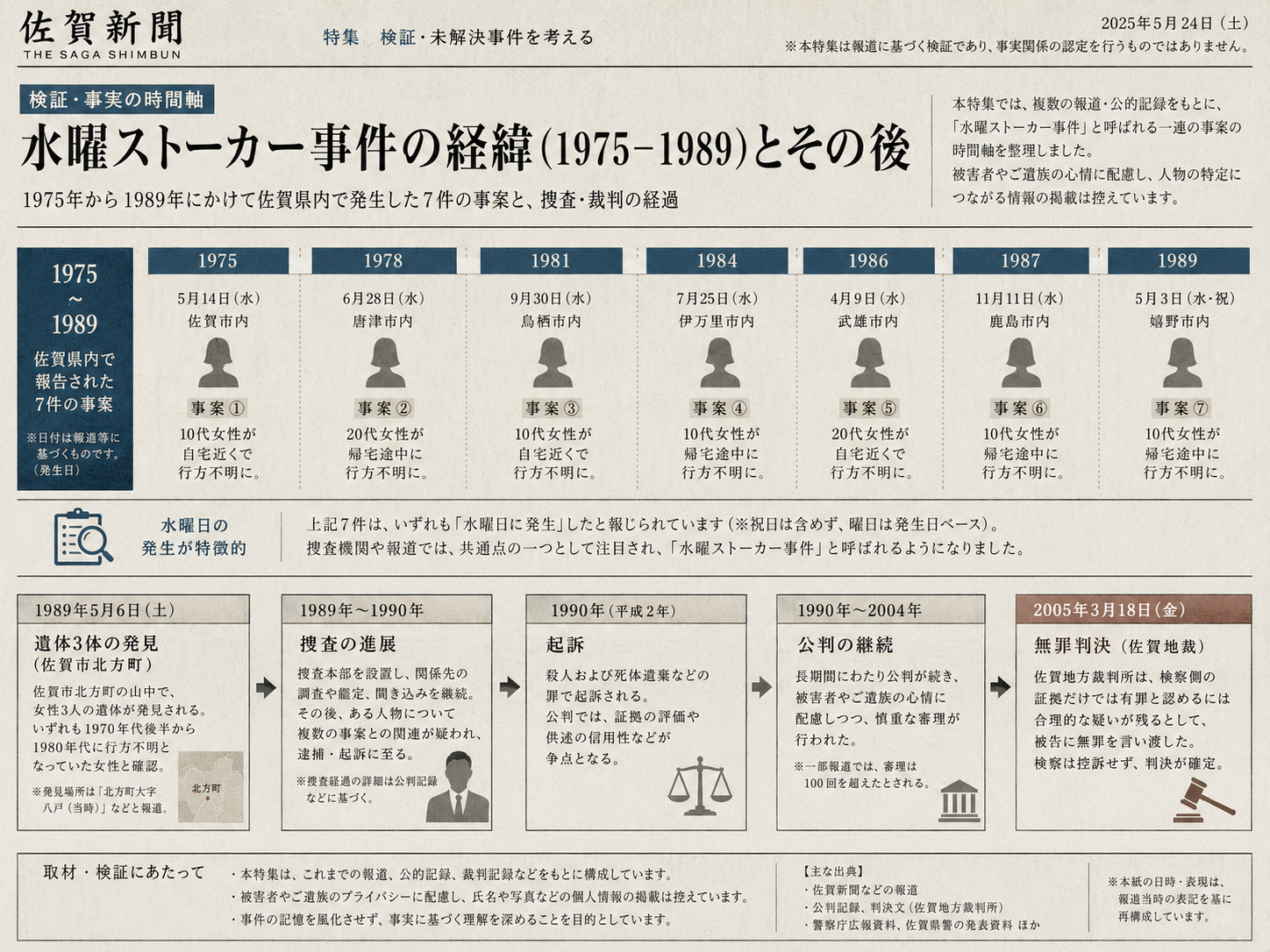
From 1975 to 1989
Retrospective summaries often begin with the 1975 disappearance and killing of a 12-year-old girl from the Kitagata area. Over the following years, more women and girls disappeared or were found dead in Saga. Their ages ranged from children to women in middle age. Some were said to have vanished on the way home. Some were found after long gaps.
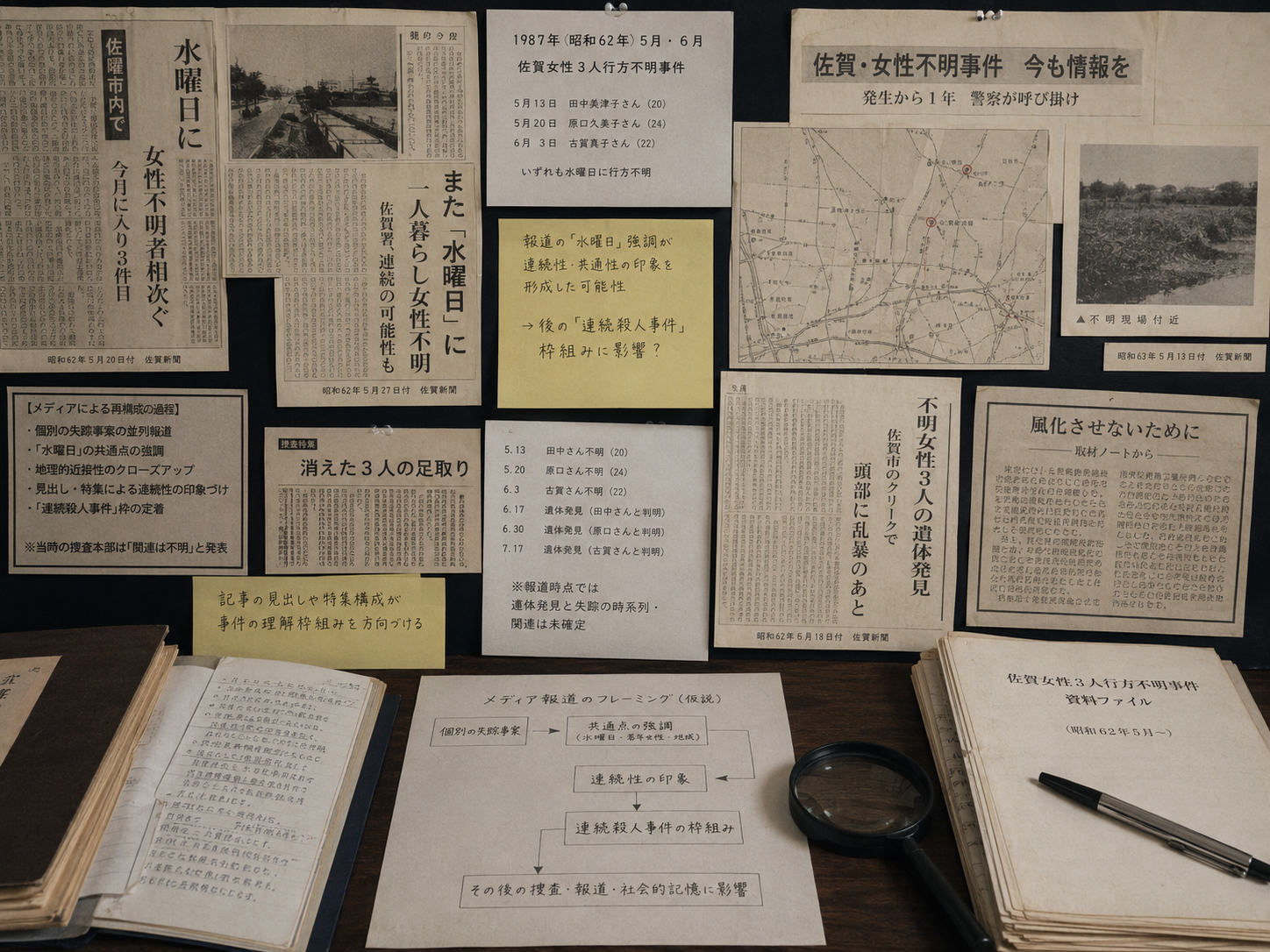
Common summaries say five of the victims were strangled, while the cause of death in two cases could not be established because of the condition of the remains. Six of the seven disappearances are described as having occurred on Wednesdays. This pattern made the nickname powerful. But the pattern should be treated as reported and interpretive, not as proof.
The strongest writing about this case is not a thriller script. It is a patient reconstruction of what can be known and what cannot.
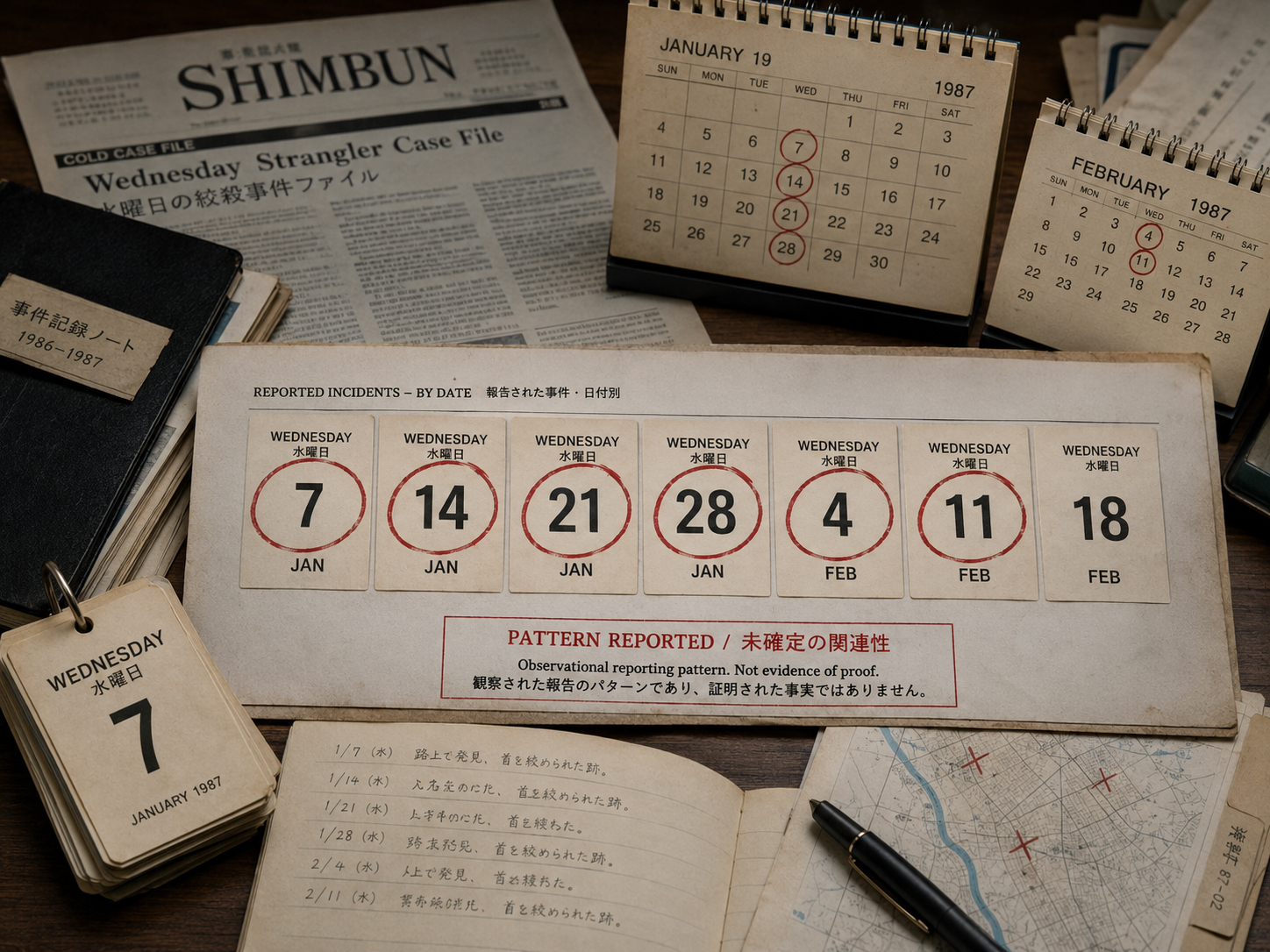

Wednesday as a symbol
“Wednesday” became the symbol. It helped reporters and readers hold the scattered cases together. It may also have shaped later memory more strongly than the evidence itself.
Patterns matter. Investigators must notice them. But a pattern is an entrance, not an exit. Geography, weekday, victim profile, cause of death, and discovery site can all be investigative leads without becoming legal proof.
That is why this case remains so difficult. It has enough shared features to haunt the public imagination, but not enough proven linkage to close the file.
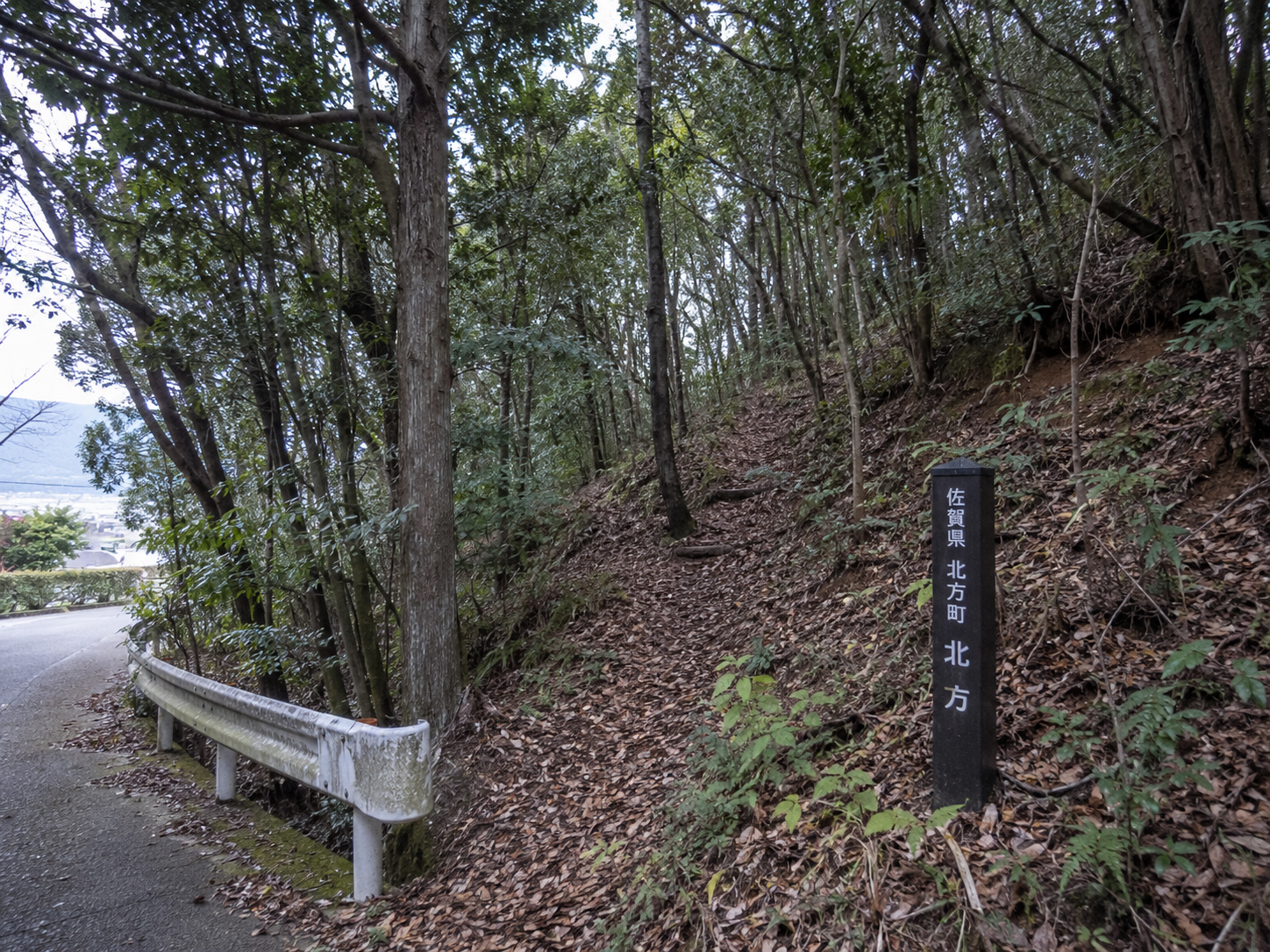
The 1989 discovery and the Kitagata cases
In 1989, three women’s bodies were found near the former Kitagata area. These later became the charged facts in what came to be known as the Kitagata Affair. In the court record, the victims are anonymized as X, Y, and Z, and the indictment alleged murders in 1989, 1987, and 1988.
The court record has a very different tone from the nickname. It is made of times, vehicles, phone calls, clothing, family routines, alibis, witness statements, forensic questions, and the admissibility of statements. That distinction matters. Myth turns everything into mood. Court records turn everything into evidence.
The Saga District Court noted that, aside from confession-related documents created during an earlier interrogation, there was no direct evidence tying the defendant to the killings. The court had already decided not to admit those written statements as evidence, leaving the prosecution to rely on circumstantial facts.
The acquittal
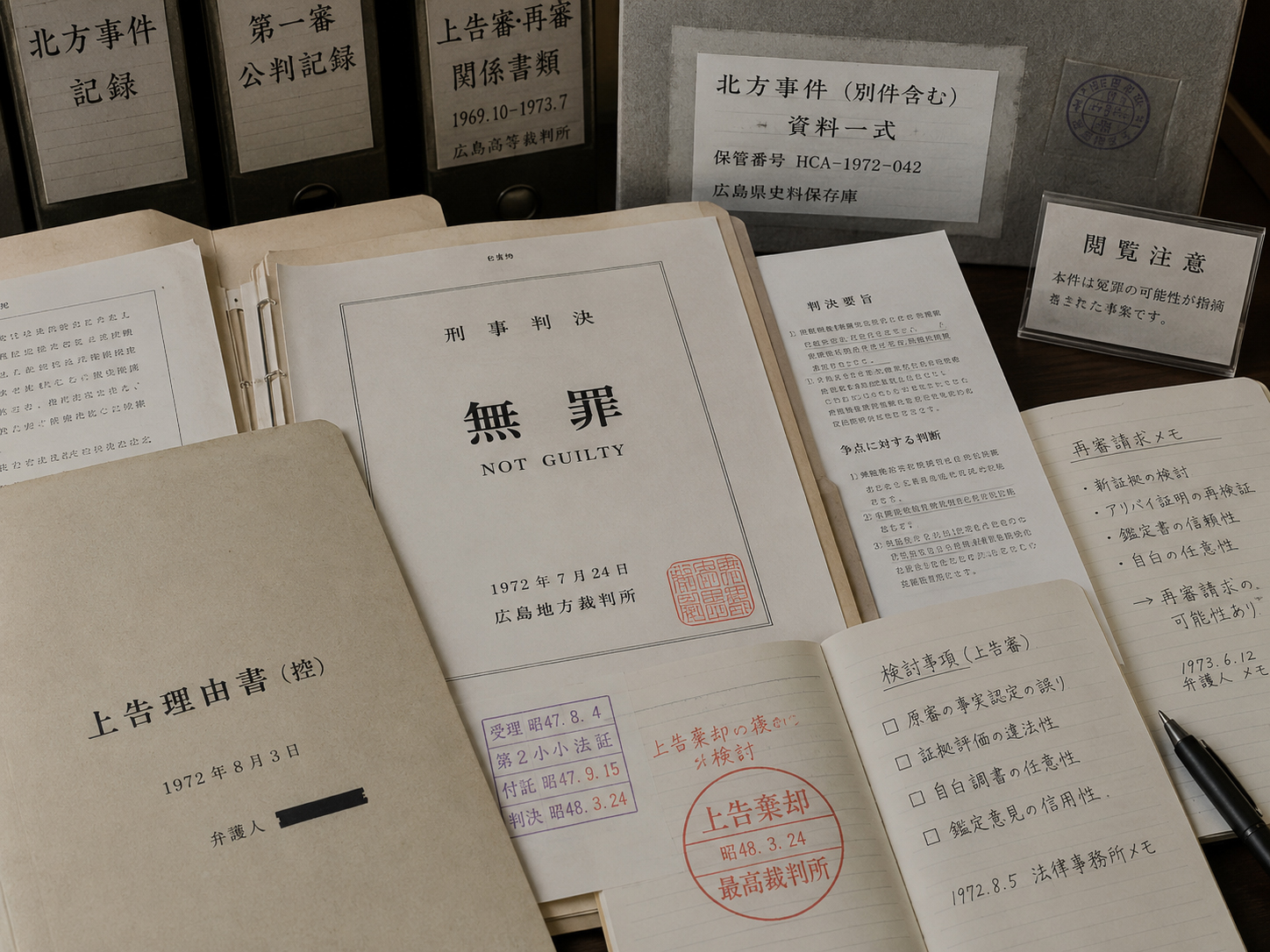
On May 10, 2005, the Saga District Court declared the defendant not guilty on all charged facts. The judgment records the defense argument that the investigation was sloppy, the forensic work mistaken, the interrogation coercive, and the case delayed in a way that damaged the defense.
The court did not accept the defense claim that the prosecution itself was void as an abuse of prosecutorial power. But it did recognize circumstances that had to be evaluated as unlawful in the interrogation, and it also described the management of evidentiary materials as extremely sloppy.
The acquittal did not solve the murders. It cleared the defendant of the charged crimes. The unresolved part remained unresolved. That is the sharpest lesson of the case: a failed prosecution can leave both an innocent person harmed and victims still without justice.
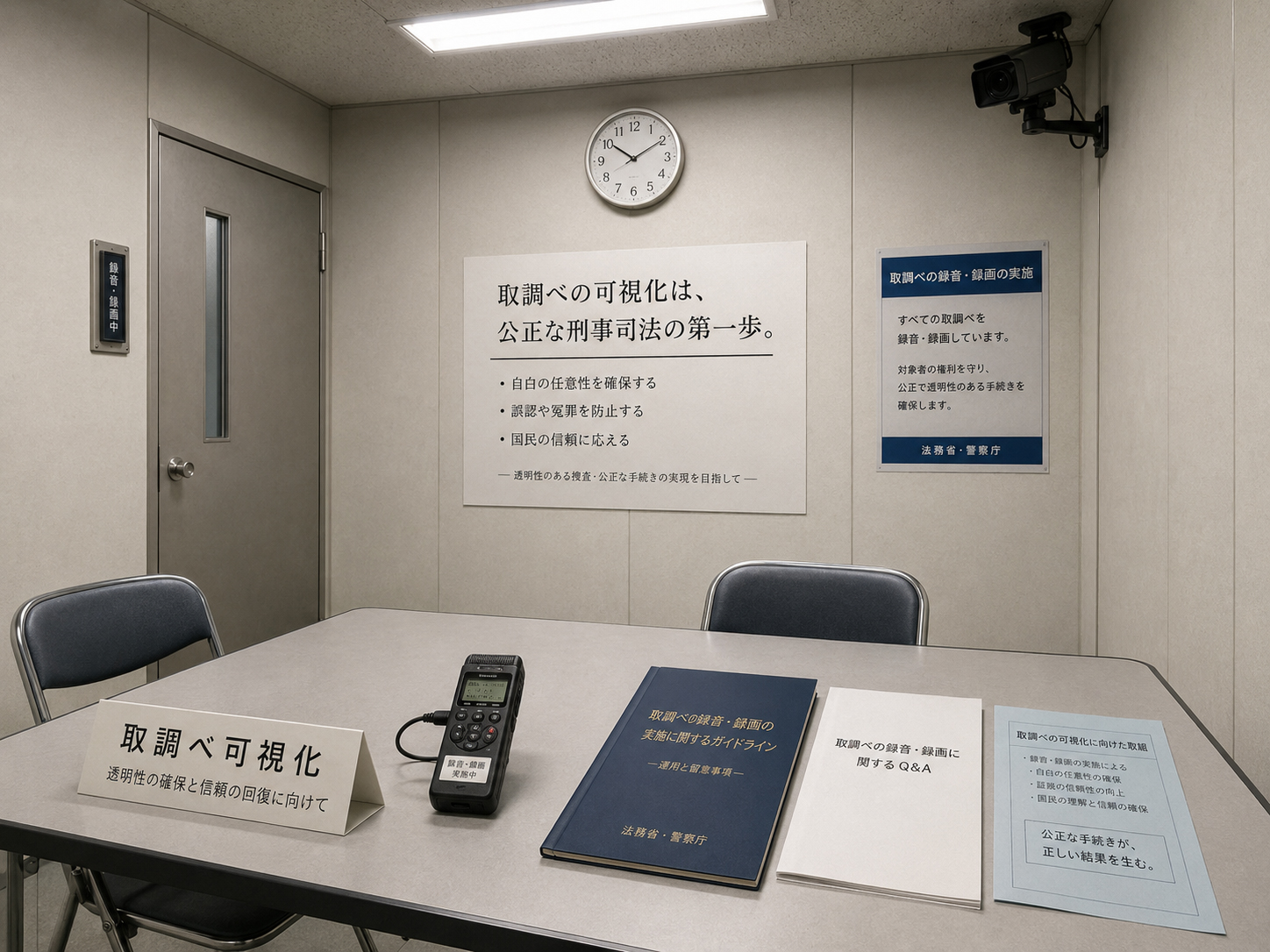
Interrogation recording as a system lesson
The Kitagata case later appeared in bar-association discussions about recording interrogations. The Japan Federation of Bar Associations’ 2007 resolution argued that recording the entire interrogation process would help prevent improper interrogations and reduce disputes over the voluntariness and credibility of confessions. Hiroshima Bar Association’s 2008 resolution similarly called for full audio-video recording of suspect and defendant interrogations.
This is not only a suspect-rights issue. It is also a victim-justice issue. If an investigation fixes on the wrong person, the real offender moves farther away. Families are injured again. In cold cases, transparency is not a luxury. It is a way to preserve truth.
What remains unknown
- Were all seven cases truly connected?
- Was the Wednesday pattern meaningful, coincidental, or amplified by later reporting?
- What evidence was lost, mishandled, or never fully tested?
- After the Kitagata acquittal, how far did the search for the true offender or offenders continue?
- How should the community remember the victims without turning the case into a serial-killer legend?
Sources and update policy
This page is based on the May 10, 2005 Saga District Court judgment, bar-association resolutions on interrogation recording, retrospective public case summaries, and reporting archives. SHIMBUN avoids unnecessary personal detail and graphic reconstruction; when a fact comes from later summaries rather than primary court records, it is described as reported.
- Courts in Japan case database: Saga District Court judgment, May 10, 2005, murder case, Heisei 14 (wa) Nos. 194, 197, and 222. The main text states the defendant was not guilty on all charged facts.
- Japan Federation of Bar Associations, 2007 resolution calling for audio/video recording of interrogations.
- Hiroshima Bar Association, May 20, 2008 resolution calling for implementation of interrogation visualization.
- Public retrospective summaries under “Wednesday Strangler / Saga Women Murders” and Japanese “Saga seven women serial murder case,” treated as secondary summaries and separated from court findings.
- News and archive references, including public headline and image archive material, used only for context. SHIMBUN images are non-graphic reconstructions.